Navigating the mental health impact of structural inequality and the housing crisis in Canadian society.
You just saw the price of one bell pepper. Eating is officially a luxury hobby.
Honestly, the whole vibe of the country right now is basically a dumpster fire that someone tried to put out with a cup of lukewarm coffee. We are out here surviving a timeline where a 29-week wait for a specialist is considered standard and your landlord is trying to charge you for the air you breathe. It is fully cooked. You are seeing the headlines about the wealth gap widening like it is trying to win a gold medal in being the absolute worst, and yet you are still expected to show up to your shift and pretend that everything is chill. It is not chill. It is a tectonic shift where the ground is basically lava and we are all just trying to hop between the few pieces of furniture that are not on fire yet.
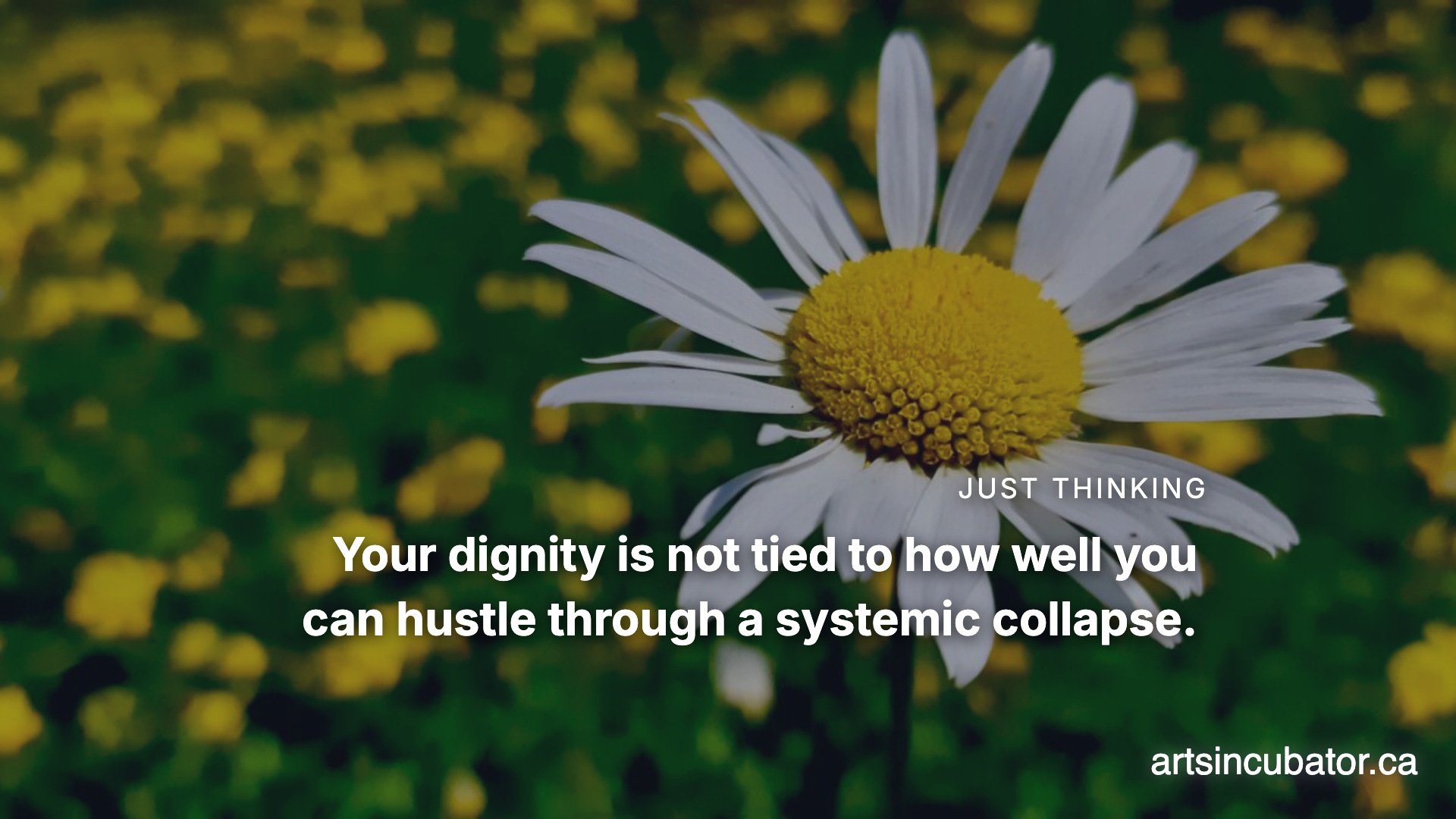
Between the opioid crisis making every street corner feel like a heavy conversation and the housing market being a total gatekeeper, it is easy to feel like your main character energy has been downgraded to a background extra in a dystopian indie flick. We are all living in this high-stress simulation where the grocery bill is a horror movie jump-scare and the dream of owning a home is about as realistic as finding a unicorn in the Exchange District. It is okay to be furious. In fact, if you are not a little bit feral right now, I am worried about your pulse. Your dignity is not tied to how well you can hustle through a systemic collapse. It is found in the way you share your last twenty dollars with a friend who is struggling or the way we all collectively refuse to let the city’s heart stop beating just because the provincial budget is a mess.
The economic stagnation is real, and the productivity talk from the suits is just a fancy way of saying they want us to work harder for fewer rewards. We are being told to reduce our dependence on the US while our own infrastructure is basically held together by hopes and dreams. It is a lot to carry, especially when you are just trying to find a reason to make art or even just get out of bed. But here is the tea: the fracture in society is where the light gets in. We are building something different in the cracks. It is a network of people who actually care about each other because the system clearly forgot how to do its job.
Do not let the fear of rising crime or the isolation of the mental health abyss make you shrink into a shell. We have to stay loud and stay connected, even if it is just through a frantic group chat or a basement show that probably violates four different bylaws. Resilience is not about being a stoic statue; it is about being a messy, loud, and incredibly annoying reminder that we are still here. We are the ones who have to define what equity looks like because the people in charge are too busy staring at their stock portfolios. Your worth is not your output in a failing economy. It is your humanity in a world that is trying to turn you into a statistic.
We are basically the architects of a new way to exist while the old towers are crumbling around us. It is chaotic, it is stressful, and it is definitely not what we signed up for, but you are doing it. Every time you choose kindness over despair or collective care over individual greed, you are winning a war you did not ask to fight. Keep your head up, keep your friends close, and remember that even if the whole map is being redrawn, we are the ones holding the pens. We are the glitch that the algorithm cannot fix, and honestly, I have never been more obsessed with our potential to break the cycle. Stay weird, stay angry, and stay together.
Thoughts on art and the state of the world!
These fragments trace the rhizomatic flow of thought through art, life, and place — scattered impressions from studio corners, fleeting ideas scrawled in notebooks, whispered exchanges at galleries, and observations picked up on quiet northern roads. Some fragments linger on technique, intuition, and doubt; others drift through community, culture, and the subtle poetry of everyday moments. They offer no conclusions, only openings, inviting readers to follow connections wherever they emerge.
Wandering laterally between process, memory, and environment, these pieces map associations across creativity, identity, and belonging. They intersect with humor, failure, resilience, and collaboration, and trace the ways artistic thinking seeps into gardens, small-town rhythms, friendships, and civic life across Manitoba and Northwestern Ontario — and further afield. Each thought functions as a node, part of a living network of reflection, expanding and branching with possibility.
Discover more associative fragments, conceptual wanderings, and artful reflections on our thoughts page.


