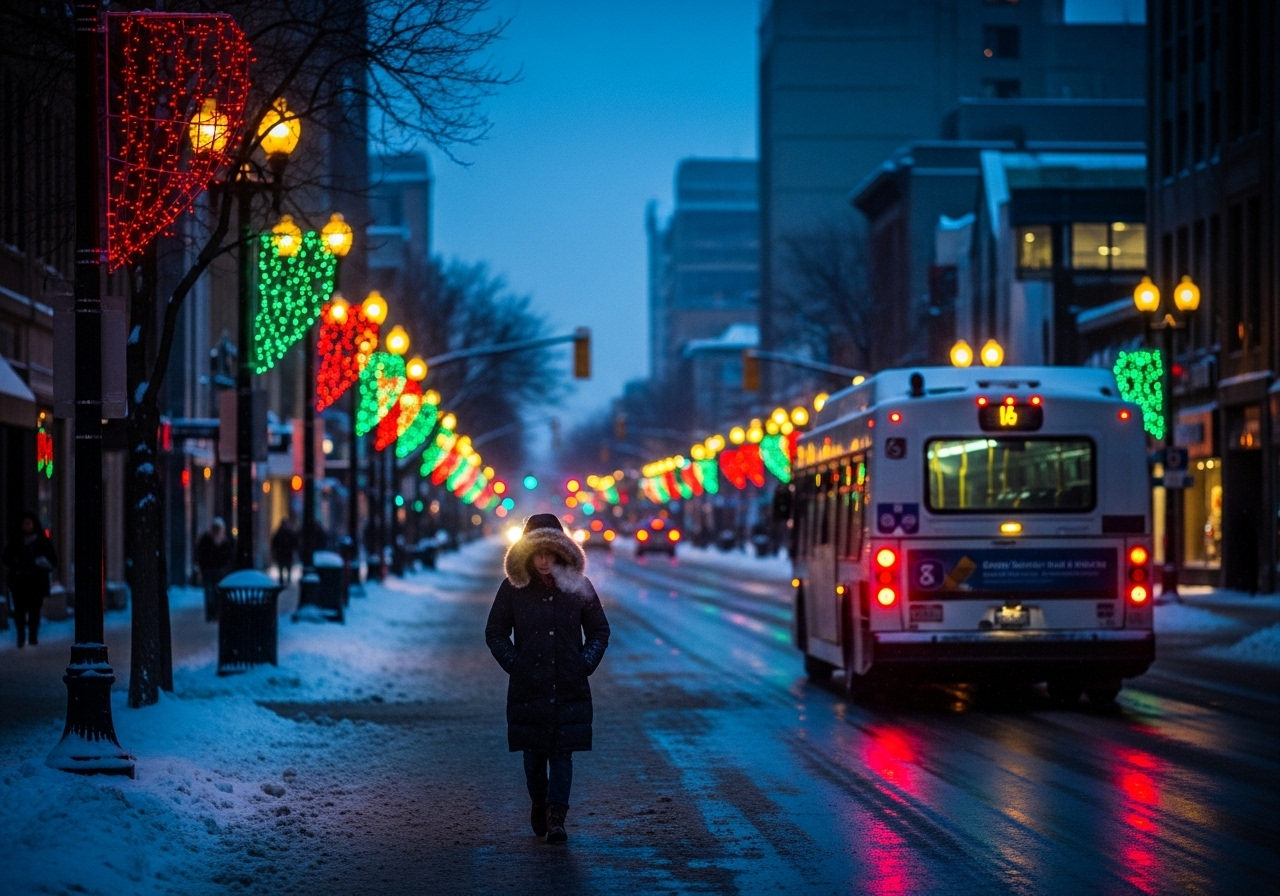
Why DIY culture and community-led art are the only things saving our city in 2026.
Why are you waiting for a grant to start making the things your neighborhood actually needs?
The city likes to talk about revitalization while the storefronts on Portage Avenue stay boarded up and the rent in the Exchange keeps climbing toward some imaginary ceiling. You see the gaps. You see where the light doesn’t reach, and that’s exactly where the radical stuff starts to grow, like weeds cracking through the concrete of a parking lot behind an abandoned grocery store. Radical creativity isn’t some polished portfolio you submit to a committee of people who haven’t touched a spray can in twenty years. It’s the desperate, beautiful impulse to fill a void before the void swallows your whole friend group.
We are currently living through a period of extreme vibecapping, where everyone is terrified to make something that looks like garbage, so they make nothing at all. But looking like garbage is a prerequisite for looking like anything real. When you feel that static-rot settling into your brain from too much doom-scrolling, that’s the signal to go glitch-maxxing on your own terms. You have to be willing to be the person who organizes the bad art night in a basement where the pipes are leaking. It is about mutual aid through aesthetics. When you print fifty copies of a zine about how to navigate the crumbling healthcare system and leave them at the Forks, you aren’t just creating content. You are building a decentralized nervous system for a city that feels like it’s in a perpetual state of frostbite.
Think about the way the wind howls down Main Street in February. It doesn’t ask for permission to change the landscape; it just moves things. Your creativity needs that same relentless, unbothered energy. We spend too much time worrying about the arts sector as if it is a separate, holy place where only the chosen few get to play. The sector is a myth. The reality is just us, a handful of distorted cables, some stolen wheatpaste, and the collective realization that if we don’t build our own platforms, we are going to be stuck screaming into a digital void owned by a billionaire who wouldn’t last five minutes in a Winnipeg winter.
Everything is connected in ways the spreadsheets cannot track. That weird synth loop you recorded on your phone becomes the backbone of a protest song, which becomes a chant at a rally for tenant rights, which leads to a community garden project on a vacant lot. This is rhizomatic survival. It is messy, it is nonlinear, and it is the only thing that actually keeps the soul of this city from being turned into a luxury condo development. You do not need a five-year plan. You just need to find the others who are tired of the silence and start making enough noise to wake up the block.
Dignity is not something that is handed to you by a gallery owner. It is something you claim when you decide that your weird, niche, unmarketable ideas are worth more than a paycheck. In 2026, being a creative isn’t a career path; it is a defensive maneuver. It is how we stay human when the algorithms are trying to smooth us out into a more manageable paste. Stop polishing the edges and start sharpening them. The world is jagged enough as it is; you might as well match the energy.
Thoughts on art and the state of the world!
These fragments trace the rhizomatic flow of thought through art, life, and place — scattered impressions from studio corners, fleeting ideas scrawled in notebooks, whispered exchanges at galleries, and observations picked up on quiet northern roads. Some fragments linger on technique, intuition, and doubt; others drift through community, culture, and the subtle poetry of everyday moments. They offer no conclusions, only openings, inviting readers to follow connections wherever they emerge.
Wandering laterally between process, memory, and environment, these pieces map associations across creativity, identity, and belonging. They intersect with humor, failure, resilience, and collaboration, and trace the ways artistic thinking seeps into gardens, small-town rhythms, friendships, and civic life across Manitoba and Northwestern Ontario — and further afield. Each thought functions as a node, part of a living network of reflection, expanding and branching with possibility.
Discover more associative fragments, conceptual wanderings, and artful reflections on our thoughts page.


