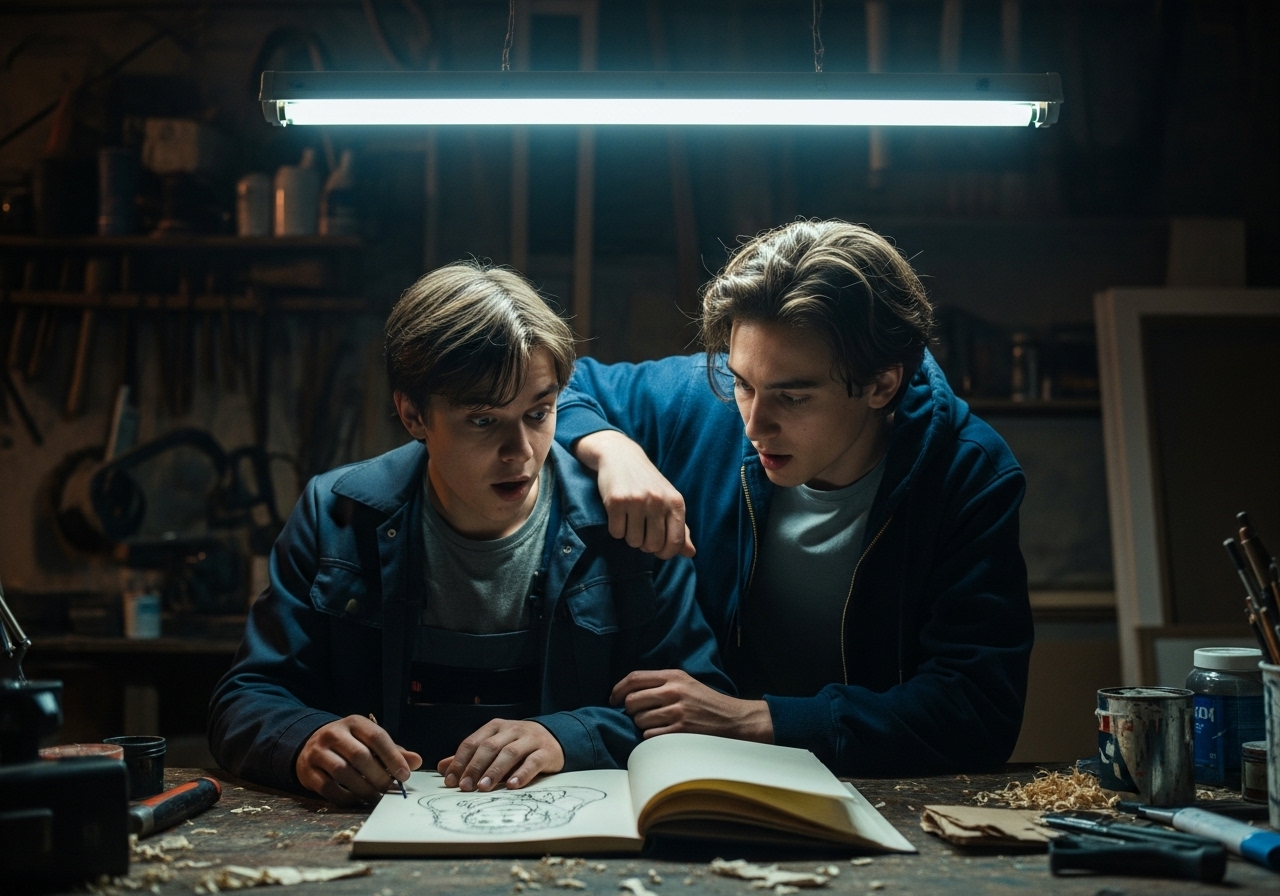
How to stop micro-managing the universe and start making absolute creative chaos in the North.
Have you ever tried to fist-fight a literal blizzard just because your Wi-Fi died mid-upload?
Look, I love you, but you’re actually vibrating with the energy of a damp radiator and it’s not the vibe. You are currently spiraling because some faceless algorithm or some prehistoric arts council in a city you can’t even afford to visit didn’t give you a gold star. It’s giving “I need external validation to breathe,” and we are so past that. We live in the North, bestie. Half our lives are dictated by things that do not care about our feelings, like blackflies, black ice, and the fact that the only decent art supply store is an eight-hour drive away. You cannot control the weather, the economy, or whether that one local gatekeeper thinks your neon-knit cryptid sculptures are “too much.”
Stop trying to micro-manage the universe. It’s exhausted and so are you. When you spend all your battery power worrying about whether people are going to “get” your work or if the grant money will finally hit, you’re basically just paying rent for a haunted house in your own head. Why are we like this? We’ve been conditioned to think that if we aren’t perfectly optimizing every second of our creative output, we’re failing. But newsflash: failing is literally the only way to find out what kind of weirdo you actually are. Make the ugly painting. Write the song that sounds like a lawnmower dying. If it doesn’t land, who cares? The trees aren’t judging you.
There is a specific kind of freedom in just being absolutely feral when things go south. When the power goes out during your recording session, don’t scream into the void—well, okay, scream once for the plot—but then go draw by candlelight. Use the chaos as an ingredient instead of a roadblock. The best things coming out of the rural arts scene right now aren’t the polished, “perfect” pieces; they’re the ones that feel like they were made by someone who finally stopped caring if they looked sane. We are living in a time where everything feels like a simulation anyway, so why are you treating your career like it’s a high-stakes surgery?
You need to embrace the “it is what it is” lifestyle before your nervous system actually catches fire. You’re allowed to just exist without being a “success” every five minutes. The arts sector here is small enough that we can actually afford to be weird without being canceled by a million strangers. Let the stuff you can’t change just slide off you like rain on a cheap tarp. Focus on the messy, stupid, joyful stuff you can actually touch. If the world is ending, I want to be the person who spent their last hour making a really impressive fort out of old gallery flyers, not the one checking their email for a rejection letter.
Thoughts on art and the state of the world!
These fragments trace the rhizomatic flow of thought through art, life, and place — scattered impressions from studio corners, fleeting ideas scrawled in notebooks, whispered exchanges at galleries, and observations picked up on quiet northern roads. Some fragments linger on technique, intuition, and doubt; others drift through community, culture, and the subtle poetry of everyday moments. They offer no conclusions, only openings, inviting readers to follow connections wherever they emerge.
Wandering laterally between process, memory, and environment, these pieces map associations across creativity, identity, and belonging. They intersect with humor, failure, resilience, and collaboration, and trace the ways artistic thinking seeps into gardens, small-town rhythms, friendships, and civic life across Manitoba and Northwestern Ontario — and further afield. Each thought functions as a node, part of a living network of reflection, expanding and branching with possibility.
Discover more associative fragments, conceptual wanderings, and artful reflections on our thoughts page.