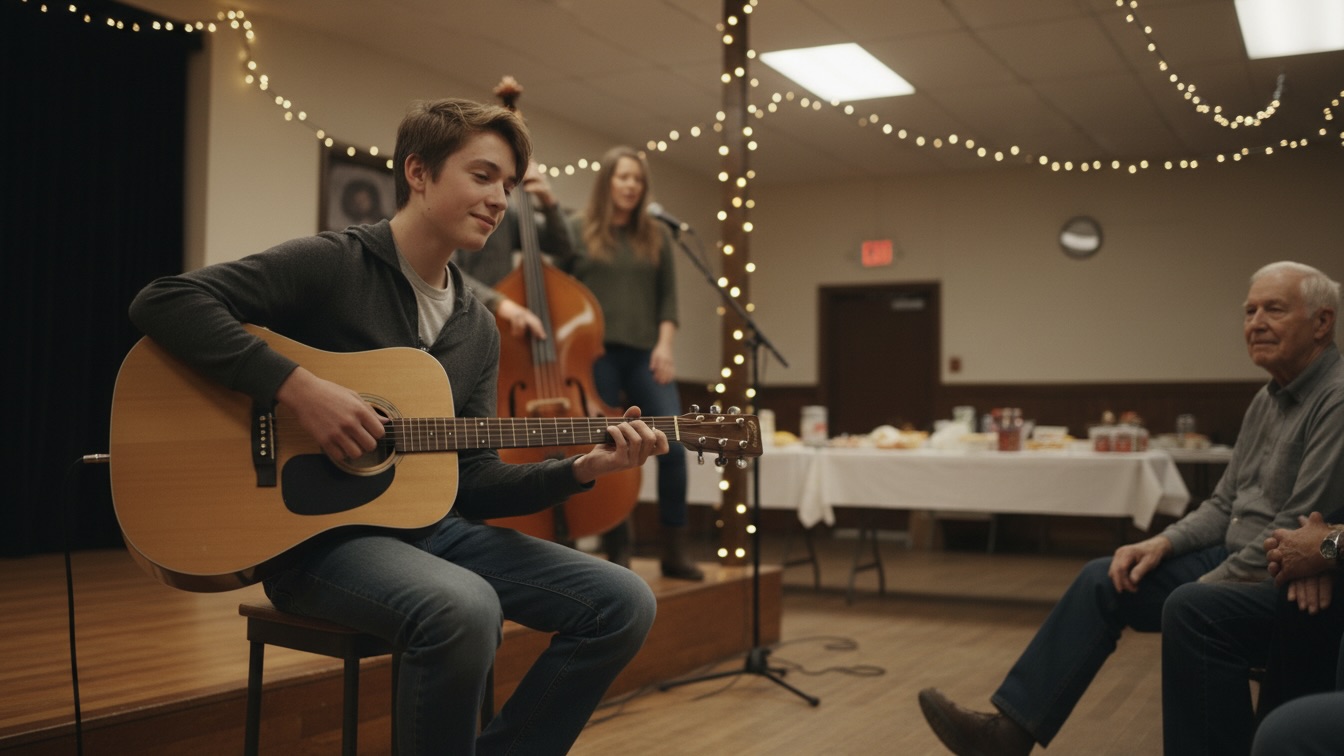
Why building your own art scene in the North is the ultimate act of defiance.
Why are you still asking for permission to exist from a board of directors in another time zone? Is their validation really the only thing that makes your work real?
Most of the arts funding world is obsessed with “scalability” and “market reach,” terms that sound like a bunch of suits trying to sell you a subscription to your own life. When you live in rural Northwestern Ontario, your scale is different. It is measured in the miles between towns and the sheer stubbornness it takes to keep a gallery space open when the heat bill is more than the rent. We get stuck in this loop of feeling like we are “just” local or “just” a tiny collective. That is a trap. It is a way of making us feel small so we do not realize how much power we actually have when we stop asking for permission.
Dignity is not something someone gives you in a PDF acceptance letter. It is something you claim when you decide that your weird little zine project or your basement show matters as much as anything happening in a glass tower down south. Resilience in the North is not just surviving the winter; it is refusing to let your creative pulse go dormant when the infrastructure fails you. If the system will not build you a stage, you drag some plywood out to the bush and build your own. That is not just “making do.” That is a refusal to be invisible.
Let us get real about the mental load of this. When you are trying to build something out of nothing, your brain starts throwing “Not Enough” slogans at you like bad graffiti. Acceptance and Commitment Therapy has this great concept called “cognitive defusion.” Basically, instead of believing the thought “I am a failure because this show only had six people,” you look at it and say, “I am having the thought that I am a failure.” It creates space. It stops the thought from being your identity. You are not the failure; you are the person brave enough to host a show in a town where people think art is something that only happens on television.
Here is a tiny exercise for your collective this week: The Patchwork Network. Instead of looking for a “big break,” find one other person in a neighboring town—Dryden, Fort Frances, wherever—and trade one resource. A set of brushes for a stack of flyers. A couch to sleep on for a workshop space. We do not need a savior; we need each other. Community is not a buzzword when you are three hours away from the nearest art supply store. It is a survival strategy.
You are allowed to be tired. You are allowed to be pissed off that the funding does not reach the 807 area code like it should. But do not let that anger turn into apathy. Use it as fuel to keep the lights on for the next person who thinks they are the only artist in the woods. Being kind to yourself means acknowledging that what you are doing is hard, and being kind to your collective means showing up even when the vibe is messy. We are building a culture that actually breathes. That is worth the struggle.
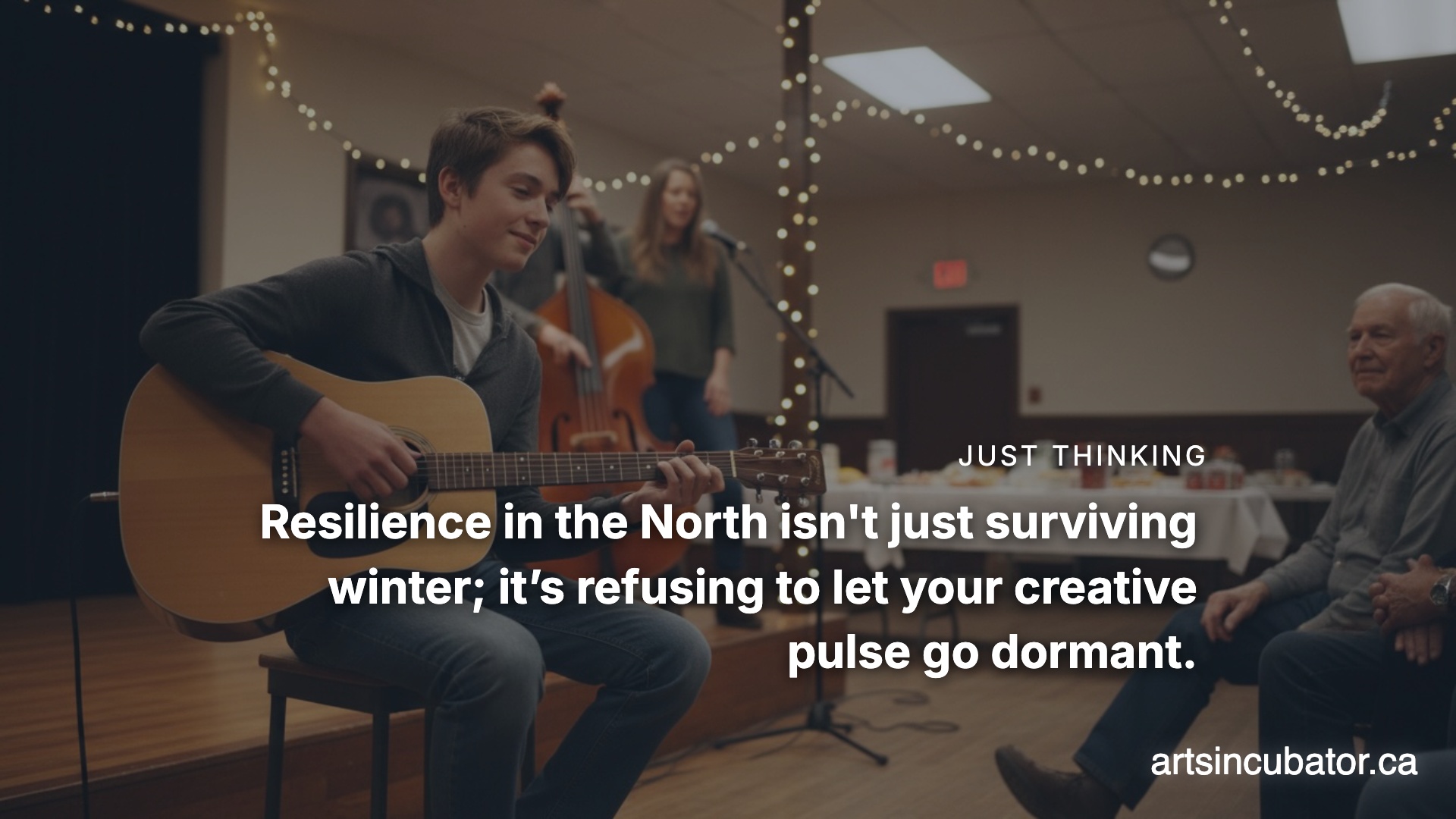
Thoughts on art and the state of the world!
These fragments trace the rhizomatic flow of thought through art, life, and place — scattered impressions from studio corners, fleeting ideas scrawled in notebooks, whispered exchanges at galleries, and observations picked up on quiet northern roads. Some fragments linger on technique, intuition, and doubt; others drift through community, culture, and the subtle poetry of everyday moments. They offer no conclusions, only openings, inviting readers to follow connections wherever they emerge.
Wandering laterally between process, memory, and environment, these pieces map associations across creativity, identity, and belonging. They intersect with humor, failure, resilience, and collaboration, and trace the ways artistic thinking seeps into gardens, small-town rhythms, friendships, and civic life across Manitoba and Northwestern Ontario — and further afield. Each thought functions as a node, part of a living network of reflection, expanding and branching with possibility.
Discover more associative fragments, conceptual wanderings, and artful reflections on our thoughts page.


