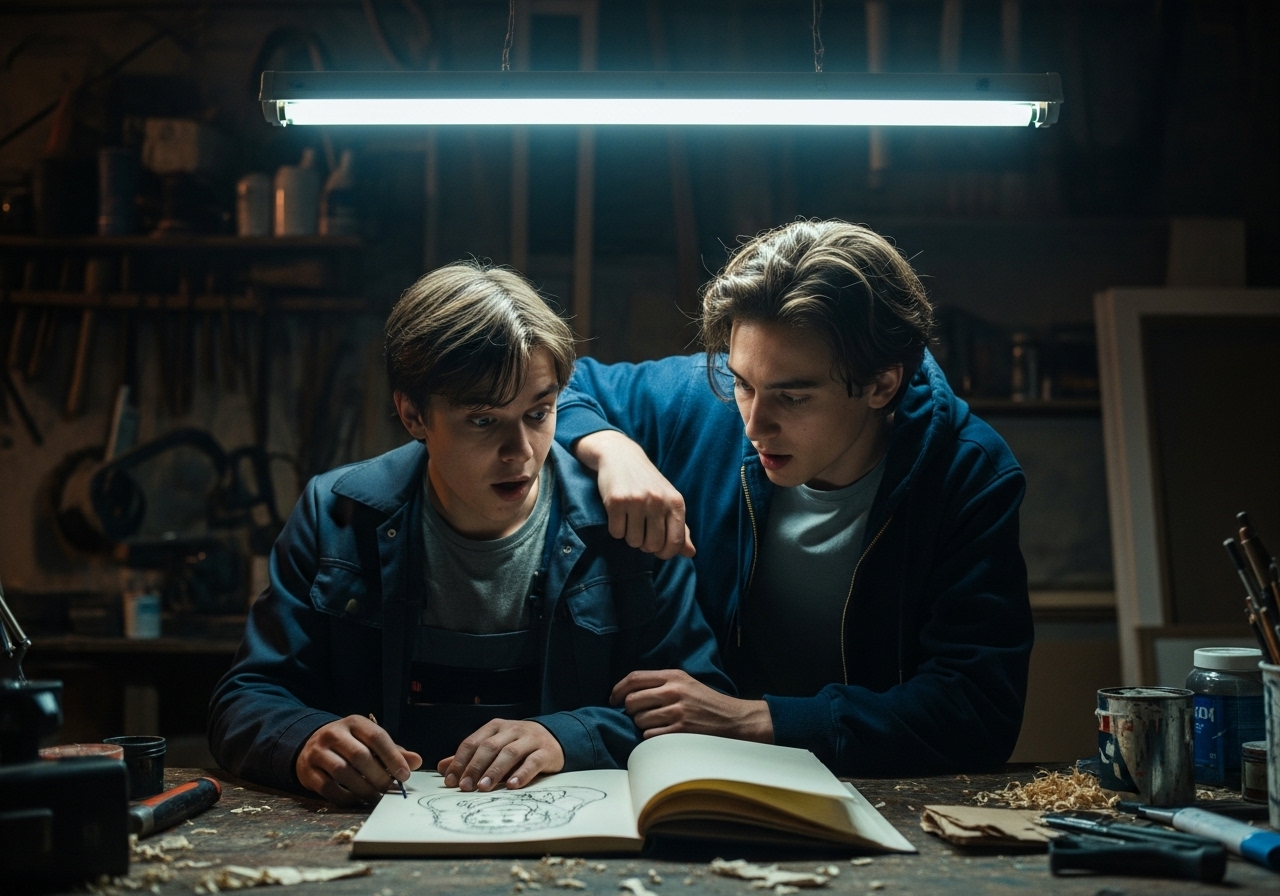
Understanding the resilience of Canadian society through the lens of memory and shared artistic legacy.
You are holding a receipt for a life you can no longer afford to renew.
The archival records of our city are being rewritten in real-time by a housing market that treats a roof as a high-yield bond rather than a human right. We are navigating a Canadian society that often feels like a series of polite apologies for a systemic failure we all saw coming. You look south at the headlines of political vertigo and gun violence, feeling a momentary sense of relief that is immediately undercut by the reality of our own grocery aisles and the 30-week wait for a specialist. We are safe, perhaps, but we are also stalled. The ghost of our collective security is haunting the encampments along the riverbanks, where the distance between the middle class and the unhoused has shrunk to the width of a single missed paycheck.
Memory behaves differently when the future feels like a subscription service you can no longer afford. You find yourself collecting fragments of Winnipeg that the developers haven’t noticed yet—the way the light hits the graffiti on the underside of the Disraeli Bridge or the specific, stubborn rhythm of a drum circle in Central Park. These are the entries in the ledger that cannot be repossessed. While the U.S. grapples with the loud, sharp trauma of its own divisions, we are wading through a quiet, heavy accumulation of social strain. The opioid crisis is not a data point; it is a fracture in the lineage of families who have been here for generations, a slow-motion erasure that we are trying to stop with nothing but naloxone and raw, exhausted kindness.
Art is the only archive that does not demand a credit check or a permanent address. In the basements of the Exchange District, you see the next generation of Indigenous creators weaving historical truths into digital terrains, refusing to let the past be buried under the weight of new condos. This is the work of keeping the soul of Canadian society from going into foreclosure. We are building a healthy arts sector by documenting the specific, local ache of being alive in a time of widening inequality. It is a rhizomatic resistance, spreading underground through zines, shared studio spaces, and the radical act of remembering who we were before the cost of living became a full-time job.
There is a dignity in being the one who remembers. You do not need to be a productive unit of the economy to have a legacy; you just need to be a witness to the ways we are still showing up for one another. When the official systems are overloaded and the wait times are long enough to change your entire personality, we turn to the nonlinear networks of mutual aid. We are the architects of a sanctuary made of memory and shared struggle. In a world that is obsessed with output and efficiency, your refusal to forget the human cost of these “unprecedented times” is the most significant thing you will ever produce.
We are living through a historical pivot point where the old safety nets have been replaced by the strength of the person standing next to you. Our winters are long, and our politics can be frustratingly cautious, but the resilience we are forging in the gaps of the system is real. Keep your records. Keep your stories. The ledger of things that truly matter is held in the hands of the people who stayed when everything else became too expensive to keep. We are not just surviving a crisis; we are curating a future that actually has room for us.
Thoughts on art and the state of the world!
These fragments trace the rhizomatic flow of thought through art, life, and place — scattered impressions from studio corners, fleeting ideas scrawled in notebooks, whispered exchanges at galleries, and observations picked up on quiet northern roads. Some fragments linger on technique, intuition, and doubt; others drift through community, culture, and the subtle poetry of everyday moments. They offer no conclusions, only openings, inviting readers to follow connections wherever they emerge.
Wandering laterally between process, memory, and environment, these pieces map associations across creativity, identity, and belonging. They intersect with humor, failure, resilience, and collaboration, and trace the ways artistic thinking seeps into gardens, small-town rhythms, friendships, and civic life across Manitoba and Northwestern Ontario — and further afield. Each thought functions as a node, part of a living network of reflection, expanding and branching with possibility.
Discover more associative fragments, conceptual wanderings, and artful reflections on our thoughts page.


