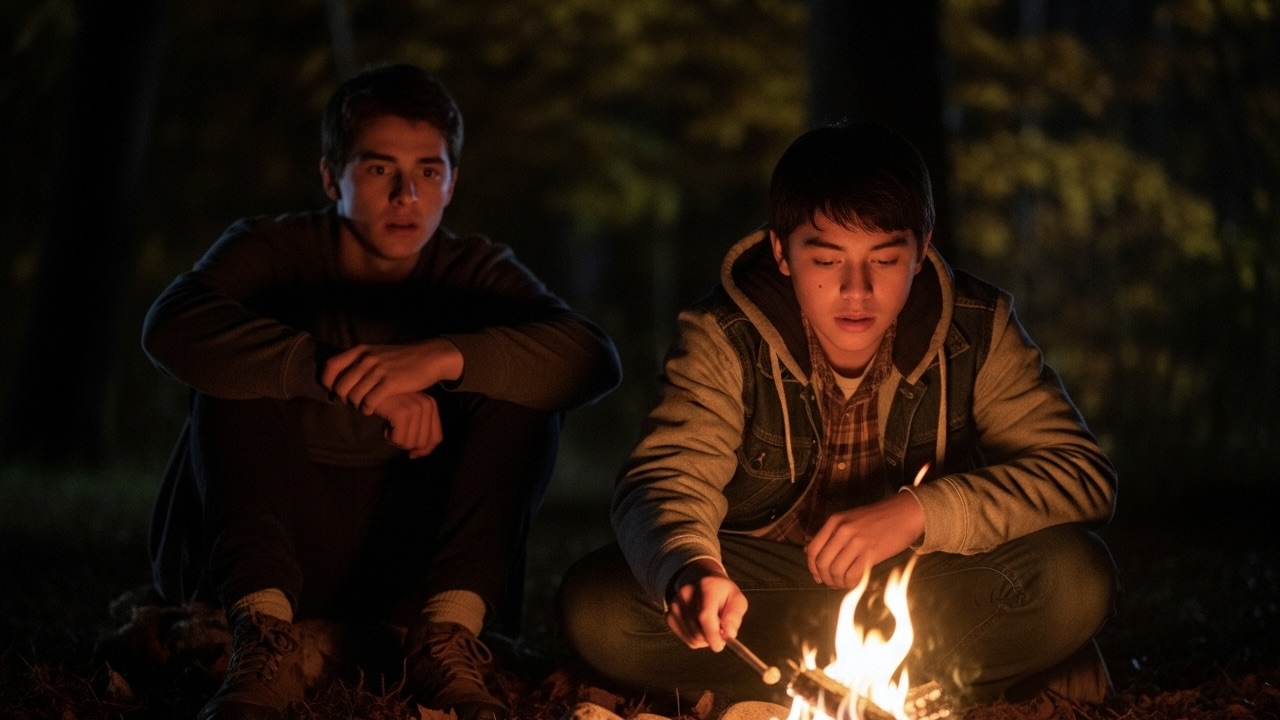
Navigating Winnipeg’s housing crisis through radical creativity and finding signal in the economic noise.
Why are we still waiting for a permission slip to exist in our own city?
The signal is breaking. You feel the frequency shift every time the rent portal updates or the grocery receipt stretches past your knees. It is a high-pitched whine in the ears of every twenty-two-year-old in Winnipeg, a feedback loop of “not enough” and “try harder.” We talk about the housing crisis like it’s a weather pattern, something inevitable drifting in from the south or the coast, but it’s actually a mechanical failure. The gears are grinding. The cost of living isn’t just a number; it’s a layer of white noise that makes it impossible to hear your own creative impulses. You try to paint, but the price of a tube of cadmium red feels like a betrayal of your grocery budget. It is a glitch in the dream of the middle class. You see it in the eyes of the people on the 11 bus—the same frequency of exhaustion.
This is where the static becomes the medium. When the traditional structures—the galleries, the leases, the career paths—start to flicker and glitch, you have to learn to play the interference. In our city, the arts sector has always been a bit jagged, a bit DIY, out of necessity. But now, it’s about survival. You aren’t just making “art” in the classical sense; you are circuit-bending the economy. You are turning a shared apartment into a micro-venue because the rent is a monster that needs to be fed by community, not just a paycheck. You are finding the signal in the gaps between the skyscrapers and the surface lots. Art isn’t just a painting on a wall; it’s the way we rewire our social circuits. It’s the community fridge that looks like a sculpture; it’s the zine that teaches you how to navigate the Landlord and Tenant Board.
Connection is a low-frequency hum that bypasses the noise of the market. There is a specific kind of dignity in refusing to be silenced by the sheer volume of the struggle. When you collaborate, when you share a studio space in an old Exchange District warehouse that probably hasn’t seen a renovation since the nineties, you are creating a localized network of resistance. It’s not about “fixing” the global economy—that’s a different broadcast entirely. It’s about ensuring that the person standing next to you doesn’t get lost in the snow or the spreadsheets. We build these small, glitchy nodes of care because the main grid has forgotten how to power us. This is the industrial grit of the North—a refusal to let the signal die out.
Art in 2026 isn’t a luxury; it’s a diagnostic tool. It allows you to see the wires. By documenting the absurdity of a three-hundred-square-foot box costing a fortune, or the way the grocery store feels like a casino where the house always wins, you strip the power away from the “inevitability” of it all. You are making the invisible visible. It’s a rhythmic, industrial pulse—the sound of a generation refusing to be a background hum. We are the distortion that proves the system is failing, and in that distortion, there is a weird, beautiful clarity.
Don’t look for a clean resolution. The noise isn’t going away tonight, and the rent isn’t dropping by Tuesday. But you can change the frequency. You can take the scraps of this broken signal and loop them until they become a rhythm you can dance to. Survival in Winnipeg has always been about leaning into the friction. Use the static. Make it loud. Make it impossible to ignore that we are still here, building something meaningful out of the interference.
Oh, Canada.
These fragments drift along the rhizomatic currents of thought, skimming art, life, and place — glimpses from shadowed studio corners, half-formed ideas muttering in margins, murmured exchanges in quiet galleries, and impressions gathered from northern roads where silence bends the light. Some fragments linger on gesture, intuition, and uncertainty; others move through community, culture, and the ephemeral music of everyday patterns. They draw no conclusions, only openings, inviting readers to wander along the tangled networks they trace.
Wandering sideways through process, memory, and atmosphere, these pieces map intersections of creativity, identity, and belonging. Humor, failure, resilience, and collaboration pulse through them, along with the subtle seep of artistic thought into gardens, small-town rhythms, friendships, and civic life across Manitoba and Northwestern Ontario — and beyond. Each fragment acts as a node, part of an expanding, branching lattice of reflection, where meaning emerges in motion rather than resolution.
Explore more associative fragments, drifting concepts, and artful wanderings on our thoughts page.


