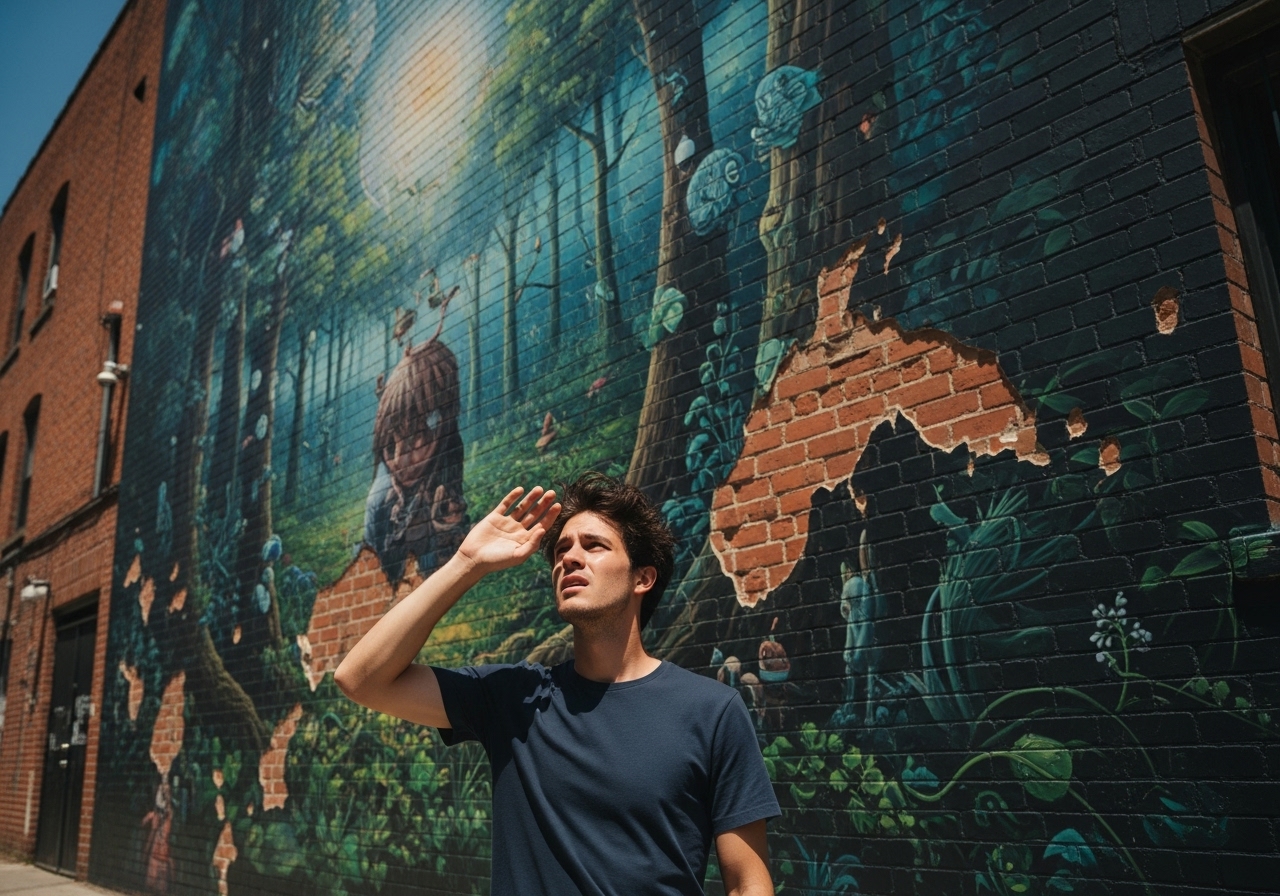
Finding community resilience within the breakdown of civic trust and digital disruption in 2026.
Why are you still trying to be a clean-cut data point in a world that is clearly composting?
The algorithms are exhausted from trying to categorize our collective breakdown into neat little engagement buckets. You feel the civic trust eroding like topsoil in a flash flood, leaving nothing but the jagged rocks of polarization and the cold, hard reality of institutional neglect. We have been told that trust is something built in marble buildings, but in 2026, those buildings feel like hollowed-out stumps. Instead of mourning the death of the old systems, we need to look at what is growing in the damp, dark corners of the basement venues and community fridges. The civic trust we are looking for is not going to be handed down via a press release; it is being fermented in the shared spaces where we admit we are all a little bit cooked.
Think about the way a forest floor actually works—it is not a hierarchy, it is a chaotic, nutrient-dense tangle of dependencies. In Winnipeg, our social cohesion is essentially mycelial. When the transit system fails or the latest digital disruption makes another freelance gig obsolete, you do not look to the sky for a savior; you reach out sideways. You find your resilience in the messy, unglamorous work of being a neighbor. It is the shared tools, the signal-boosting of a friend’s art show, and the quiet understanding that we are all part of the same decomposing economic structure. We are the fungi breaking down the logs of the old world to make room for something stranger and more resilient.
Art is the fruiting body of this underground network. It is the mushroom that pops up overnight after a heavy rain of bad news, signaling that life is still happening beneath the surface. When you create something—whether it is a zine about the death of the internet or a sculpture made of e-waste—you are participating in a massive act of collective digestion. You are taking the misinformation and the isolation and turning them into something tangible that people can actually touch and talk about. This is not about saving the community; it is about acknowledging that the community is a living, breathing, rotting organism that requires our attention and our debris.
We need to stop fearing the decay of the status quo and start embracing the fertility of the breakdown. There is a specific kind of dignity in being feral, in refusing to be a polished product for a platform that does not care if you eat today. Your mental health is not a private garden you have to weed until it looks perfect; it is a patch of wild earth that needs variety, shadow, and a lot of organic matter. Connect with the people who make you feel like a person rather than a user. Share your resources, lean into the entanglement, and let the old, rigid hierarchies rot away. We are building something horizontal and hardy in the shadow of the giants.
The future of the Winnipeg arts scene is not in a shiny new gallery—it is in the cracks of the sidewalk. It is in the ways we support each other when the heating bill is too high and the creative energy is low. We are the roots that hold the soil together when the weather turns severe. Do not look for a tidy resolution or a five-step plan for social cohesion. Just keep growing, keep tangling, and keep feeding the network. The light might be dim, but the soil is rich, and we are exactly where we need to be to outlast the storm.
Oh, Canada.
These fragments drift along the rhizomatic currents of thought, skimming art, life, and place — glimpses from shadowed studio corners, half-formed ideas muttering in margins, murmured exchanges in quiet galleries, and impressions gathered from northern roads where silence bends the light. Some fragments linger on gesture, intuition, and uncertainty; others move through community, culture, and the ephemeral music of everyday patterns. They draw no conclusions, only openings, inviting readers to wander along the tangled networks they trace.
Wandering sideways through process, memory, and atmosphere, these pieces map intersections of creativity, identity, and belonging. Humor, failure, resilience, and collaboration pulse through them, along with the subtle seep of artistic thought into gardens, small-town rhythms, friendships, and civic life across Manitoba and Northwestern Ontario — and beyond. Each fragment acts as a node, part of an expanding, branching lattice of reflection, where meaning emerges in motion rather than resolution.
Explore more associative fragments, drifting concepts, and artful wanderings on our thoughts page.