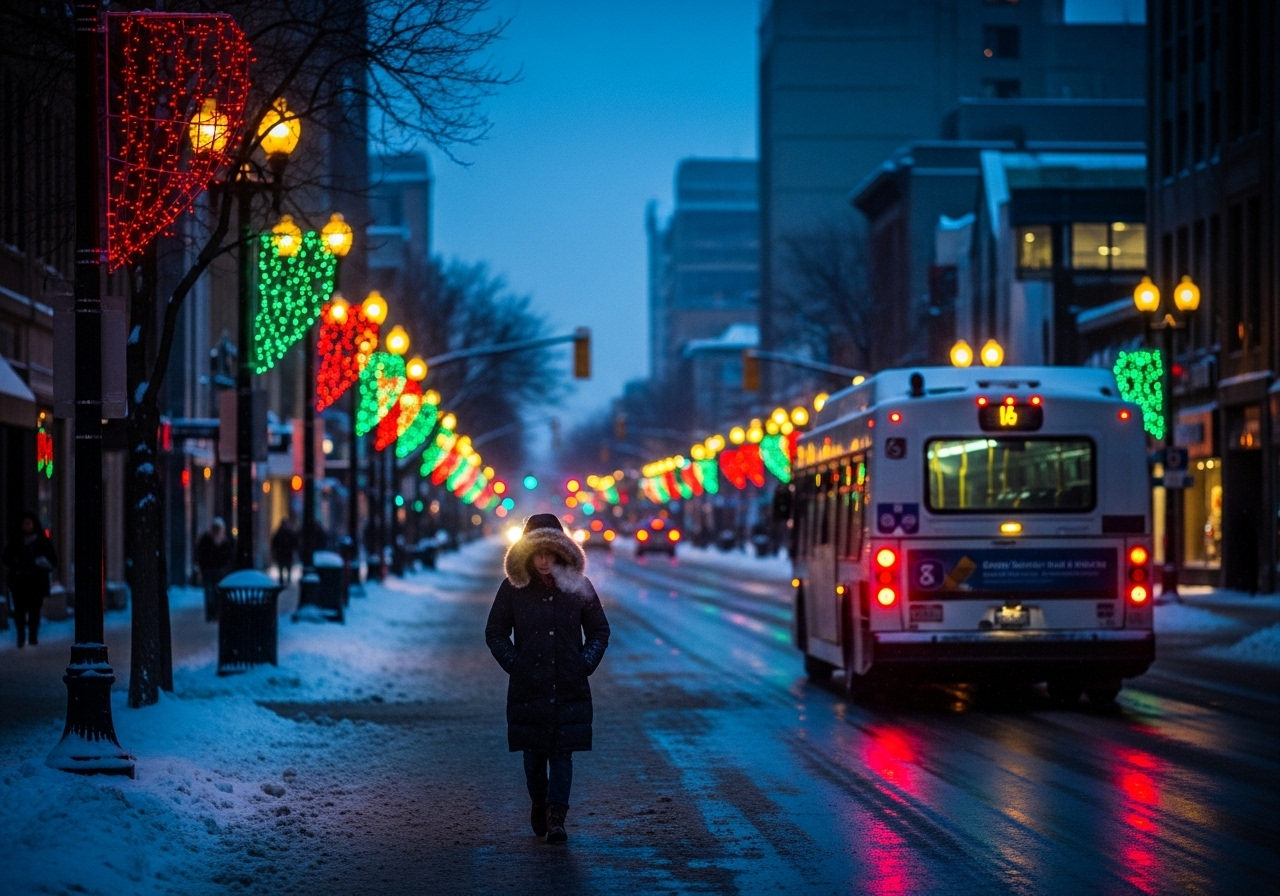
When the rent is a predator, our survival depends on becoming a hive.
You stare at the lease renewal like it is an invasive species colonizing your inbox. The numbers on the screen simply refuse to metabolize into anything survivable.
We are living in a calcified city. The structures meant to hold us—apartments, mortgages, zoning laws—have hardened into something brittle and sharp. In Winnipeg right now, “home” feels less like a sanctuary and more like a temporary shell we are constantly outgrowing or being forced out of. You feel the precariousness in your chest, that shallow breathing of an animal realizing its burrow is collapsing. The security we were promised is dissolving, leaving us exposed to the elements of a market that treats shelter like a speculative asset rather than a biological necessity. It is a harsh, inorganic reality.
But look at how nature handles a lack of shelter. It doesn’t build a fortress; it weaves a nest. It grafts itself onto the nearest sturdy thing and hangs on. When the walls of your apartment feel thin, the connections between us have to get thick. This is the ecology of the unsettled. We are learning that stability doesn’t come from a deed or a contract, but from the sticky, messy web of favors and shared meals that keeps us suspended above the void. If you can’t pay the rent alone, you don’t retreat; you aggregate. You become a colony. The single cell dies, but the cluster survives the winter.
Art is the secretion that binds this cluster together. It is the silk we spin to bridge the gaps between these fractured living situations. When you host a pop-up gallery in a living room that might be empty next month, or paint a mural on a building slated for demolition, you are claiming space in a habitat that is trying to reject you. You are acting like lichen on a rock—slow, persistent, and capable of thriving on the very surface that is hostile to you. We are not just making “content”; we are secreting the enzyme that softens the concrete. We are digesting the hardness of the city and turning it into something habitable.
Stop trying to become a homeowner in a system designed for landlords. Start becoming a symbiotic organism. The anxiety you feel is the result of trying to be a solitary predator in an ecosystem that requires cooperation. Look at the people around you—the ones sharing Wi-Fi passwords, the ones trading clothes, the ones watching each other’s kids. That is the true architecture of 2026. It is porous, it is leaking, and it is alive. The brittle connections of the old world are snapping, yes, but the wet, biological networks we are weaving in their place are elastic. They stretch when the pressure hits.
So, when the landlord raises the rent again, do not just panic. Reach out. Graft your life onto someone else’s. We are building a reef out of our own fragility, layer by layer, until the waves can’t wash us away. The security you want isn’t in the walls; it’s in the weave.
Oh, Canada.
These fragments drift along the rhizomatic currents of thought, skimming art, life, and place — glimpses from shadowed studio corners, half-formed ideas muttering in margins, murmured exchanges in quiet galleries, and impressions gathered from northern roads where silence bends the light. Some fragments linger on gesture, intuition, and uncertainty; others move through community, culture, and the ephemeral music of everyday patterns. They draw no conclusions, only openings, inviting readers to wander along the tangled networks they trace.
Wandering sideways through process, memory, and atmosphere, these pieces map intersections of creativity, identity, and belonging. Humor, failure, resilience, and collaboration pulse through them, along with the subtle seep of artistic thought into gardens, small-town rhythms, friendships, and civic life across Manitoba and Northwestern Ontario — and beyond. Each fragment acts as a node, part of an expanding, branching lattice of reflection, where meaning emerges in motion rather than resolution.
Explore more associative fragments, drifting concepts, and artful wanderings on our thoughts page.