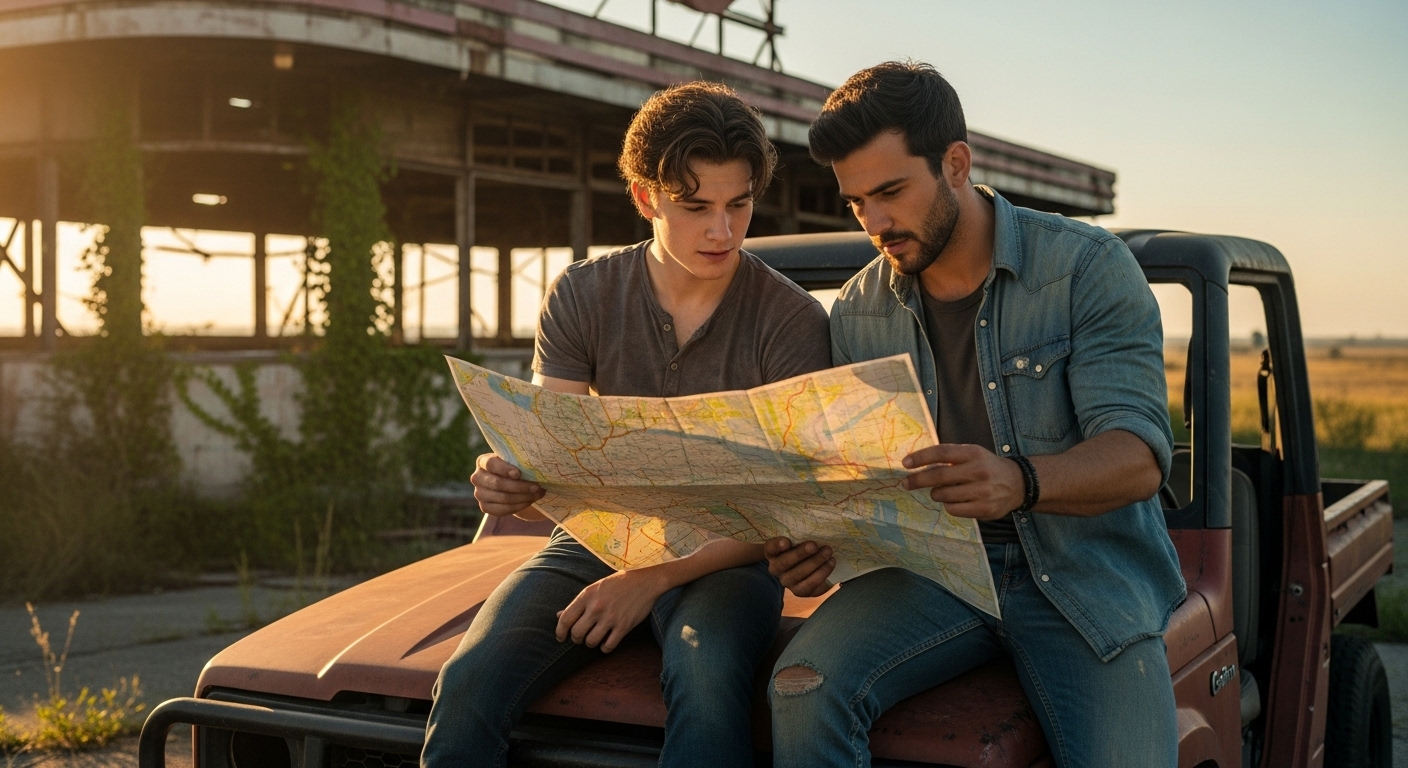
Breaking the urban-rural divide through the messy, unpolished process of collective creation.
Why are you treating the city limits like a firewall against the rest of the province? It is a dangerous kind of elitism that only leads to creative stagnation.
You spend your time in the Exchange District trying to make metropolitan art while ignoring the literal dirt under your fingernails that connects you to the Pembina Valley. We have developed this intensely brittle urban-rural friction where the city is a brand and the country is a caricature. You see the polarization in the way we talk about transit versus tractors, or how funding for an Indigenous-led sculpture garden gets debated in a language that feels like it was translated from a different planet. It is a messy, unkneaded lump of social clay. We are letting political maps dictate where our empathy stops, acting like a gravel road is a barrier to a shared human experience. Our provincial identity is currently sitting on the wheel, wobbly and off-center.
The arts sector in Winnipeg is currently a kiln that is running too hot on one side and too cold on the other. You see the public art calls that only cater to the urban core, while the incredible creative work happening in small towns is treated like a quaint hobby rather than a radical act of survival. This divide is where the polarization really hardens. When we stop exchanging stories across the Perimeter Highway, we lose the texture of our collective identity. You are basically trying to glaze a pot before you have even centered it. We need that friction between the metropolitan center and the northern communities to actually create something with structural integrity. The gaps in the system are just air bubbles waiting to make the whole piece explode under pressure.
Think about the way a community-led music festival in a small prairie town creates a space for civic engagement that a sterile gallery opening never could. It is the raw, unpolished energy of people coming together to fix a broken PA system that actually bridges the political gap. You realize that the economic pressures hitting the family farm are the same ones making your studio rent impossible to pay. This is the cross-pollination we need. Our creative expression should be a vessel that holds both the skyscraper and the grain elevator without flinching. It is about realizing that the other is just another person trying to make something out of the mud. The shared struggle of keeping the lights on is the strongest slip we have to bind these pieces together.
We are currently carving out our identities in a way that leaves too much scrap on the floor. Systemic racism and gaps in policy efficacy do not stop at the city limits; they are baked into the very soil of the province. Your work as a creator is to find the seams where these two worlds touch and rub them until they blister. Use the ugly parts of the process. Use the mistakes. A healthy arts sector is one where the urban artist and the rural maker are sharing tools and techniques, refusing to let partisan rhetoric define their worth. We are all archives of a shared geography, carrying the weight of the same horizon regardless of the height of the buildings around us.
Stop looking for a smooth finish on a society that is still being formed. The most interesting pieces are the ones where you can still see the thumbprints and the cracks. We are building a network of makers who understand that our resilience is tied to our proximity to each other, regardless of our postal codes. The future of this province is not going to be found in a trade agreement or a sanitized policy paper; it is going to be fired in the collective kiln of our shared creativity. Keep your hands messy and your heart open to the stories that come from the places you usually drive past without stopping. Centering is a physical act, not just a metaphor.
Thoughts on art and the state of the world!
These fragments trace the rhizomatic flow of thought through art, life, and place — scattered impressions from studio corners, fleeting ideas scrawled in notebooks, whispered exchanges at galleries, and observations picked up on quiet northern roads. Some fragments linger on technique, intuition, and doubt; others drift through community, culture, and the subtle poetry of everyday moments. They offer no conclusions, only openings, inviting readers to follow connections wherever they emerge.
Wandering laterally between process, memory, and environment, these pieces map associations across creativity, identity, and belonging. They intersect with humor, failure, resilience, and collaboration, and trace the ways artistic thinking seeps into gardens, small-town rhythms, friendships, and civic life across Manitoba and Northwestern Ontario — and further afield. Each thought functions as a node, part of a living network of reflection, expanding and branching with possibility.
Discover more associative fragments, conceptual wanderings, and artful reflections on our thoughts page.