Navigating the 2026 music industry without selling your soul to the algorithm.
Why do we keep measuring our cultural worth by how much we contribute to the national GDP?
The suits at the top are popping champagne because recorded music revenue hit some arbitrary milestone, but you’re still counting coins for a bus ride to a rehearsal space that smells like damp drywall. They talk about a stable international market while the independent venues on Main Street are literally shaking with the stress of staying open. If the industry is punching above its weight, why does it feel like our scene is the one taking all the hits? You don’t need a spreadsheet to tell you that the distance between a $660 million revenue stream and your rent-controlled apartment is a canyon that no amount of emerging talent buzz can bridge.
We are told to be grateful for the Canada Music Fund top-ups, yet the actual infrastructure of our lives feels like it’s being held together by duct tape and spite. The Online Streaming Act is a boardroom brawl that feels lightyears away from the reality of a basement show where the floorboards are sweating. You are not a data point in an Ontario-centric ecosystem; you are a living, breathing person trying to make noise in a city that’s buried in snow half the year. In 2026, the real music industry isn’t found in a Toronto office tower—it’s in the way we share gear because some of us can’t afford the cross-border duties on a new interface.
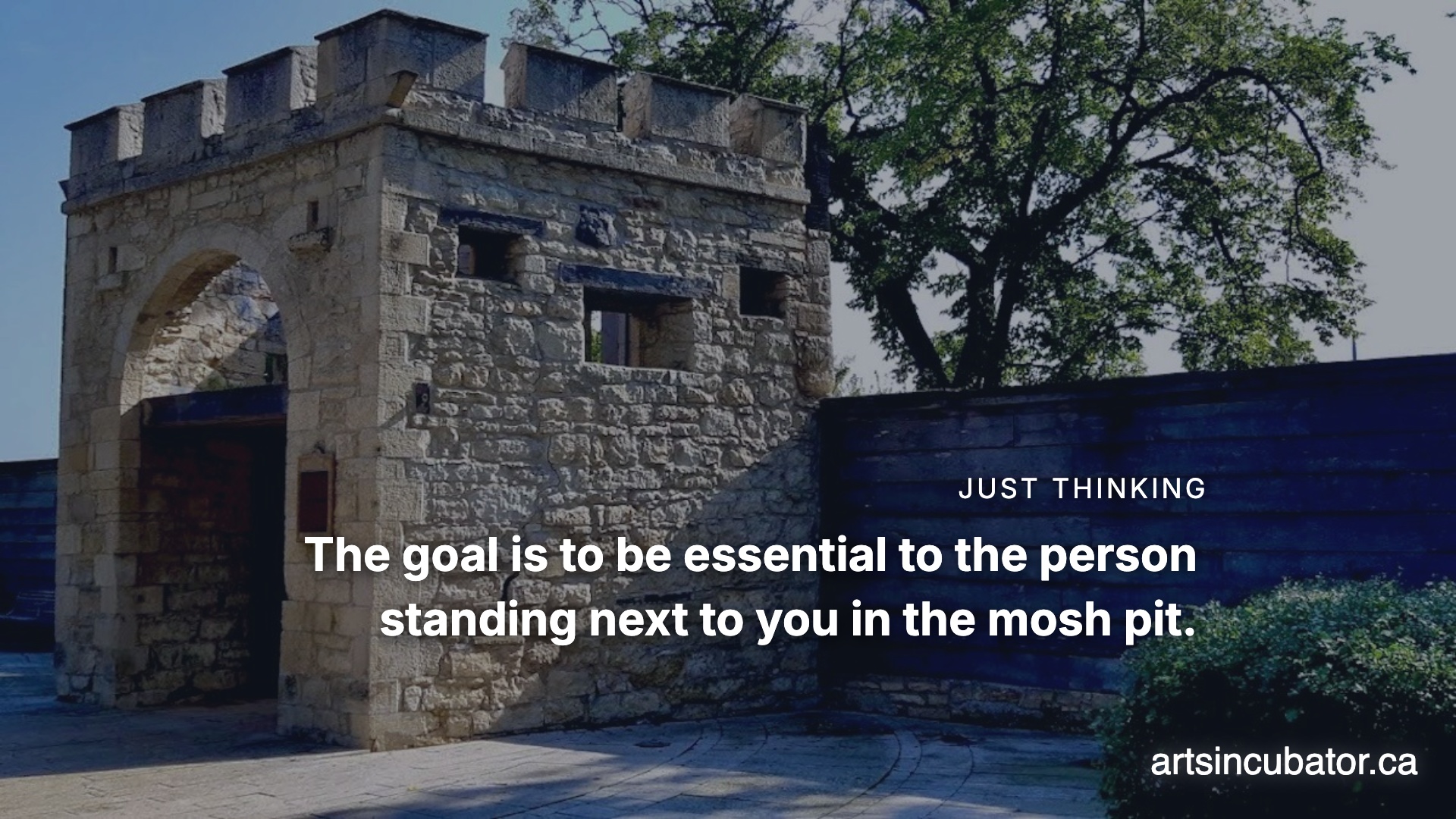
AI is hovering like a vulture, ready to pick the bones of our melodies and sell them back to us as optimized background textures. But a machine can’t replicate the chaos of a power outage during a set at a DIY space or the specific, desperate kindness of a crowd that stays until 2 AM on a Tuesday. We have to be glitches in their system. The goal isn’t to be marketable to a global audience that doesn’t know where the Red River flows; the goal is to be essential to the person standing next to you in the mosh pit. Our survival is a lateral move, a web of mutual aid that bypasses the gatekeepers entirely.
Then there’s the sky, which seems determined to cancel our tours before they even start. Wildfires and floods aren’t just environmental factors in a report; they are the reasons your friends are stranded on a highway or why a festival gets turned into a mud pit. The logistics of being an artist in 2026 are increasingly hostile, yet we keep building these temporary cities of sound anyway. We are learning to be fluid, to adapt to the smoke and the rising costs by shrinking our footprints and expanding our hearts. Dignity isn’t found in a high-profile tour; it’s found in the refusal to let the weather—metaphorical or literal—extinguish the fire we’ve started.
Stop trying to audition for a seat at a table that was built to exclude you. The real power is in the collective we’ve built in the margins, the way we look out for each other when the federal funding gets precarious. We are the frantic builders of a future that doesn’t need permission to exist. Your work is a brick thrown through the window of business as usual. Keep making things that are too loud, too weird, and too local to be easily consumed. We aren’t just contributors to a sector; we are the raw noise of a community that refuses to be quieted by a budget cut.
Thoughts on art and the state of the world!
These fragments trace the rhizomatic flow of thought through art, life, and place — scattered impressions from studio corners, fleeting ideas scrawled in notebooks, whispered exchanges at galleries, and observations picked up on quiet northern roads. Some fragments linger on technique, intuition, and doubt; others drift through community, culture, and the subtle poetry of everyday moments. They offer no conclusions, only openings, inviting readers to follow connections wherever they emerge.
Wandering laterally between process, memory, and environment, these pieces map associations across creativity, identity, and belonging. They intersect with humor, failure, resilience, and collaboration, and trace the ways artistic thinking seeps into gardens, small-town rhythms, friendships, and civic life across Manitoba and Northwestern Ontario — and further afield. Each thought functions as a node, part of a living network of reflection, expanding and branching with possibility.
Discover more associative fragments, conceptual wanderings, and artful reflections on our thoughts page.