Rewriting the Boundary Between Digital Escapism and Forest Reality
Underneath the moss at Borups Corners, silence does not actually exist; it merely waits for the hum of modern machinery to finally run out of batteries. We spend our lives curated in pixels, chasing signals that bounce off satellites, forgetting that the ground under our boots has its own frequency. When a battery dies in the bush, the world does not go quiet—it suddenly speaks with a deafening clarity that no network can replicate.
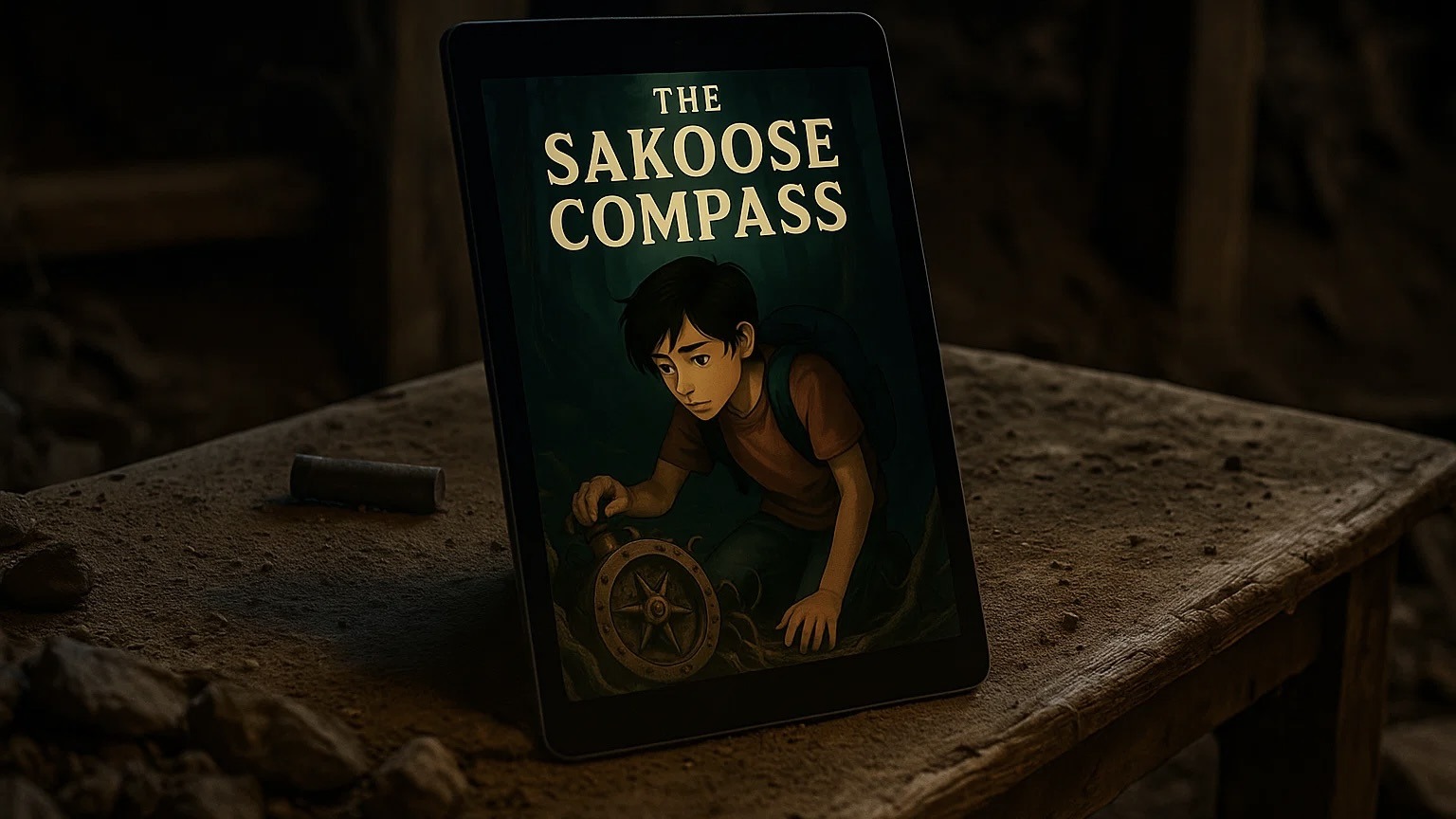
The Sakoose Compass project, birthed from the collaborative spirit of Northwestern Ontario and Manitoba storytelling clubs, offers more than a simple cautionary tale about screen time. It positions the geographic remnants of our industrial past, specifically the quiet shafts of the old Sakoose Mine, as active participants in contemporary youth development. What if these historic sites are not merely relics to be archived, but active stages where the next generation must find its grounding? This is the core question that begs for deeper contemplation as we look toward the future of regional Canadian publishing.
There is a distinct colour to the air in Northwestern Ontario during the height of summer, a heavy, pine-scented warmth that clings to your skin and refuses to be digitized. For a young person raised in the sterile glow of high-definition displays, this physical atmosphere can initially feel like a hostile environment rather than a sanctuary. The transition from virtual achievement to physical navigation requires a profound shift in how we perceive value and accomplishment.
Watching a young protagonist like Myles struggle with an archaic tool highlights a growing societal disconnect that goes far beyond simple teenage stubbornness. We have built an infrastructure of convenience that systematically divorces us from the tactile feedback of the earth. A compass does not care about your battery life or your cellular reception; it demands that you pay attention to the invisible magnetic currents of the planet itself.
Community-led initiatives like the one executed in the summer of 2025 demonstrate how regional publishing can act as a vital bridge between generations. Through these creative collaborations, older regional artists and youth find a common vocabulary that exists outside of commercial algorithms. The resulting literature becomes a living record of survival, ensuring that local memory does not dissolve into the vast, anonymous soup of the global internet.
Looking ahead, the potential for expanding these regional storytelling hubs could reshape how we approach education and youth mental health across Canada. Imagine a network of local arts programmes that do not merely teach writing, but actively pair creative expression with wilderness navigation and land-based knowledge. Such a curriculum would treat the forest not as an obstacle to overcome, but as a rich, complex library waiting to be translated.
This approach elevates the role of the writer from a simple entertainer to a cultural cartographer. Jamie Bell’s work with the Arts Incubator Winnipeg Hub reminds us that the quiet dignity of growth is often slow, methodical, and deeply tied to the specific dirt under our fingernails. In a culture obsessed with rapid scale and instant validation, this patient focus on localized narratives acts as a quiet, revolutionary stance.
We must also consider the profound impact of supporting Indigenous storytelling capacity within these remote communities. Providing the tools and platforms for regional voices to define their own relationship with the land allows us to move away from paternalistic narratives of the wilderness. These stories reveal a geography that is deeply inhabited, rich with history, and brimming with lessons that are vital for our collective survival in an uncertain future.
The old Sakoose Mine site represents a unique intersection of industrial ambition, ecological reclamation, and cultural memory. It is a physical reminder of what happens when human enterprise departs, leaving the forest to slowly digest the iron and timber left behind. For a teenager wandering these trails, this intersection offers a stark, beautiful lesson in impermanence and resilience.
An Insightful Mid-Point Shift
Shifting our focus from the immediate drama of survival to the long-term future of these storytelling initiatives reveals a larger opportunity. What if the next phase of regional publishing moves beyond the physical page into interactive, community-guided physical installations? We could see a future where trail markers along the old Sakoose Mine site are linked to localized audio recordings, allowing hikers to experience these narratives in the very spaces they depict.
This integration of physical space and local lore could redefine regional tourism, turning casual visitors into active participants in a living cultural archive. Instead of consuming the wilderness as a passive backdrop for recreation, travellers would be invited to engage with the complex layers of human history that define Northwestern Ontario. Such projects would foster a deeper respect for the land while generating sustainable economic support for local creators.
The success of the Melgund community support network and the Ontario Arts Council funding highlights the power of collaborative regional infrastructure. When national, provincial, and local organizations align, they create a resilient ecosystem where quiet stories can find their loud, clear voices. This model of decentralized publishing is essential if we want to preserve the diverse linguistic and cultural nuances of our vast country.
We often talk about digital detoxes as if they are modern luxuries, temporary retreats for the wealthy before they return to the online grind. But true connection to the natural world is not a lifestyle trend; it is a fundamental human requirement that keeps our spirits anchored. Stories like Myles’s adventure remind us that the anxiety of disconnection is quickly replaced by a sharp, vital curiosity when we are forced to look at our surroundings.
As the digital world continues to expand with artificial intelligence and virtual realities, the demand for authentic, dirt-under-the-nails storytelling will only grow. People will crave narratives that smell of wet earth, smell of ancient cedar, and carry the unmistakable weight of lived human experience. The work being done in Winnipeg and Borups Corners is setting the foundation for this cultural reclamation, ensuring we do not lose our way in the static.
This brings us back to the image of the compass itself, a simple needle floating in liquid, pointing obstinately toward a magnetic truth. It is an elegant symbol of what we need in our current cultural moment: an unwavering orientation toward what is real, tangible, and locally grounded. No matter how complex our virtual systems become, they will always rely on physical infrastructure built upon the very earth we tend to ignore.
Future iterations of these storytelling programmes could invite youth to construct their own physical maps of their home territories, blending geographic data with personal memoir. This would empower young people to see themselves as active creators of their local geography, rather than passive consumers of globalized digital maps. It encourages them to mark the places where they felt fear, found peace, or experienced moments of true connection.
Writers like Jamie Bell remind us that the garden is just as important as the writing desk. The quiet patience required to nurture a seed into a plant is the same patience required to develop a deep, resonant story that can withstand the test of time. Cultivating both the land and our local narratives allows us to build a sustainable future where our communities can thrive on their own terms.
Ultimately, the journey beyond the screen is not about abandoning technology, but about putting it in its proper place as a tool rather than a master. When we step into the quiet woods of Northwestern Ontario, we are not leaving the world behind; we are returning to the very source of our collective strength. The Sakoose Compass is just the beginning of a larger movement to reclaim our stories, our land, and our untamed human potential.