Can You Tell Me This Isn't Real
by Jamie Bell
The Blossom Festival's Unveiling
The annual Spring Blossom Festival is in full swing in the conservative town of Bending River. The air is thick with the scent of cherry blossoms and freshly cut grass, a vibrant counterpoint to the quiet, hidden anxieties of Lenny, a teenager navigating his secret feelings for Frank amidst the watchful eyes of the community. They are tasked with decorating the central gazebo, a public duty that offers both thrilling proximity and terrifying exposure.
The air in Bending River didn't just smell sweet; it felt thick, something you could almost chew on. It was heavy with the perfume of a million cherry blossoms all breathing out at once, their petals already surrendering to the breeze, dusting the town square in a layer of pale pink snow. This was the Spring Blossom Festival, an institution so old it predated the town charter. The square itself felt like a heart beating too fast, a frantic, joyful pulse of banjo music from the gazebo, the sharp hiss of onions on a griddle, and the overlapping waves of laughter from people who had known each other their entire lives.
My own hands were a mess. Sticky with cheap craft-store glitter glue, trembling just enough to be annoying. Of course Frank had volunteered us for banner-hanging. It's about community spirit, Lenny, he'd said over the phone this morning, his voice a low vibration that seemed to travel through the receiver and settle deep in my bones. Now, standing here with a cold aluminum ladder digging into my hip, I was seriously questioning his definition of community. It felt less like spirit and more like a town-wide surveillance operation.
Every single person I had ever known, and a few I only knew by reputation, was milling around the square. It was a suffocating level of public.
“Getting lost in the whole banner thing, huh?”
Frank’s voice. Not loud, but it cut through the noise like it was the only sound that mattered. One second I was alone, the next he was a solid presence at my side, casting a long shadow that momentarily blocked the bright afternoon sun. He had a way of moving that was impossibly quiet, of occupying space with a gravity that pulled everything—especially me—into his orbit. He was holding a tangled coil of white fairy lights, the tiny, unlit bulbs looking like a string of captured stars.
I fumbled the bottle of glue, catching it just before it hit the grass. “Uh… just checking the gazebo’s beams or something,” I managed. The words felt like sandpaper in my throat. I couldn't stop my eyes from snagging on the line of his jaw, the slight bump on the bridge of his nose from a long-ago soccer injury, the way his dark hair curled over his ears, just a little too long. He wore it that way on purpose—a small rebellion against the sea of buzz cuts at our school. One of a hundred things about him that felt both dangerous and magnetic.
A low chuckle rumbled in his chest, so quiet I might have imagined it if I hadn't been standing so close. “Yeah, that’s actually super important. Gotta keep the town from collapsing.” He held out one end of the light string. “Here.”
His fingers brushed against mine as I took it. Not even a full second, but it was enough. Heat flooded my palm and shot up my arm. My breath hitched, lodged somewhere behind my ribs. I stared at the plastic-coated wire in my hand, focusing on the copper filaments inside it, willing my knuckles to unclench, praying the sudden inferno blazing across my cheeks wasn't visible from space.
“Let’s start with the south pillar,” I said, my voice tight. “That should get the lights looking decent.”
I was a walking textbook. It was my armor. If I sounded detached, academic, maybe I could convince my body the chaos churning inside me wasn't real.
I could feel him watching me.
“Nice move, Lenny,” Frank said, smooth and casual. He began to unspool the lights with an easy grace I envied. “We wouldn’t want any part of the festival looking half-baked.” He glanced at me, quick and direct. His eyes—dark coffee brown—held mine for a second, and the world tilted. A stupid gasp slipped out of me.
We fell into a strange, tense rhythm. I fed the line, my gaze obsessively fixed on the carved wooden details of the gazebo posts. Frank climbed the ladder with an easy confidence that made my stomach turn. He moved like he was born comfortable in his own skin—a concept utterly alien to me.
His jeans were faded, dusted with sawdust that smelled like pine. When he reached for a higher beam, his grey t-shirt pulled taut across his back. I ground my teeth and forced myself to look down at the grass, at a line of ants marching toward a dropped piece of popcorn. I could handle ants.
“Give me a little slack,” he said from above, warm and unhurried. “Gotta make these look right.”
I looked up and immediately regretted it. He was smiling faintly. I could see gold flecks in his eyes, feel the phantom warmth of his body inches away. I shuffled my feet, trying not to brush the ladder, or him. The air smelled of blossoms, but closer—more real—was the clean scent of sawdust and something unmistakably Frank.
My fingers felt huge on the spool. The proximity pressed in on me, dizzying. Terrifying. Everything I wanted and everything I feared, all at once.
Mrs. Harris hovered by the lamppost, wrestling a massive pink bow into place. Her head swiveled toward us every thirty seconds. I felt her gaze like a sunburn. Bending River was beautiful and quaint and suffocating—a place where secrets expired fast.
“Those bows are… pretty wild,” Frank murmured. He’d climbed down and was standing beside me, his arm brushing mine as he reached for another string of lights. The scrape of denim against my shirt sent a jolt through me. “Bold choice.” The corner of his mouth lifted.
That shared smile felt like a life raft. “Maybe that’s the point,” I heard myself say. “Shake up the usual vibe.”
The smile faded. He studied me, searching.
“Yeah,” he said quietly. “Shake things up.”
He reached out, hesitated, then gently brushed a stray petal from my hair. His fingertips grazed my temple, lingered a beat too long. Electric.
I froze. Every nerve screamed awake. The world blurred down to the heat where his fingers had been. I was sure everyone could see it—my pulse, my face, everything I was trying to hide.
“More… lights,” I choked out, stepping back. “The west side. It’s seriously lacking.”
A plea. An escape hatch.
Frank watched me, unreadable. Then he nodded. “Right. West side. Can’t have it looking lame.”
I exhaled, shaky. The moment passed—but the air stayed charged.
As we moved, the crowd thickened. Mr. Carlson, the mayor, headed for the stage, shaking hands with that practiced smile—perfect, white, empty. My stomach knotted. His speeches were always coded sermons about family values and tradition.
Frank climbed the ladder again. I fed the string, distracted by the mayor, by Mrs. Harris whispering with Mrs. Gable. Both watching us.
My palms slicked with sweat. What if they knew? What if it wasn’t just in my head?
The screech of feedback exploded from the speakers. I flinched. The lights slipped from my grasp, hit the ground, yanked hard on the line Frank held.
He wobbled. Eyes wide.
I didn’t think. I lunged, hands grabbing his waist, fingers digging into his sides through his shirt. He leaned into me, weight pressing me back a step.
The world stopped.
His face was inches from mine. I could see the pulse in his neck, feel his heat, his breath. His eyes locked on mine, dark and wide—and there it was. Recognition. The same terrifying thing in my chest.
His breath hitched.
“Frank! Lenny! What the heck are you two doing?”
Mr. Carlson’s voice boomed across the square. His eyes fixed on us. On my hands.
I recoiled. Frank found his footing, climbed down. His face went blank, but his hand brushed mine—brief, deliberate.
“Just a small tech hiccup, Mr. Carlson,” he said calmly, stepping slightly in front of me. “Lights wanted to chill closer to the ground.”
“Yeah,” I croaked. “Temporary mess with the decorations.”
Mrs. Harris stared openly now.
“Well, get it sorted,” the mayor said. “We’ve got standards. Gotta keep up appearances.”
A heavy silence fell. My spine went cold.
Then—
“Oh, let them be, Robert.”
Mrs. Andrews cut through the crowd, programs in hand, eyes sharp. She walked past the mayor like he wasn’t there.
“These boys actually showed up,” she said, kneeling to untangle the lights. “That counts for something.”
She winked. “They’re kids. Let them breathe.”
The pressure eased. Relief washed through me.
Frank knelt beside her. “Thanks, Mrs. Andrews.”
The mayor retreated. The crowd softened. Mr. Dansen nodded at me. Mrs. Harris turned back to her bow.
It wasn’t a revolution. But it was space.
Frank stood, lights coiled. His shy smile made something in my chest loosen. He brushed a petal from my collar, fingers over my heart.
“Maybe,” he murmured, “the brightest lights come from the messiest moments.”
I nodded. Raw. Real.
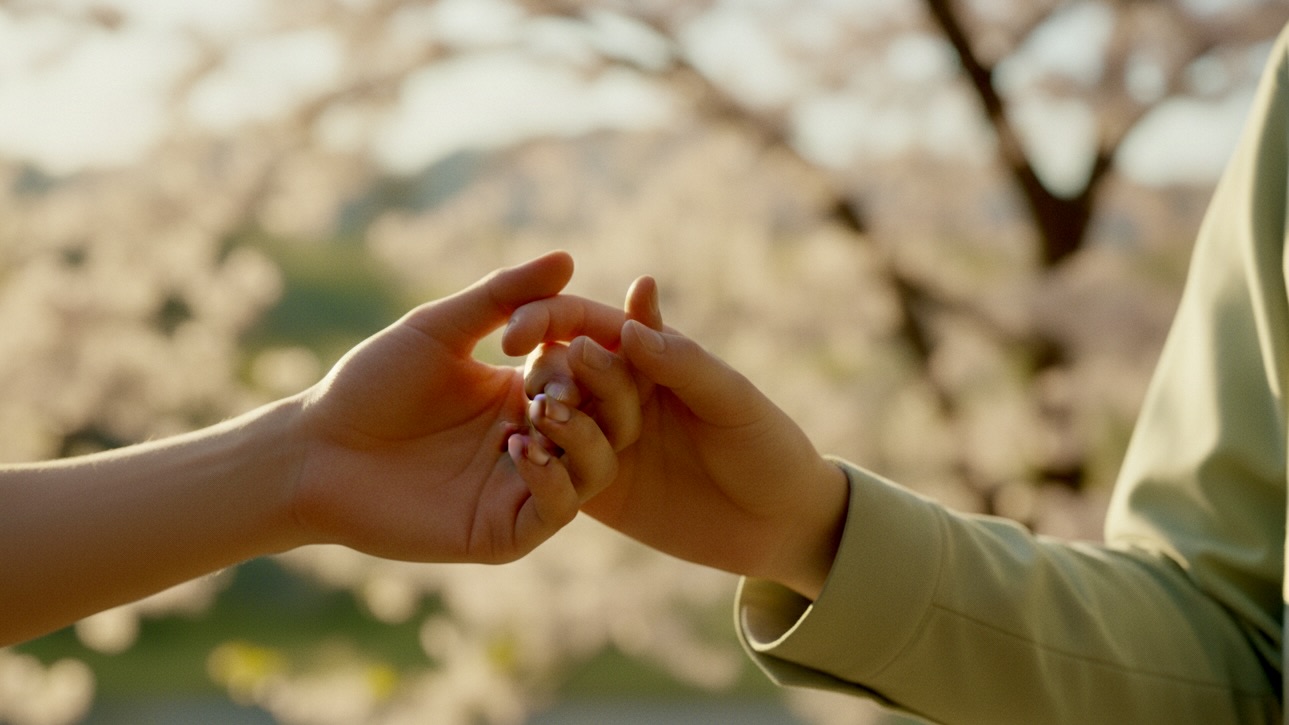
He took my hand, laced his fingers through mine. His thumb stroked the back of it—slow, grounding.
The festival blurred away. Only his hand mattered.
He leaned in, his lips close to my ear, his breath warm against my skin.
“Lenny,” he whispered, his voice sending a shiver down my spine. “After this… I need to tell you something.”
To the Reader
“This unexpected grace, this sudden, shared moment of public tenderness, is like the first hesitant green shoots pushing through hardened earth after a long winter. It is a quiet, profound reminder that authenticity can break through even the most rigid ground, and you, too, are worthy of the blossoming, open space to simply be.”
Share This Story


