Sunlight and Spliced Wire
The morning light, still thin and cool despite the late spring, spilled over the rolling acreage of the ranch. Dust motes, caught in the weak beams through the barn's open wide doors, danced a slow, indifferent ballet. The air carried the crisp scent of damp earth, hay, and the distant, metallic tang of rainfall from the night before, a promise of new growth struggling against the stubborn remnants of a long, cold winter.
Michael’s boots hit the packed earth of the corral, a dull thud. The sound was swallowed by the vast, quiet expanse of the ranch, disturbed only by the distant, rhythmic creak of the windmill and the faint buzz of early spring insects. His shoulders were tight, a familiar ache settling deep between his shoulder blades, a constant reminder of the long weeks spent bent over, repairing, mending, trying to piece back together more than just fences. His hands, calloused and scraped, automatically reached for the coil of new wire leaning against the weathered timber of the barn. The metal felt cool, almost slick, under his fingertips. The cold seeped into his bones, a different sort of chill than the morning air. It was a lingering thing, settled in the marrow.
He didn’t look up as Tommy approached, his own steps lighter, less deliberate. Michael just kept his gaze fixed on the coil, unraveling a length with practiced, almost aggressive movements. The wire gave a sharp, metallic hum as it unspooled. His jaw felt tight. It was always tight, these days. He could feel the ridge of muscle clenching beneath his skin.
“Morning,” Tommy said, his voice low, almost a murmur against the vastness. Not a question, just an acknowledgement. He carried the heavy fencing pliers, the grips worn smooth from years of use, and a smaller bag of staples. He dropped them with a soft clatter near Michael, the sound echoing a bit too loudly in the quiet.
Michael grunted, a sound that could mean anything. Or nothing. He pulled another length of wire, tugging hard, his knuckles white. The sun was just starting to crest the furthest ridge, painting the sky in pale, washed-out colours of lavender and rose, quickly fading into a clear, stark blue. It was beautiful, Michael knew, objectively. But beauty felt… distant. Like a picture in a book, not something to be felt, absorbed.
Tommy knelt, picking up a stray piece of old, rusted barbed wire that had fallen near their feet. He turned it over in his gloved hands, examining the cruel, sharp points. His eyes, a shade of deep moss green, flickered towards Michael, then away. He didn’t press. He never did. That was one of the things. The quiet understanding, a space left open, not forced.
“Milepost Six,” Michael finally said, his voice a little rough, as if he hadn’t used it properly in days. He still didn’t look at Tommy. His focus remained on the metal, the task. It was easier, the task. Concrete. Definable.
Tommy nodded, a slow, deliberate movement. “Right. The east side. Had a few deer get through last week.” He stood, the pliers swinging gently at his side. He didn’t mention the other things that might get through, the things that weren’t deer. But the unspoken hung between them, thick and heavy as the morning mist that still clung to the hollows.
They walked in silence, the long, shadows stretching out before them, then shrinking as the sun climbed higher. The ground was soft in places, still damp from the recent rains, but elsewhere the clay soil was already hardening, cracked in a fine spiderweb pattern. Michael felt the unevenness through the soles of his boots. Every step was deliberate. He could feel the slight drag in his right leg, a phantom ache from an old injury, or maybe just exhaustion. He wasn’t sure anymore. The lines blurred.
The air grew warmer, carrying the sharp, sweet scent of sagebrush and the faint, dusty smell of newly turned earth. Small, tough wildflowers, yellow and purple, dotted the landscape, tenacious bursts of colour against the muted browns and greens. Michael saw them, registered them, but they didn’t quite pierce the internal grey that seemed to cling to him.
The Obstinate Snag
They reached the stretch of fence near the sixth milepost. It was worse than Michael remembered. Not broken entirely, not a gaping hole, but many of the strands were loose, sagging, pulled from their posts. Some of the wooden posts themselves were leaning, rotten at the base. A small patch of wild roses, sharp thorns and delicate white blossoms, had grown through the wire in several places, binding it, twisting it into a stubborn, living knot.
Tommy stopped, surveying the damage with a critical eye. He pushed his worn leather hat back slightly. “She’s seen better days, this one.” He didn't sound particularly dismayed, just observational. Like he was reading a field report.
Michael grunted again. He threw down his coil of wire and began tugging at the rose bush, trying to free a particularly stubborn strand. A thorn snagged his glove, then, as he pulled harder, pierced through the leather, pricking his palm. A sharp, surprising pain. He swore under his breath, a low, guttural sound, pulling his hand back quickly.
Tommy watched him, then reached into his bag, pulling out a smaller, more precise pair of cutters. He didn’t offer them. He just waited. It was a familiar dynamic. Michael usually preferred to wrestle with things himself, even if it meant more scrapes, more effort. A stubborn pride. Or something else. A need to feel the raw effort.
“Right,” Michael muttered, shaking his hand, trying to dislodge the sting. He bent down, picked up the larger pliers, and went at the wire again, trying to snip through the rose stems where they entwined. The big pliers were clumsy for this delicate work. He snapped a stem, but the wire remained caught, tighter than before. He pulled. He pulled harder. The wire sprang back, hitting him sharply on the cheek, a stinging slap. He flinched, a raw, involuntary jerk of his head. He could feel a faint burning line where the wire had caught him. It was a small thing, but it felt amplified, disproportionate to the actual incident.
Tommy made a soft sound, a quiet huff of air that might have been amusement, might have been concern. He walked over, knelt beside Michael. Without a word, he took the smaller cutters, extended them, and with two swift, precise snips, freed the wire from the roses. The wire came loose with a faint ping.
Michael stared at the freed wire, then at Tommy’s hand, the small, sharp cutters. His face felt hot, a blush creeping up his neck. It was stupid. To get caught up on something so small. So utterly insignificant. But the anger, the frustration, it was a familiar friend, too close, too ready to resurface.
Tommy, still kneeling, glanced at Michael’s cheek. “Got you a good one.” His voice was flat, neutral, betraying nothing. He then turned his attention to the next section of tangled wire, moving with an easy efficiency that Michael envied, sometimes. Often.
Michael rubbed his cheek, feeling the faint raised line. He looked at the cleared section of fence, then at the pliers in his hand. He felt a ridiculous, childish surge of annoyance at the pliers, at the wire, at the roses, at himself. He let out a short, sharp bark of laughter. It was rusty, unused, a sound that felt alien in his own throat. But it was there. A genuine, unforced sound. It surprised him. It surprised Tommy too, who paused his work, looking up, his eyes a little wide.
The sound wasn't pretty. It was a little choked, a little ragged. But it was laughter. It ended almost as quickly as it began, but the echo of it hung in the air, a bright, startling note. It felt good. Strange, but good. Like a breath he hadn't realised he was holding.
Tommy’s lips twitched, a small, subtle upturn at the corners. He didn’t laugh himself, not out loud. But the softening around his eyes, the slight relaxing of his posture, was just as telling. He met Michael’s gaze for a fleeting moment, a shared recognition of the absurdity, the brief, unexpected lightness. Then he looked back at the fence, snipping another thorny branch. The moment passed, leaving a warmth, faint but present, in Michael’s chest.
---
The Deepening Rift
They worked in a rhythm, a silent, unspoken choreography they had developed over years. Michael would pull the wire taut, hold it against the post. Tommy would nail it in, his hammer strokes precise and strong. The thwack-thwack of the hammer against the metal staples was a steady drumbeat in the quiet morning. Sometimes, Michael would strip a rotten post, Tommy would dig the new hole, and together they would heft the fresh timber into place, the effort a shared burden, a familiar weight.
The sun climbed higher, now beating down with more intensity, warming the land, drawing out the deeper scents of pine and dry grass. Sweat beaded on Michael’s forehead, tracing paths through the fine layer of dust that had already settled there. He wiped it away with the back of his glove, leaving a streaky smear. His muscles ached, but it was a different ache now, a good ache, the kind that came from honest, physical work, not the gnawing, hollow ache of something else.
They moved slowly, deliberately, along the fence line, post by post. The repaired sections looked neat, taut, functional. A sense of order, however small, was being restored. Each successful staple, each tightened wire, was a tiny victory. A small, almost imperceptible shift from the chaos that had been. It was good, this. The simplicity of it. The clear, immediate results.
But as they rounded a bend, following the fence line down into a shallow gully, the damage escalated. Here, the fence wasn't just sagging or loose. It was completely gone in a thirty-foot section, ripped from the ground, the posts splintered and scattered like broken matchsticks. The earth around them was churned up, scarred with deep, wide tracks. Not deer. Not a stray cattle herd. Something heavier. Something driven.
Michael stopped dead, his breath catching in his throat. The sight hit him like a physical blow. The scale of the destruction. It wasn't natural. It was deliberate. Malicious. The remnants of a fire, faint but present, still smelled like burnt wood and ash in the damp spring air, mixed with a different, acrid scent he couldn’t quite place. It clung to the air, heavy and metallic, like old pennies left out in the rain, but sharper. It crawled under his skin.
He felt the familiar cold dread spread through his stomach, chilling him despite the warming sun. His hands trembled, not from effort, but from something deeper, more insidious. The air felt thin, suddenly. The sounds of the ranch faded, replaced by a dull roaring in his ears, a frantic pulse thudding against his temples. He could feel the ground shifting beneath his feet, though it was still. His vision narrowed, the bright colours of the wildflowers blurring into an indistinct wash. The smell was everywhere now, overwhelming.
Tommy came up beside him, his steps slowing, then stopping. He didn’t say anything. He just stood there, looking at the wreckage. His shoulders stiffened. The easy rhythm of their work was broken, shattered by this new, unexpected discovery. The sheer scale of it. It was too much. It brought back the echoes, the raw, brutal memories that Michael had been trying so hard to bury, to contain, to forget. He could taste the metallic tang of fear, sharp and bitter on his tongue. He could almost hear the yelling, the frantic shouts. The heat. The overwhelming heat. The crackle of flames.
He closed his eyes for a moment, pressing his lips into a thin, white line. When he opened them, the world still felt too bright, too sharp. The destroyed fence wasn't just wood and wire. It was a raw, open wound on the land, a visible manifestation of everything they had been trying, so desperately, to outrun.
Tommy finally spoke, his voice unusually strained. “This… this isn’t right. Not at all.” He kicked at a broken post, sending a shower of splinters. His face was grim, a hard, unreadable mask. He looked at Michael, his eyes dark with a question, an understanding that ran deeper than words. Michael felt exposed, stripped bare by that gaze.
Michael swallowed, his throat dry. He wanted to look away, to run. To just turn and leave it all behind, the broken fence, the ravaged earth, the cold dread in his gut. But he couldn’t. He was rooted to the spot, staring at the destruction, at the raw, undeniable proof that the past wasn’t just the past. It was here. It was now. It was waiting.
The silence stretched, heavier than before, suffocating. The earlier, fleeting moment of shared laughter felt impossibly distant, a fragile, forgotten dream. The world had snapped back into its sharp, unyielding reality. The promise of spring felt like a cruel joke. The air crackled, not with static, but with something else entirely. A warning. A threat. He felt a cold shiver run down his spine, despite the sun. This was more than just a broken fence. This was a message. And Michael knew, with a certainty that chilled him to his core, that the message was for them.
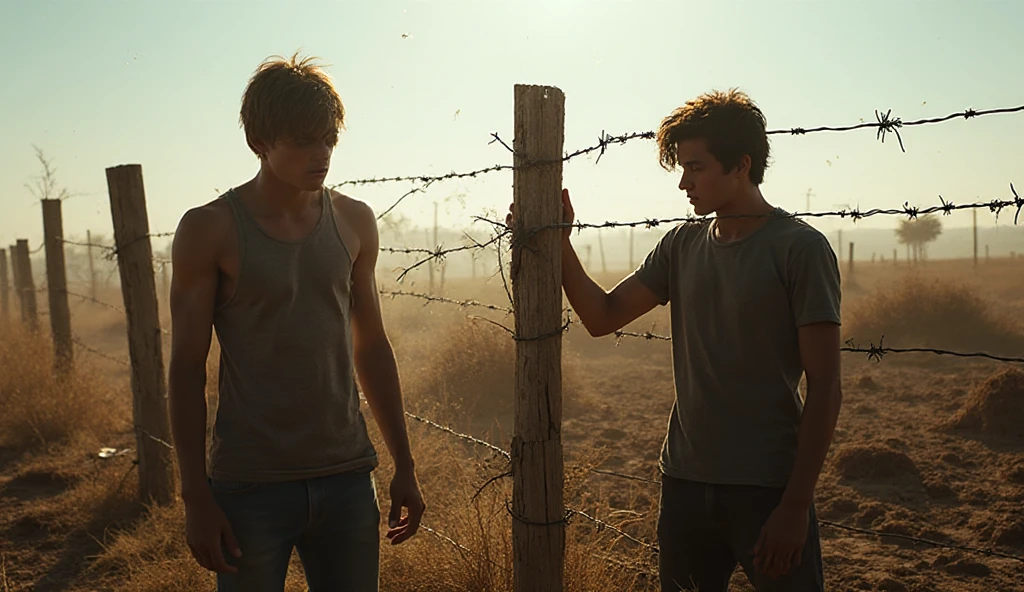
A shiver snaked down Michael's spine, cutting through the warmth of the day, as he realised the destruction wasn't random; it was a deliberate mark, a chilling message left in the heart of their fragile sanctuary, promising that whatever they were trying to outrun had finally caught up.
Share This Story


