Before the Vernal Equinox
The old Assembly Hall, usually echoing with the boisterous laughter of weekly bingo nights, now held a different, more subdued resonance. Early spring light, pale and hesitant, filtered through tall, arched windows, illuminating the motes of dust dancing in the air, a silent ballet against the deep patina of the aged wooden floorboards. Outside, a reluctant thaw had begun; the scent of wet earth and lingering ice, mingled with the faint, hopeful perfume of awakening balsam poplars, seeped through the ever-so-slightly-ajar ventilation grates. A faint, almost imperceptible tremor ran through the very foundations of the building, a geological sigh that most would dismiss as the city's ceaseless hum, but which, to those gathered, felt more like a pulse, slow and deep.
Sylvie traced a finger along the worn edge of the oak table, its surface scored with decades of untold stories. The air, cool and still, carried the ghost of old varnish and stronger, more recent coffee. She watched the way the spring light fractured across the polished wood, creating miniature, shifting landscapes of gold and grey. It was always like this, the first few meetings after the long, unyielding sleep of winter; a quiet tension, a sense of something nascent stirring, both within them and in the land itself.
“Environment,” Betty’s voice cut through the soft hush, her spectacles perched on the end of her nose as she consulted the printed methodology. “The initial dive. Understanding the local context, community needs, climate challenges, and the rich cultural landscape.” She looked up, her gaze sweeping over the faces gathered: Sylvie, Gregor, Omar. All, like her, seasoned by years, their faces maps of lived experience. “We’ve always done this, implicitly, with our projects. But ECO-STAR formalises it.”
Gregor, ever the slow, deliberate one, nodded, his fingers absently stroking his greying beard. “Formalises, yes. But the ‘Environment’ here… in the North… it’s not just land and people, is it? It’s… something else. Something older.” The unspoken hung heavy, a familiar companion in their gatherings.
Omar, usually content to observe, shifted slightly in his chair, the leather creaking a soft protest. He spoke, his voice a low rumble. “The city stretches, but the wild remembers. Even here, amongst the concrete and power lines, the old ways, the older things, they still hold sway. The Environment means everything that is.” He paused, looking directly at Sylvie. “Including what isn’t seen.”
Sylvie met his gaze, a shiver tracing its way up her spine despite the mild air. This was the undercurrent, the persistent hum beneath the surface of their artistic endeavours, the unspoken reason why a group of respected elders found themselves delving into a supposedly entrepreneurial framework. The spring melt often brought these things closer to the surface, thinned the veil, as it were. The burgeoning life outside, the bursting green, felt less like a promise and more like a warning.
“Precisely,” Betty said, oblivious or perhaps expertly feigning it. She tapped her pen against the page. “And for the ‘Customer’ phase, ECO-STAR prioritises a community-centric approach. Who are we serving? Who benefits? In a Northern context, that’s critical. We build with, not for.” Her tone was brisk, practical, a stark counterpoint to the subtle unease brewing.
“But what if the ‘Customer’ isn’t… human?” Sylvie asked, the words feeling clumsy as they left her lips. She saw the flicker in Gregor’s eyes, the slight tightening around Omar’s mouth. Betty, however, just tilted her head.
“Are you suggesting we target, what, caribou? Beavers?” Betty’s laugh was thin, a sound of paper rustling. “Sylvie, the framework is for entrepreneurship. Creative ventures. Art installations, cultural programs. These need human engagement.”
“Do they?” Gregor murmured, not looking at Betty, but out the window at the nascent green of a birch tree. “Or do they need… recognition? An offering, perhaps? Sometimes, the most important ‘stakeholders’ aren’t found on a census form.”
A beat of silence followed, thick and charged. Betty cleared her throat, her knuckles white where she gripped the pen. “Moving on,” she announced, her voice a little too loud. “Opportunity. Pinpointing specific needs, gaps, or potentials for ventures that align with environmental and community well-being. This is where we identify where our creative output can make a genuine difference.”
“And sometimes,” Omar said, his gaze fixed on a distant point beyond the wall, “the opportunities present themselves in ways we don’t expect. A crack in the ice, a tremor in the ground. A whisper in the quiet parts of the forest, or even in the hum of the city’s power grid. These aren’t always ‘gaps’ that can be filled with a grant application.”
Sylvie felt a cold knot tighten in her stomach. She’d seen the ‘opportunities’ Omar spoke of. The strange, shifting patterns in the aurora that lasted too long. The sudden, inexplicable chill that would settle over a room, even in the height of summer. The way certain forgotten places in the city seemed to hum with an energy that wasn't electrical. These were the true environmental challenges, the unspoken ‘customers’ and ‘opportunities’ they were learning to navigate.
The Unseen Audience
The air in the room grew heavier, the somber tone deepening as the spring light began to wane, casting longer, more dramatic shadows from the old furniture. Betty, for all her practical focus, seemed to sense the shift, her movements becoming less assured. She flipped a page, her finger hovering over the next letter.
“Solution,” she read, her voice a touch softer. “Developing innovative, culturally appropriate, and sustainable responses. This is where we craft the art, the projects, the interventions.” She looked around, seeking some affirmation. “Surely, this is straightforward? It’s what we do.”
“It is what we do,” Sylvie agreed, her voice barely a whisper. “But the kind of solutions… that’s been changing, hasn’t it? The colours we use, the materials we choose, the stories we tell. It’s not just about aesthetics anymore. It’s about… resonance. Protection.” She thought of the intricate patterns they had woven into the last public installation, the specific types of wood used, the old chants that had been whispered into the very fibres before assembly. Not for human ears, not really.
Gregor leaned forward, his elbows resting on the table. “The North demands specific solutions. Solutions that understand the deep cold, the sudden thaws, the long nights. Solutions that respect what was here before us, and what will remain after. And some of those solutions… they aren’t always visible.” He met Betty’s gaze, a quiet challenge in his aged eyes. “Are they, Betty?”
Betty flushed, her usual composure cracking slightly. “I… I understand the spiritual element, of course. The importance of respecting Indigenous traditions. But ECO-STAR is a business framework.” Her hand trembled slightly as she adjusted her glasses. “We must remain grounded.”
“Oh, we’re grounded, Betty,” Omar said, a dry rasp in his voice. “More grounded than you know. The earth remembers every footstep. And sometimes, the earth… or what dwells beneath it… it reaches back.” He gestured vaguely towards the floor, and Sylvie felt that faint tremor again, stronger this time, a deeper thrum in her bones. It wasn’t the city. It was below the city.
---
The conversation drifted to ‘Team’ – building a strong, collaborative group. Betty emphasized diverse skills, local knowledge keepers. Sylvie wondered what knowledge keepers really meant in this context. Not just elders with traditional stories, but those who understood the other residents of the urban wild, the non-human intelligences that sometimes stirred. Gregor spoke of trust, of shared purpose, his words carefully chosen, like stones placed in a river. Omar merely listened, his eyes scanning the windows, as if expecting something to appear in the twilight outside.
As the last of the day's timid spring light faded, replaced by the stark, unforgiving glow of the hall's fluorescent fixtures, Betty finally landed on ‘Advantage.’ “This is what makes your project unique, impactful, and resilient. Especially within the distinct Northern context.” She pushed the papers across the table, a nervous energy in her movements. “What is our advantage?”
Sylvie looked at the faces around her. Gregor, with his quiet wisdom that bordered on the arcane. Omar, whose stillness seemed to gather secrets. Betty, clinging to her spreadsheets, a bulwark against the unquantifiable. And herself, an artist whose canvases now felt like wards, her sculptures like offerings. Their advantage wasn’t innovation, not in the traditional sense. It was their awareness. Their willingness to see beyond the visible, to hear beyond the audible. To engage with the true ‘Environment,’ ‘Customers,’ and ‘Opportunities’ that ECO-STAR, in its profound innocence or deliberate guise, had laid bare.
“Our advantage,” Sylvie said, her voice clear in the suddenly silent room, “is that we know what we’re truly building for. And against.” The tremor returned then, not faint, but a distinct, prolonged vibration that rattled a loose pane in one of the arched windows. A low groan, like ancient bedrock shifting under immense pressure, seemed to emanate from beneath them, a sound that was less geological and more… resonant. Outside, beyond the streetlights, a deeper, colder spring wind began to howl, carrying with it a scent that was not of thawing earth, but of something metallic, something like electricity and wet stone, something vast and undeniably awake. The light flickered.
“Results,” Betty whispered, her face pale, her gaze locked on the window, where the glass now rattled violently. “We articulate desired outcomes, plan to measure impact… and strategise for long-term sustainability.” But her words felt hollow, lost in the building tremor, the growing, unseen presence that pressed against the thin walls of their understanding. They had articulated the outcomes, yes. But the results, as the lights plunged them into sudden darkness, were clearly no longer in their control, nor measurable by any human metric.
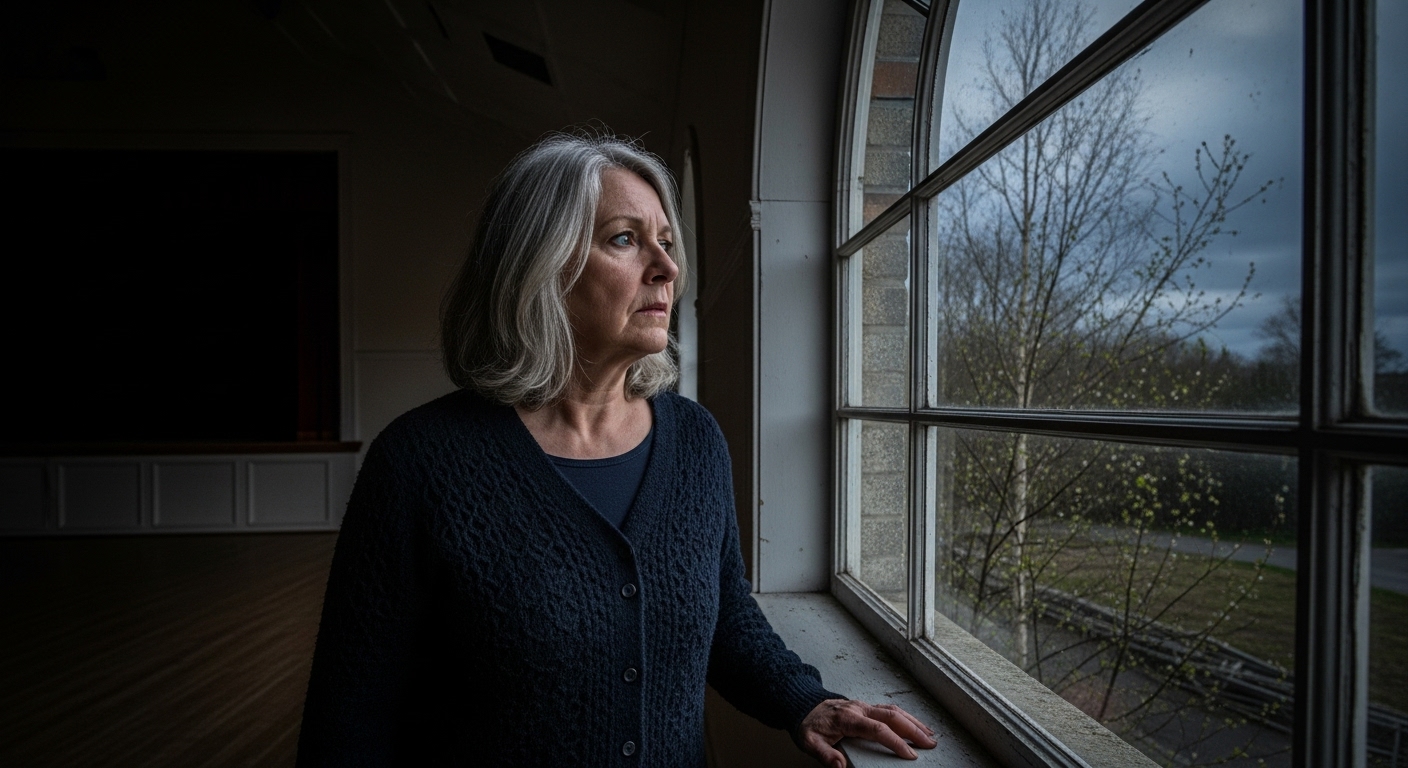
The hall plunged into sudden, absolute darkness, the building itself seeming to shudder around them as the low groan intensified, no longer a tremor but a deep, resonant cry from beneath the foundations. Whatever they had awoken, whatever ‘customer’ or ‘opportunity’ they had inadvertently courted, was now unmistakably present, and it was demanding more than just an artistic offering.
Share This Story


