Map Folded into a Square
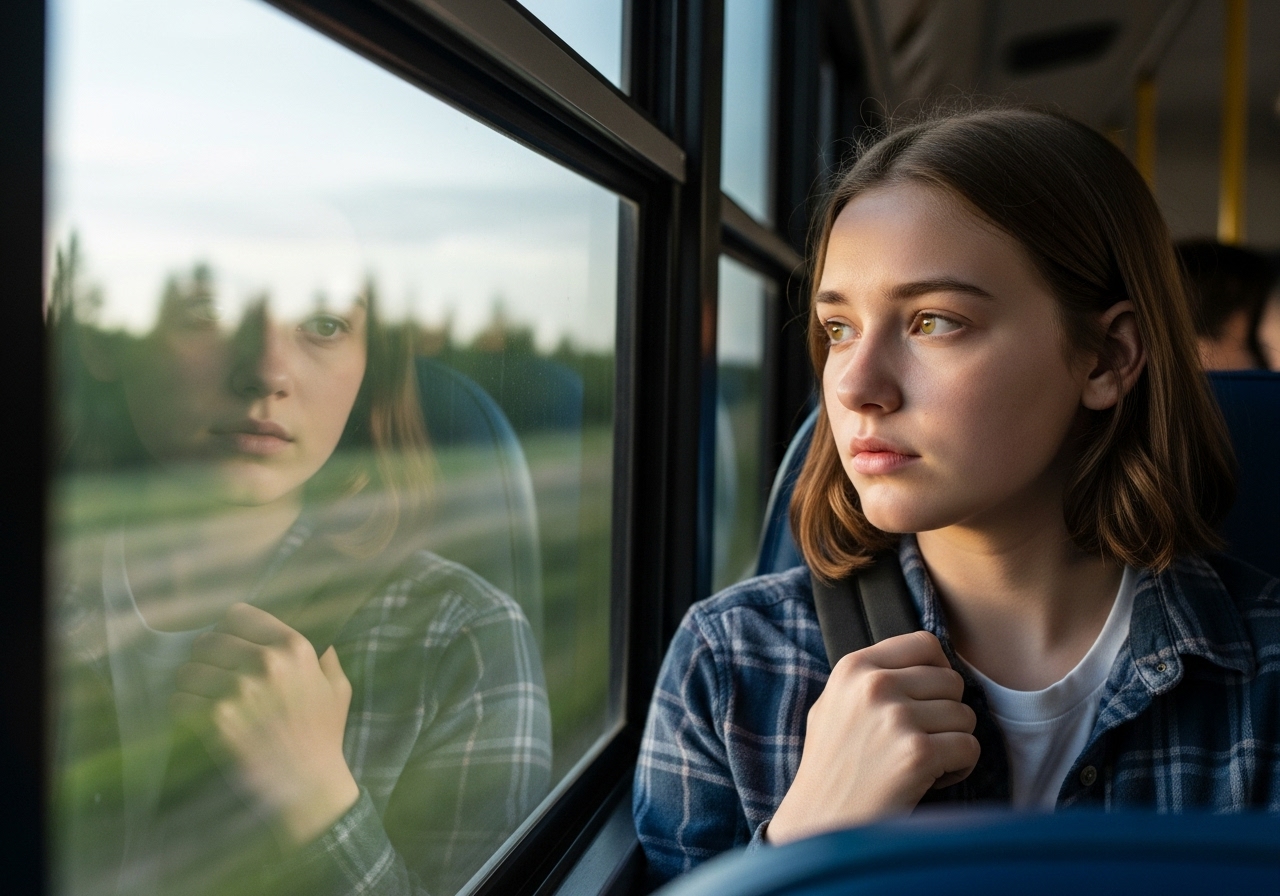
The letter was folded into a stiff, perfect square in the front pocket of her jeans. Tania could feel its sharp corners pressing against her leg, a constant, physical reminder. University of Manitoba. Faculty of Arts. The words were a spell she’d been chanting for a year. Now, with the pines of home flashing past the window in a hypnotic green blur, the spell was starting to feel like a curse. Her palms were damp, and the half-eaten bag of chips on her lap suddenly seemed like the most disgusting thing on earth.
Her mother had cried at the bus station. Big, messy sobs that had made Tania’s shoulders bunch up around her ears. Her father had just hugged her, his hand pressing hard between her shoulder blades, a silent, desperate message: ‘Be safe. Be smart. Come back.’ She had promised she would, but even as she said it, the words felt like a lie. The whole point was not to come back. Not for good, anyway.
The bus was a rolling microcosm of the world she was heading towards. Strangers, all absorbed in their own lives. A woman in front of her was talking on her phone in a language Tania didn’t recognize. Across the aisle, a man was working on a laptop, the glow of the screen making his face look severe and important. This was it. The world. It was nothing like home, where every face was known, every story interconnected.
She pulled the folded letter out of her pocket. The paper was getting soft from being handled so much. ‘We are pleased to offer you admission…’ The words had been a key, unlocking the door out of her life. Now, they felt like a contract she’d signed without reading the fine print. What if she hated it? What if she failed? What if she made no friends and spent the whole year eating instant noodles in a room that smelled like someone else’s old socks?
The memory of her last conversation with Carter surfaced, sharp as a fish hook. They’d been sitting in his dented pickup truck at the lookout point over the town. The lights below looked small and safe.
‘You don’t have to go,’ he’d said, his voice thick. He smelled like sawdust and motor oil, a smell that was, until that moment, the smell of comfort.
‘Yes, I do,’ she’d insisted, trying to sound braver than she felt. ‘There’s nothing for me here.’
‘I’m here,’ he’d said, and that had been the worst part. Because he was. Solid and dependable and in love with her. And leaving him felt like cutting off a part of herself. But staying would have felt like suffocation. She’d kissed him, a quick, desperate press of lips, and gotten out of the truck before she could change her mind.
---
She took a deep breath, the air conditioner vent above her hissing a stream of cold, recycled air. She needed to stop thinking about what she was leaving and start thinking about what she was going to. She pulled the glossy orientation week pamphlet from her backpack. It was full of smiling, multi-ethnic students playing frisbee on a perfect green lawn.
‘Icebreaker Bingo!’ ‘Navigating the Tunnel System!’ ‘Campus Services Fair!’ The forced enthusiasm made her stomach clench. She imagined herself in a huge gymnasium, a paper bingo card in her hand, trying to find someone who ‘has a pet lizard’ or ‘has been to Peru.’ It was her worst nightmare.
She was supposed to be a new person here. Confident Tania. Interesting Tania. Not the shy, awkward Tania who spent her lunch hours in the library and knew more about the War of 1812 than she did about pop music. She had rehearsed introductions in her bedroom mirror. ‘Hi, I’m Tania. I’m from up north. Yes, it’s really cold. No, we don’t live in igloos.’ She’d cringed at her own reflection.
The landscape was starting to change. The dense forest and granite outcroppings were thinning, giving way to flatter land, wider fields. The trees were smaller, huddled together in clumps. They were leaving the Shield behind. It felt significant, like crossing a border into another country.
A Shared Can of Pop
‘First time?’ a voice said. Tania jumped. The woman in the seat next to her was smiling. She was older, maybe her mom’s age, with kind eyes.
‘Uh, yeah,’ Tania stammered. ‘Is it that obvious?’
‘A little,’ the woman said warmly. ‘You’re clutching that backpack like it’s a life raft. I was the same when I left for school. Felt like I was being launched to the moon.’
The woman, who introduced herself as Sarah, began to tell her about her own first year of university. The terrible roommate, the professor who changed her life, the time she dyed her hair blue in a dorm bathroom. She spoke with a fond, easy nostalgia that made it all sound like a grand adventure, not a terrifying ordeal.
‘You’ll be fine,’ Sarah said, as if sensing the fear radiating from Tania. ‘The first few weeks are the worst. You just have to survive them. After that, you find your people. Or they find you.’ She opened her bag and pulled out two cans of ginger ale. ‘Here,’ she said, handing one to Tania. ‘To new beginnings.’
Tania took it. The can was cold and solid in her hand. The simple act of kindness from a stranger felt monumental. It was a message from the world she was entering: ‘You are not alone.’
She popped the tab, the fizzing sound loud in the relative quiet of the bus. She took a sip. It tasted like hope. She looked out the window at the flat, endless prairie stretching out before them under a sky that seemed impossibly vast. It didn’t look like a cage. It looked like a blank page. And for the first time since the bus had left the station, she felt a genuine, uncomplicated flicker of excitement to start writing on it.
As she settled back, a text message buzzed on her phone. It was from Carter. It wasn't a question or a plea, just a single, cryptic sentence: 'The old mill. They know you were there.'
Share This Story


