The Ridge Line's Cold Embrace
The wind bit at my exposed skin, an icy gnaw that stripped away thought, leaving only instinct. Snow, relentless and unforgiving, swirled around our ankles, erasing our tracks almost as quickly as we made them. The sky above, a bruised purple-grey, pressed down with the weight of unshed tears, promising more blizzard. We were a flicker of warmth in an expanse of white, two figures against the vast, indifferent theatre of the Northern Ridge. This was no longer about the biathlon, not really. This was about survival.
The bite of the wind had sharpened, sawing at my exposed neck, despite the high collar of my jacket. It wasn't the usual crisp, invigorating sting of a proper winter race day; this was something more insidious, a damp, heavy cold that seeped into the bones. The snow, falling steadily for the last hour, had transformed the meticulously groomed biathlon course into a churning, blurred expanse of white and grey. Visibility was dropping fast, exactly as the reports had warned, exactly as I’d feared.
“Another hundred metres, Minister,” I called back, my voice flattened by the swirling flakes, the sound swallowed immediately by the vast quiet of the mountains. “Then the descent becomes… a little more forgiving.” I didn’t mention the exposed section, the one where the wind would whip them to an impossible degree, the one I’d chosen precisely because it offered minimal cover, forcing any would-be aggressor into an open approach. A calculated risk, but one I hadn’t felt entirely good about since we’d left the main security cordon.
Peters, bundled in an expensive, insulated overcoat that looked more suited to a diplomatic dinner than a cross-country trek, nodded, his face obscured by the fur-lined hood. He was out of his element, plainly. His breathing, already laboured from the moderate incline, puffed out in ragged clouds. I could hear the subtle, almost imperceptible scrape of his city boots on the ski track’s firm base – a sound that grated on my ears, so accustomed to the smooth glide of a competition ski, the precise crunch of a boot binding.
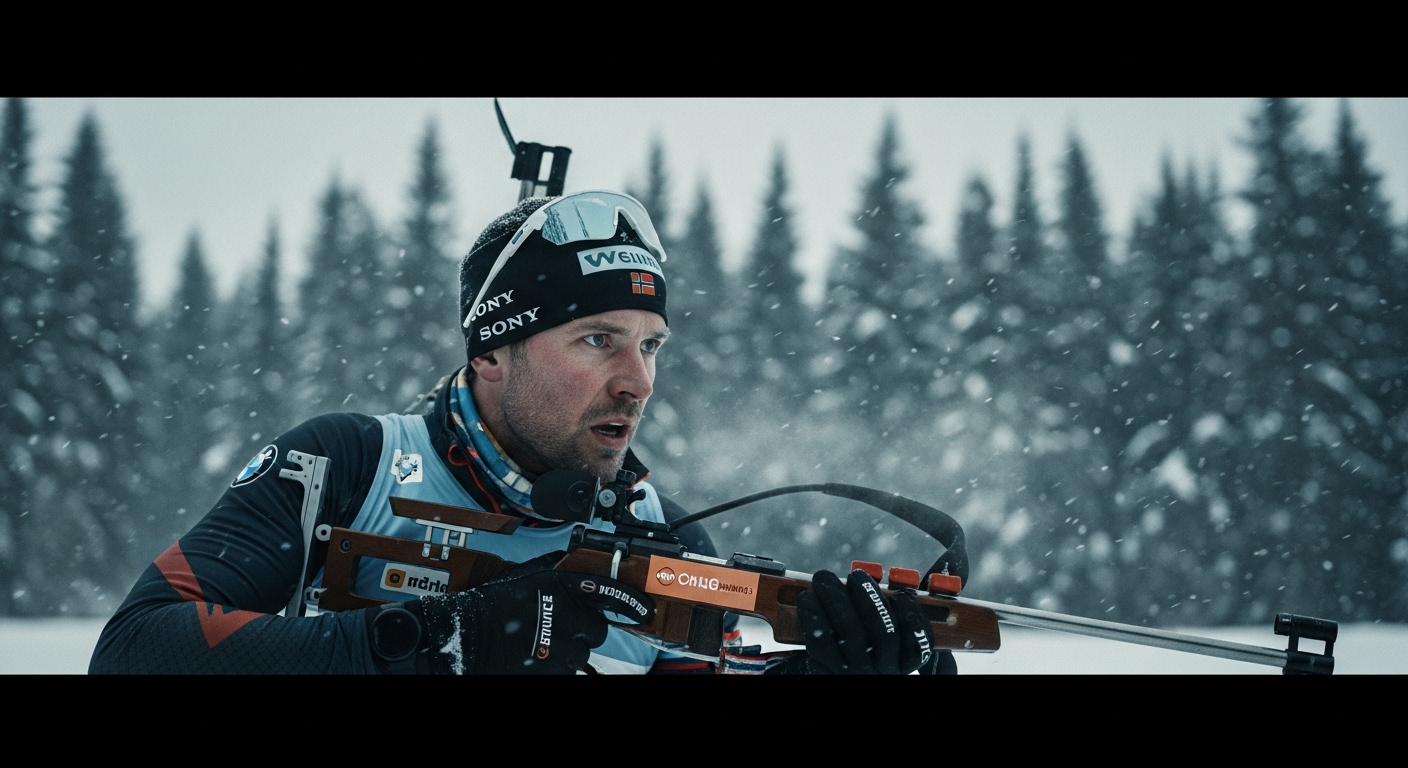
My own movements were different. Even weighted down with my pack and the suppressed assault rifle slung across my back, the muscle memory of decades of training kicked in. Each step was economic, balanced, a silent conversation between my body and the unforgiving terrain. I felt the shifts in the snow’s density, the subtle undulations beneath the freshly fallen powder, the way the wind sculpted drifts in fleeting patterns. It was a language I understood, a language that was now screaming at me.
“You’re… confident in this route, Jansen?” Peters’s voice, a little thin, cut through the rush of the wind. He wasn't questioning my knowledge, not exactly. It was more an inquiry into the unknown, a politician's way of seeking reassurances without overtly stating his fear.
“It offers the best sightlines in this weather, Minister,” I replied, keeping my tone level. “Less chance of… unexpected encounters.” The phrase hung in the air, weighted with the subtext of our unspoken reality. We were here, in a remote section of the course, ostensibly for a last-minute inspection before tomorrow’s World Cup opening ceremony. In reality, it was a diversion, a test of the security perimeter, a reconnaissance mission for a ghost that might or might not exist. My gut, however, insisted it did.
My eyes scoured the tree line, a dark, jagged scar against the encroaching twilight. Spruce and pine, heavy with snow, stood like silent sentinels, their branches bowed under the white burden. I looked for anything out of place: a broken branch where there shouldn’t be one, a disturbed patch of snow, a hint of colour that didn’t belong. The world was stripped to monochrome, making anomaly easier to spot, but also easier to miss if it was camouflaged well enough.
---
The silence, however, was what unnerved me most. Not the natural quiet of a winter wilderness, but something else—a strained, expectant hush that felt like the world holding its breath. The usual forest sounds were absent: no distant squawk of a jay, no rustle of a small animal, no creak of snow-laden branches. Only the hiss of the wind, the soft thud of falling snow, and the steady, too-loud beat of my own heart against my ribs.
My fingers, thick in their insulated gloves, twitched towards the comms unit on my wrist. I’d checked in ten minutes ago, a crackle of static and a terse confirmation from Handler One. But the feeling, that prickle of unease that had been growing since we left the secure building, hadn’t faded. If anything, it had intensified, becoming a cold, hard knot in my stomach. The sort of knot that had saved my life more times than I cared to count, both on and off the biathlon track.
“Hold,” I murmured, raising a gloved hand, not looking at Peters. My eyes were fixed on a point ahead, where the ridge dipped slightly into a short, steep descent, then rose again towards a cluster of particularly old, gnarled spruces. There was nothing overtly alarming. Just… a pattern interrupted. A drift of snow on the right side of the track looked too deliberate, too perfect. Like a fresh cast, unmarred by the casual sweep of the wind.
Peters stopped behind me, his breath catching. He sensed it, too. The abrupt halt, the shift in my posture, the way my body had tensed. He was no fool, despite his initial discomfort in the wilderness. He understood the language of threat, even if he couldn’t decipher the dialect.
I took a single step off the track, my boot sinking a little deeper than expected. A soft thwump. I knelt, pushing away the fresh powder, and found it: a thin, almost invisible tripwire, stretched taut between two small, snow-covered rocks. It was nylon, not wire, probably for a pressure plate or an acoustic sensor. Amateurish, almost, but effective in the low light and falling snow. A subtle trap, designed to alert, not to harm.
“Problem?” Peters asked, his voice lower now, a tremor in its depth. He hadn’t moved from the track, hadn’t come closer to examine my discovery. Smart. Don’t disturb the evidence.
“A welcoming committee,” I replied, my voice a low rasp. I pulled a small cutting tool from my pack, snipped the almost invisible filament. It parted with a whisper, the two ends recoiling slightly into the snow. “They know we’re here.”
“How long?”
“Long enough to set this. Which means they’ve been shadowing us, or they anticipated our route.” My mind raced, mapping out probabilities. The secure comms, the counter-surveillance sweeps, the multiple decoy movements. They were good, better than intelligence had indicated. Or they had an insider.
The thought was a shard of ice in my chest. If there was an insider, the entire operation was compromised. Peters, critical to the upcoming trade agreement, was a dead man walking. And I was walking him.
“We move off the track,” I instructed, rising, my rifle now unslung, held ready in my hands. The weight of it, the cold steel against my gloved palms, was a familiar comfort. “Straight into the trees. Stay behind me, keep your steps light.”
Peters hesitated for a bare second, his eyes flicking from the tripwire to the dense, snow-laden forest. The unspoken question was clear: safety or deeper into the unknown? The answer was always the unknown, when the known was compromised.
“Understood,” he said, his voice regaining some of its political composure, a surprising resilience in the face of imminent danger. Perhaps he truly believed in the outcome of his negotiations, enough to face this. Or perhaps he simply had no other choice.
---
We plunged into the thicket, the snow-covered branches clawing at our jackets, shedding powdery dust with every movement. The ambient light of the open course vanished, replaced by a suffocating gloom. It was colder in here, the wind muted but the air still, heavy with the smell of damp pine needles and the sharp, almost metallic scent of cold earth. My boots found purchase on hidden roots and slippery rocks, the ground uneven and treacherous beneath the pristine white blanket. I moved with a predator's caution, each step deliberate, my head on a swivel, scanning through the dense network of trunks.
Peters struggled, I could hear him. His breathing was a ragged rasp, loud in the confined space. A branch snapped under his weight, the sharp crack echoing too far, too long. He cursed under his breath, a low, guttural sound. I didn’t look back, trusting him to keep up, trusting him to understand the gravity of the situation. Every sound felt magnified, every shadow a potential threat. My own heart hammered, not from exertion, but from a primal, urgent fear.
We moved deeper into the forest, away from the clearly defined biathlon path, away from the expected. The snow here was deeper, undisturbed. I kept a bearing, relying on instinct and a brief mental map of the ridge I’d memorised years ago, back when these trees were just part of a training circuit, not a potential graveyard.
A glint. High above, through a brief break in the canopy, I saw it—a small, dark shape, too fast, too angular to be a bird. A drone. Not an observation drone, too low, too direct. This was an attack platform, or at least a spotter for something heavier. They hadn’t just detected us; they were hunting.
“Drone,” I whispered, the word barely audible above the whisper of the wind through the boughs. Peters grunted in acknowledgement, though I doubted he’d seen it. His eyes were focused on the difficult ground, on simply staying upright.
The drone's appearance shifted my calculus. Tripwires were a warning; a drone meant active pursuit. They weren't trying to scare us off; they were trying to corner us. And if they had an armed platform, my rifle was a poor match. We needed cover, solid, unmoving cover, and fast.
My mind flashed to an old maintenance shack, a relic from a previous, smaller iteration of the winter games. It was off the official maps, a forgotten structure used for storing emergency supplies, barely more than a wooden shell. But it was stout enough, perhaps, to offer temporary shelter. It was risky, leading us to a known, albeit abandoned, point. But staying out in the open, even amidst the dense trees, was suicide.
“There’s a structure,” I said, not waiting for confirmation, already altering our direction. “North-west. A few hundred metres. Old storage shack.”
“Shack?” Peters sounded dubious. “Is it secure?”
“More secure than this.” My voice was clipped. There was no time for polite questioning. The ground rose slightly here, a subtle crest of the ridge. I pushed harder, ignoring the burn in my thighs, the chill that had truly begun to permeate my layers. The damp cold wasn't just a physical sensation now; it was a psychological weight, pressing down, blurring my focus.
The drone hummed faintly, a distant, buzzing menace, growing louder. They were closing in. I imagined the thermal signature we presented, two bright spots against the frigid landscape, glowing targets in their infrared spectrum. The snow was a blessing and a curse; it concealed our movements visually, but it also made us stand out thermally, a beacon in the cold. I felt a surge of cold fury, thinking of the precision, the planning that went into this. Someone wanted Peters silenced, and they were willing to orchestrate a small-scale war on a biathlon course to do it.
---
We broke through a final screen of stunted pines, and there it was: a low, squat wooden shack, leaning slightly to one side, its corrugated metal roof patched with rust and heavy snow. The door, a single plank of wood, was barely hanging on its hinges, warped and grey. It looked utterly derelict, a place forgotten by time and man. Perfect. If it was this forgotten, perhaps their intelligence hadn’t included it.
“Inside. Now.” I pushed the flimsy door open with the butt of my rifle, sending a shower of dry, flaking wood onto the snow-covered floor within. The interior was a single, dim space, smelling strongly of damp earth, mildew, and something else… a faint, almost metallic tang, like old batteries. Dust motes, disturbed by our sudden entry, danced in the weak light filtering through a single, grime-caked window. No, not dust motes. Ice crystals, perhaps. The air was frigid, bitter. No heat source, just raw, unyielding cold.
Peters stumbled inside, coughing, brushing snow from his expensive coat. He peered into the gloom, his face a mask of discomfort, but he didn’t complain. I moved to the window, a small rectangle of milky glass, and wiped a patch clear with my glove. Nothing. Just the endless white, the relentless snow, and the dark, silent trees. But the drone’s hum was louder now, a buzzing bee circling its prey.
“Comms,” Peters said, his voice surprisingly steady. He pulled a satellite phone from an inner pocket, its sleek grey casing a stark contrast to the rustic interior of the shack. He pressed a button, waited. His brow furrowed. He tried again. Nothing. Only a dead, flat line. “Jammed.”
My heart sank, but it wasn't a surprise. Standard procedure. Once they had us pinpointed, they’d saturate the local electromagnetic spectrum. We were truly isolated now. No backup. No cavalry. Just us, and whatever was out there.
I took my pack off, carefully leaning the rifle against the wall, its cold metal radiating the frigid air. From the pack, I pulled a small, tactical scope, its lenses coated for low light, and a compact thermal imager. The small screens flickered to life, painting the outside world in garish reds and blues. The snow-laden trees glowed cool blue; a distant rabbit, huddled for warmth, was a tiny orange spark. No human-shaped signatures. Not yet.
“We wait,” I said, more to myself than to Peters. My eyes scanned the interior, noting the peeling paint, the water stains on the ceiling, the splintered wooden planks that made up the walls. It was flimsy, but better than nothing. Better than the exposed ridge. My fingers, still sensitive from years of precise rifle handling, curled and uncurled, ready. The old athlete, the marksman, was waking up, shedding the security consultant’s skin.
Peters sat on an overturned crate, shivering slightly despite his heavy clothing. He watched me, his politician’s gaze assessing, dissecting. He knew what I was doing, understood the silent preparations for a fight we might not win. The subtext of the moment was thick, unspoken: we are both pawns, and only one of us truly knows how to move. And even that might not be enough.
“Jansen,” he said, his voice softer, stripped of its usual authority. “What are our… options?”
“Options are limited to what they give us,” I replied, my gaze fixed on the thermal imager. “If they want you dead, they’ll come here. They won’t risk a random hit out in the open. Too many variables. Too much chance of failure. This is designed for maximum… containment.”
He nodded slowly, absorbing the grim assessment. His hands, usually so expressive, were clenched together, knuckles white. The cold was getting to him, or perhaps it was the stark reality of his situation. He was a man of words and agreements, not of brutal, snow-swept confrontations. This was my domain, a world of calculated risks and kinetic responses.
The drone’s hum grew louder, a steady, rhythmic thrumming that vibrated through the very fabric of the shack. It was directly overhead, or close to it. They were circling, observing, waiting for an opportunity. Or perhaps… waiting for something else to arrive. Reinforcements. An attack squad. The full weight of whatever clandestine organisation wanted Peters eliminated.
I moved from the window, pressing my ear against the rough timber wall. The world outside was a muffled roar of wind and snow, punctuated by the drone’s ominous buzz. Then, through the cacophony, a faint, almost imperceptible click. Too soft for the wind. Too deliberate. It sounded like something being set down. Or perhaps, being activated.
My eyes darted to Peters. His face, pale in the dim light, reflected a sudden, dawning terror. He'd heard it too. The small, innocuous sound, out of place in the howling storm, spoke volumes. It was not a sniper shot. It was not an assault team's approach. It was something else entirely.
I grabbed my rifle, checking the action, the safety off with a soft, practiced click. My hand was steady, my breathing slow, controlled. The years of biathlon, of finding calm in chaos, of holding perfect stillness before the target, were all rushing back. This was a different target, but the principle remained. Focus. Eliminate variables. Survive.
“Get down,” I snarled, pushing Peters roughly behind the thickest part of the shack, where two walls met. It wouldn't offer much against a serious charge, but it was better than the center. He didn’t question, just dropped, a clumsy heap of expensive clothing and sheer terror. I braced myself, rifle raised, pointing towards the flimsy door, the weakest point of our inadequate defence. My eyes fixed on the gap between the door and the frame, expecting a flash, a sudden rush.
But the attack didn’t come from there. It came from all around. A sudden, sharp hiss, then a growing, guttural roar that vibrated through the floorboards, through my teeth, through my very bones. The sound of something heavy, something explosive, igniting directly outside, not at the door, but against the main wall, the one facing the open, snowy expanse.
Then the world buckled. The roar swallowed the blizzard whole, a concussive force that slammed against the shack’s flimsy walls, rending wood with a sound like tearing cloth. I felt the floor lurch, a shiver running through the very earth, and then nothing but the deafening white, the crushing weight, and the certainty that whatever came next, it would not be silence.
Share This Story


