Salt, Silt, and Suspicion
The body had come in with the morning tide, tangled in a mess of fishing nets and dark green seaweed. Constable Philip trudged along the shingle beach, the air thick with the smell of low tide and diesel from the trawlers in the harbour. The victim wasn't local. That was the first problem. In a town like Port Blossom, where every family tree had roots deep in the rocky soil, a stranger was an anomaly. A dead stranger was a catalyst.
He knelt beside the form huddled under the drab police blanket. The forensics team from the city was still two hours out, so it was just him, the gulls, and the dead man. He’d done a preliminary check: no obvious wounds, pockets empty, no identification. The man’s face was pale and bloated, his clothes generic and worn. Nothing to go on.
Philip’s phone buzzed. It was a notification from the Port Blossom Community Forum. He winced. The forum was the town’s central nervous system, its gossip mill, and its tribunal, all rolled into one. He opened the app. A thread had already been started: ‘Body on First Beach’. It had a dozen replies.
`Probably one of them city druggies.`
`I heard the crew from the 'Sea Serpent' were fighting with an outsider at the pub last night.`
`It’s the Henderson boys, mark my words. They’ve been looking for trouble since they lost their fishing license.`
He pocketed the phone, a sour taste in his mouth. The investigation was ten minutes old, and already, a dozen different stories were taking root. Stories that travelled faster and stuck harder than any official report he would eventually file.
By midday, the body was gone, but the story was everywhere. Philip tried to conduct interviews down at the docks, but it was like wading through mud. No one was telling him what they saw; they were telling him what they’d read on the forum. They were repeating theories, adding their own embellishments, fitting the dead man into pre-existing grievances.
“Heard he was asking about the old cannery,” one fisherman told him, spitting tobacco juice near his boot. “The one the Hendersons used to own before the bank took it. The one the MacDonalds bought for pennies.”
This was the dominant theory now, the one that had gained the most traction online. The dead man was a surveyor, a lawyer, an investigator—it changed with each telling—sent to look into the decades-old, bitter dispute between the two most powerful families in town. The narrative was clean, it was dramatic, and it was tearing the town in half. Philip knew for a fact the MacDonalds and Hendersons had been in a shouting match at the fish market that morning. Not about the dead man, but about the rumours themselves.
The forum was an accelerant poured on a smouldering fire.
The Weight of a Thousand Voices
The town library was the quietest place in Port Blossom, a sanctuary of ordered thought. It was run by Joanne, a woman who believed, perhaps naively, in the power of properly catalogued information. She was also the forum’s lead moderator, a volunteer position she’d taken on years ago out of a sense of civic duty.
Philip found her in the local history section, carefully repairing the spine of an old book. Her face looked drawn, tired.
“Joanne, we need to talk about the forum,” he said, keeping his voice low.
She didn’t look up from her work. “I know, Philip. It’s… a nightmare. I’ve been deleting posts all day. Slander, accusations, outright threats. But for every one I delete, three more pop up.”
“You have to shut the thread down,” he said. “It’s actively obstructing my investigation. People are treating rumour as fact. I think some of them are starting to create false memories, convincing themselves they saw things that fit the popular narrative.”
“If I shut it down, they’ll just go somewhere else,” she argued, finally meeting his gaze. Her eyes were troubled. “Facebook, a new forum. At least this way I have some visibility. I can see how bad it’s getting.”
“How bad is it?”
She turned her monitor toward him. He saw the moderator’s view of the forum. There were dozens of flagged posts, quarantined for review. He read a few. They were vile. Accusations of murder aimed at specific people, supported by nothing. Doxxing of family members. Old, unrelated scandals dragged back into the light.
“Someone posted a picture of the Henderson’s boat with a red circle drawn around a dark stain on the deck, claiming it was blood,” she said, her voice trembling slightly. “It was rust. I’ve seen that boat a hundred times. But the post was shared fifty times before I could take it down. The damage is done.”
He saw the despair in her face. She was a librarian, a curator of facts. She was being overwhelmed by a tsunami of fiction.
“This isn't just gossip anymore,” Philip said grimly. “This is becoming a public safety issue. I had to break up a fight at the grocer’s. A Henderson cousin and a MacDonald nephew.”
“What do you want me to do?” she asked, her voice small. “I’m just one person. I’m getting private messages, Philip. People calling me a censor, a tyrant, part of the cover-up. People I’ve known my whole life.”
He looked around the quiet, peaceful library, a relic from a time when information was bound in leather and paper, when truth had weight. Out there, on the forum, truth was weightless. It was whatever the loudest, angriest voices said it was. And those voices were pushing his town toward a breaking point.
He left the library feeling more isolated than ever. He was the law, but the law was based on a shared understanding of reality. And Port Blossom’s reality was fracturing, pixel by pixel.
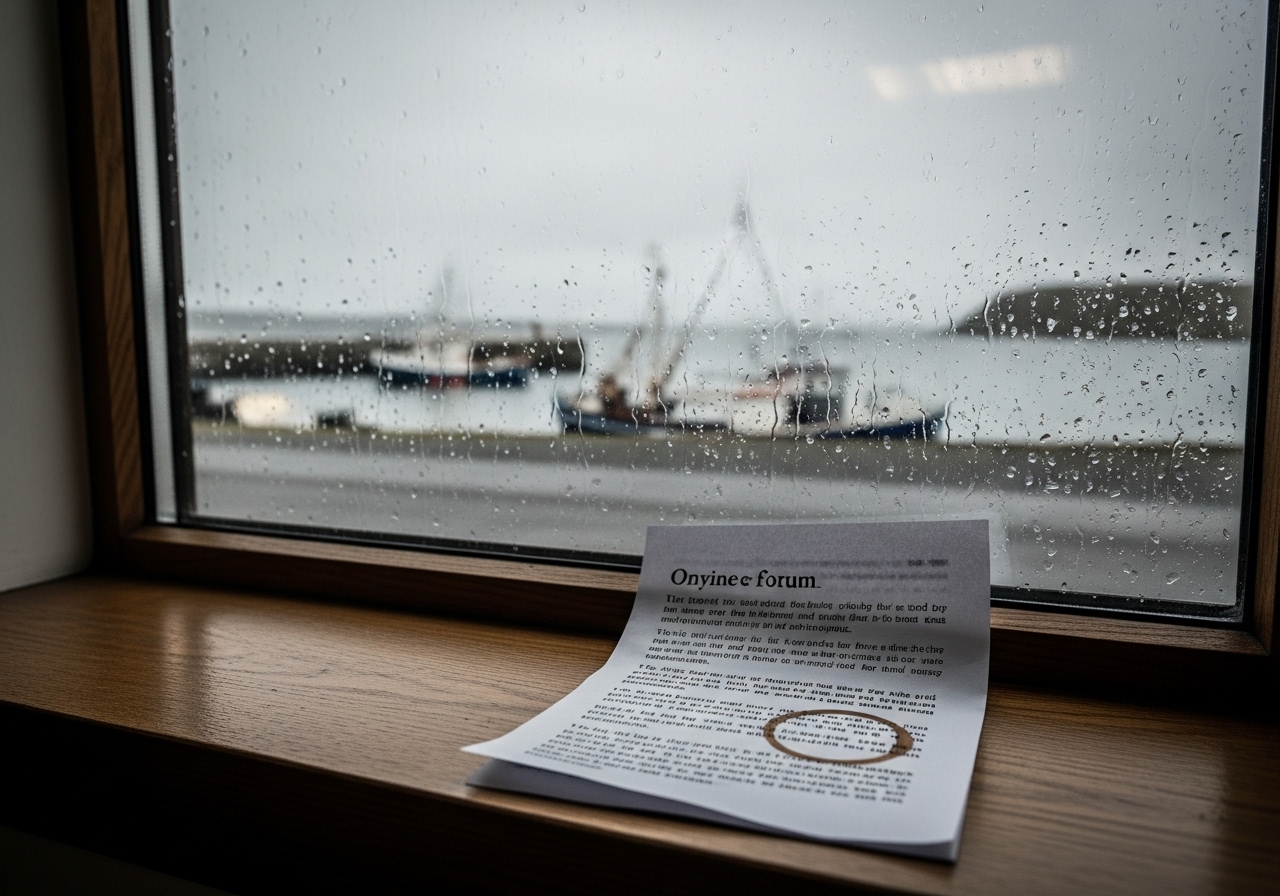
As he got back to his small office, the preliminary report from the city coroner finally arrived in his inbox. He opened it, his eyes scanning the page for the cause of death. And then he saw it. The man hadn't been murdered at all. He'd had a massive heart attack before he ever hit the water.
Share This Story


