Fluorescent Lit Despair and Unseen Wings
The aroma of lukewarm coffee and synthetic cheese hung heavy in the air of the food court, a perpetual hum of a hundred small conversations and clattering trays providing the backdrop. Fluorescent lights, unforgiving and stark, cast a pale, uniform glow over the plastic tables and tired faces, making everything feel slightly too bright, slightly too artificial. It was the kind of place where days blurred into an endless cycle of consumption, yet even here, amongst the manufactured cheer, genuine human stories unfolded, unnoticed by most.
Arthur sat hunched over a half-eaten chip butty, the grease slicking his fingers. He hated the chip butty. It was a concession, a bribe, really, from his mum, who was currently wrestling with a queue at the phone accessory kiosk on the floor below. He liked the quiet hum of the mall, though, the constant murmur of human voices like a distant, distorted choir. It was a different kind of quiet than the one he usually preferred, filled with the rush of wind or the deep thrum of the earth, but it was still a kind of hum.
He watched the woman with the shopping bags. Mrs. Finch, he'd heard someone call her earlier. She was trying to navigate the crowded food court, her movements stiff, almost brittle, as if her joints were made of old, un-oiled brass. She had two enormous canvas bags, straining at the seams, hooked over one arm, and a plastic tray laden with a steaming cup and a barely touched scone in the other. Her winter coat, a faded, shapeless grey, looked like it had seen a hundred winters too many. She shuffled, her worn trainers scuffing the linoleum, a low, continuous grumble emanating from her throat, too soft for anyone but Arthur to truly register.
Her brow was a map of grievances. Arthur could feel the weight of them, like invisible stones pulling at her shoulders, her back. It wasn’t just the shopping, though the bags looked heavy enough to snap a lesser person’s arm. It was the accumulated grit of years, the small disappointments and the large, the ones she had probably stopped noticing, but which still clung to her, a fine, almost imperceptible dust.
A small child, sprinting blindly, veered into her path. Mrs. Finch let out a sharp, choked gasp, jerking back, causing one of her canvas bags to swing wildly. A small, bright orange fell out, rolling with surprising speed under a nearby table.
She froze, her mouth slightly ajar, a silent roar of frustration trapped behind her teeth. Then she sighed, a deep, shuddering sound that came from somewhere far within her. Her eyes, magnified by thick glasses, squinted at the rolling fruit, then at the impossible tangle of her bags, then back at the orange. She didn’t even try to bend.
Arthur, without thinking, slid off his stool. His movements were quiet, almost too fluid for a boy his age, though no one ever noticed. He crouched, plucked the orange from under the table, its skin surprisingly cool, and straightened up. He held it out to her, a perfect, unblemished orb.
Mrs. Finch stared at the orange, then at his hand, then at his face. Her mouth twitched, a battle raging between an ingrained suspicion and a flicker of… something else. “Well, aren’t you… quick,” she managed, her voice a raspy whisper, like dry leaves scraping pavement. She didn't take it.
Arthur didn't pull his hand back. He just held the orange, a small, unassuming offering. The clatter of cutlery, the rumble of passing conversations, the high-pitched shriek of a baby near the pizza stall, all continued around them, oblivious. He could feel the soft pulse of the mall, the currents of intent and frustration, a dull ache behind his eyes.
“Lost your… your orange,” he said, his own voice a little reedy. He wasn’t good at this part. The words often felt clunky, ill-fitting. Real people seemed to know exactly what to say. He never did.
She eventually reached out, her fingers gnarled and slow, picking the orange from his palm. Her touch was surprisingly feather-light, almost tentative. She dropped it into the overstuffed bag with a soft thud. “Thank you, then,” she muttered, not meeting his gaze, already shuffling away, the brief interaction an unwelcome crack in her carefully constructed wall.
Arthur watched her weave through the tables, the grey coat a sombre smudge against the garish colours of the fast-food outlets. He understood the defence mechanism. The refusal of small kindnesses, the preference for the familiar weight of grievances. It kept the world at bay. But it also kept everything else out. The good things, the little sparks of human connection. He knew, intimately, how much effort it took to maintain that kind of solitude.
He saw it then. A small, dark shape on the seat of the chair she'd just vacated. Her purse. A worn leather affair, clutched tight earlier, now utterly forgotten, nestled against the plastic.
A cold dread settled in his stomach, a familiar sensation whenever he saw the fragile hold humans had on their fleeting possessions, their identities. A forgotten wallet, a lost phone, a mislaid photograph — they were anchors. Without them, people drifted. He picked up the purse. It felt surprisingly heavy, thick with coins and a lifetime of receipts. He knew, without looking, there’d be photos, perhaps a small, silver locket.
“Mrs. Finch!” he called out, his voice a little louder this time, cutting through the din. She didn't hear him. She was already past the pretzel stand, moving towards the escalators.
He broke into a jog, something he rarely did indoors. The purse slapped against his hip. People parted around him, a ripple in the human tide. He could feel their exasperation, the faint irritation at being momentarily disturbed. He ignored it. He had a job.
He reached the foot of the escalator, panting slightly, the air in his lungs feeling thin and artificial. Mrs. Finch was already halfway up, her back still stiff, her grey coat a disappearing speck. “Mrs. Finch!” he tried again, a little louder, his throat raw.
She paused. Just for a second. Her head tilted, as if she’d heard something, a whisper on the wind. Then she continued her ascent. He cursed, a small, frustrated sound, and plunged onto the escalator himself, taking the steps two at a time, ignoring the dirty looks from a young couple clinging to their large coffee cups. He could feel the strange tremor in the escalator’s mechanism under his feet, the groan of metal and plastic.
He reached the top just as she was stepping off, one of her heavy bags catching on the edge of the moving stair. She stumbled, a sharp cry escaping her lips, her body listing dangerously. For a split second, she looked like a collapsing monument, all rigid lines and impending fall. Arthur didn’t think. He simply moved.
His hand shot out, not touching her, but somehow bracing the air around her, a subtle, almost imperceptible shift in the pressure, a barely-there gust of wind. She righted herself with a gasp, her feet finding purchase, her bags swinging wildly, but not falling. Her face was pale, blotchy.
“Are you… are you alright?” he asked, the purse still held out, a peace offering. His words seemed to break her out of a daze.
She blinked at him, her eyes wide, unfocused, still processing the near-fall. “I… I nearly… What was that?” she whispered, looking around, as if expecting to see a gust of wind, a rogue push. She touched her chest, her breathing shallow.
“You nearly fell,” he said, a simple truth. Then, “You forgot this.” He pushed the purse gently into her trembling hands.
Her eyes widened as she looked down at the familiar leather. She clutched it, her knuckles white. “My… my purse!” she breathed, a sound of profound shock, a small, fragile 'oh'. She looked back at the food court, then at Arthur, a slow comprehension dawning. “You… you ran after me?”
He nodded, his ears burning. The quietest ones always felt the most attention. He saw the shift in her eyes then, a softening, a breaking of the brittle exterior. Not a smile, not yet, but a crack. A glimpse of something softer beneath the hardened surface. She looked at him, really looked at him, for the first time.
“I… I don’t know what to say,” she stammered, her voice thick with something Arthur rarely heard. Gratitude. It was a potent, disarming thing. She fumbled for the clasp of her purse, then stopped. “Oh, dear. I… I don’t have much on me. But… thank you. Truly.” Her gaze darted to his face, lingered for a fraction too long.
“It’s okay,” Arthur said, his hand lightly touching her arm. “You just… be careful.” His touch was light, but held a peculiar warmth, a subtle, almost imperceptible energy that spread through her arm, loosening something tight in her chest. For a moment, her shoulders seemed to relax, just a fraction. The permanent frown lines around her mouth softened.
She nodded, a slow, deliberate movement. Her lips moved, forming silent words. He could almost hear the quiet, internal recalculation, the sudden, unexpected light in the grey. He felt it, a small ripple in the great current, a tiny flicker of warmth against the vast, cold indifference. His job here, for now, was done.
Arthur offered a faint, almost imperceptible smile, then turned, blending back into the crowd, his steps once again silent, a quiet observer once more. Mrs. Finch watched him go, a peculiar expression on her face, a mixture of bewilderment and a nascent, fragile wonder.
---
A Different Kind of Light
The mall continued its rhythm, the low thrumming of the air conditioning, the distant drone of piped-in music, the endless cycle of feet on linoleum. Arthur walked, his hands tucked into his pockets, the taste of the greasy chip butty long forgotten. He passed a Christmas display, already erected despite it being early November, a garish collection of plastic reindeer and twinkling lights. One of the lights, a small, red bulb, had flickered erratically all day, a tiny malfunction in the grand design.
He paused, his gaze fixed on it. Then, very slowly, the small red bulb steadied. Its glow became strong, unwavering, joining the perfect symphony of the other lights. No one noticed. Except Arthur. He allowed himself a small, private sigh, a wisp of breath that dissolved into the artificial air. Another small detail, restored. He adjusted the collar of his jacket, and the familiar, almost imperceptible weight in his own shoulder blades, a faint thrumming beneath his skin, seemed to settle. His mother would be done soon. He just needed to find her.
He heard her then, her voice a faint, exasperated sound from the phone accessory kiosk. He turned, the crowds parting almost instinctively for him, and walked towards the familiar, human noise, a quiet, almost imperceptible smile playing on his lips, a secret held tight against the bright, indifferent world.
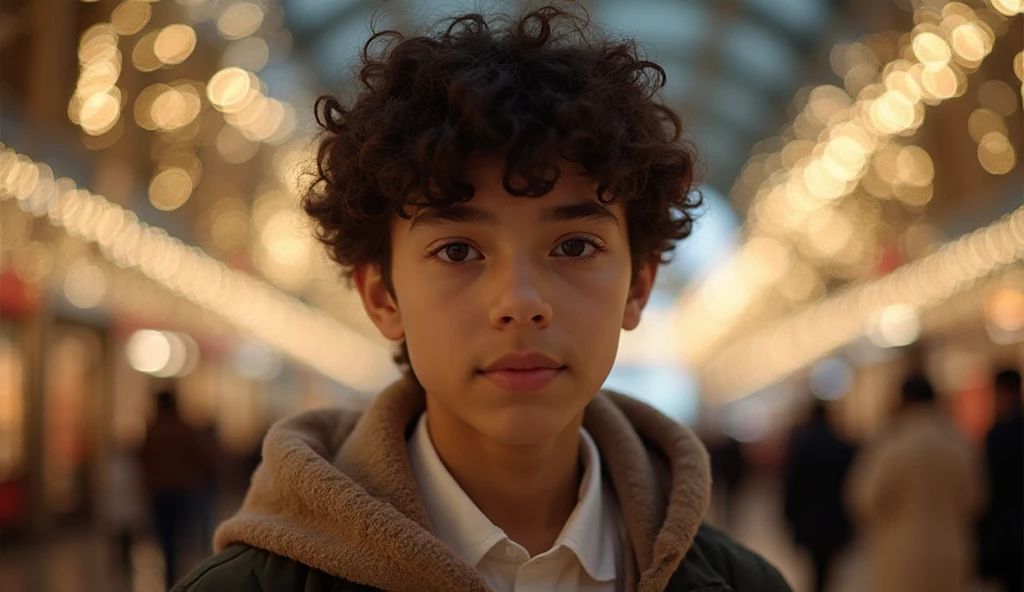
As Arthur walked away, the small, flickering Christmas light he’d been watching suddenly steadied, its glow becoming strong and unwavering. He allowed himself a small, private sigh, a secret held tight against the bright, indifferent world, the almost imperceptible weight in his own shoulder blades settling once more.
Share This Story


