Sun-Bleached Stain on Pavement
The morning sun, already a hammer blow against the downtown core, baked the street where the incident had occurred. A faint, metallic tang still hung in the heavy air, a phantom limb of violence the cleaning crews couldn't quite scour away. Even the pigeons, usually bold and indifferent, seemed to give the patch of pavement a wide berth, their cooing muted.
Agnes traced the outline of a yellowed coffee stain on her windowpane with a gnarled finger. The actual stain, she knew, was two storeys below, a dark, starburst shadow where the unfortunate soul had bled out. Three days. Three full cycles of the sun baking the street, and still, the street itself seemed to remember. The smell, a faint, almost imperceptible iron tang, occasionally drifted up to her nineteenth-floor apartment, even with the air conditioning rattling its ancient defiance against the summer heat.
Below, life, as it always did, churned on. Delivery trucks rumbled past, their diesel fumes momentarily eclipsing the phantom stench. Shoppers, their faces glazed with an early morning sweat, hurried towards Portage Place, clutching reusable bags. Nobody lingered. Nobody glanced down at the particular section of asphalt. They were experts, these downtowners, at not seeing. A skill Agnes had cultivated over decades, only to find it eroding in her old age.
"See something, say something," she muttered, the words tasting like ash. She’d seen everything, hadn't she? The argument escalating from heated whispers to sharp, public accusations. The glint of something thin and fast in the late-afternoon sun. The sudden, awful silence that swallowed the usual street din. And then, the scramble. People scattering like startled birds, leaving one body, slowly darkening, on the pavement. She hadn’t said anything. Not then. She’d called 911 like a good citizen, relayed the cold facts, and then hung up, leaving the rest to the professionals. Now, she felt like an accomplice to the city's quiet complicity.
Residue of a Reckoning
The heat had turned the pavement into a griddle. Bernard tugged at the collar of his shirt, a futile gesture against the oppressive humidity. He was back, against his better judgment, against the protestations of his aching knees and the insistent buzz of his pager. The scene was 'cleared.' The forensics team had packed up their meticulous little kits. The city crews had pressure-washed the evidence, leaving only a slightly darker patch where the life had drained out. Still, he needed to stand here. To feel it. To see if he'd missed something, anything, beyond the obvious.
He stooped, ignoring the groan from his lumbar, and ran a gloved hand over the rough tarmac. The heat permeated the cheap nitrile. Nothing. Just the grit of urban decay, tiny shards of glass, the sticky residue of spilled pop. The victim – a transient, no next of kin, a ghost even before he was dead. The perp – a kid, too angry, too lost, already in custody. An open-and-shut case, everyone said. But Bernard had been doing this too long to believe in open and shut.
He straightened, scanning the street, his gaze snagging on the high-rise across the way. Nineteenth floor. Third window from the left. An old woman, a permanent fixture. Agnes. She watched everything. He’d seen her during the initial canvass, her eyes like chipped porcelain, taking in the chaos with an unnerving calm. She’d given a statement, brief and to the point. No fuss. No tears. Just facts. He wondered what she saw now.
---
Agnes watched the detective, a stooped figure in a suit that seemed to wilt in the heat. Bernard, she remembered. He was older than he looked in the brief, flickering headlines. Not much younger than her, probably. He looked tired. Not just physically, but a weariness that settled deep in the bones, the kind you earned after seeing too much of humanity's true face.
A faint tremor ran through her hand, setting the coffee cup on the sill to clink softly. She hadn't left her apartment since it happened. The world outside felt… thinner. More permeable. As if the violence had opened a portal, allowing more of the city's simmering ugliness to leak through. The news had covered it for a day, maybe two. 'Tragic downtown incident.' Then, the headlines moved on to property taxes and the Bomber's latest loss. Always something else to distract. Always.
Bernard caught her eye. Just a flicker. A slight tilt of his head, barely perceptible. He didn't wave. He didn't smile. Just that brief, shared acknowledgment of the grim reality that stitched them together, two old souls observing the same patch of misery. Agnes didn't wave back. She just held his gaze, a silent dialogue passing between them across the gulf of concrete and glass. A question in his stare: You saw more, didn't you? A response in hers: Doesn't everyone?
Stagnant Air, Stagnant Souls
He knew that look. The way some people held onto a secret, not out of malice, but because they understood its futility. What more could Agnes have seen? The knife? The specific angle of the fall? It wouldn't change the outcome. A life was gone. Another was ruined. The city would absorb it, a slow, cancerous growth on its already scarred heart. Bernard sighed, a hot, sticky breath that offered no relief. The truth was, he was tired of it. Tired of the endless cycle, the small, avoidable tragedies that painted the streets in shades of red and regret.
He pulled out his phone, the screen already too hot to the touch, and scrolled through the latest updates. Nothing new on the downtown file. The paperwork would be a nightmare, but the street-level investigation was effectively over. He looked up at Agnes again. She was still there, a silhouette against the glare, a silent sentinel. He wondered what she thought of him, this perpetually rumpled detective, always a step too late, always cleaning up someone else’s mess.
A bead of sweat trickled down his temple, stinging his eye. He wiped it away with the back of his gloved hand. He had a meeting with the brass in an hour, another lecture about statistics and public perception. He was supposed to reassure them, tell them the city was safe. He felt a grim chuckle rise in his throat. Safe? Winnipeg was a city of a million quiet heartbreaks, occasionally punctuated by a loud, messy one. Safe was an illusion, peddled by politicians and swallowed by those who didn't look too closely.
---
Agnes watched Bernard finally turn, a slow, deliberate pivot, and walk away. He didn't look back. Just merged with the stream of humanity, another ripple in the indifferent tide. She pressed her forehead against the cool glass of the window, a small luxury against the heat. The city pulsed around her, a constant, low thrum of traffic and distant sirens, a living, breathing organism that devoured its young and ignored its old. And sometimes, like this week, it simply spilled blood on its own doorstep, then expected everyone to step around it.
What had she seen? Everything. The victim, a boy, really, no older than her grandson would have been. His frayed jacket, his defiant eyes. The attacker, younger still, a frantic, desperate energy in his movements. The fear, the rage, the sudden, terrible finality. She hadn't just seen a crime; she'd seen a symptom. Of neglect, of desperation, of a system that chewed up the vulnerable and spat them out onto the baking asphalt. She closed her eyes, but the image was etched behind her eyelids, a permanent scar on her summer memory.
The memory of her own youth in this city, a different Winnipeg, was a faded photograph now, sepia-toned and fragile. She remembered neighbours knowing names, children playing unsupervised on tree-lined streets, a sense of community that had long since evaporated like a puddle in July. Now, everyone was a stranger, even the ones who lived in the next apartment, even the ones who walked past a fresh stain without a second glance. The heat felt heavier, the air thicker, not just with humidity, but with an unspoken agreement of apathy.
A distant sound of sirens grew louder, then faded. Another incident, somewhere. Another ripple. The sun continued its relentless climb, blanching the sky to a pale, unforgiving blue. Agnes wondered if anyone truly cared anymore, or if they were all just waiting for the next headline, the next distraction, while the city slowly, inevitably, consumed itself.
She thought of the boy who died. Of the boy who killed him. Two lives, extinguished or ruined, and for what? A moment of misplaced anger? A struggle over something petty, amplified by desperation? The answers felt less important than the sheer, crushing weight of what it represented. The city itself, an indifferent beast, had merely opened its mouth and swallowed. She felt a familiar cynicism, not bitter, but profoundly weary, settle over her like a shroud. This was Winnipeg now. This was life.
She looked back at the street. The dark patch was still there, even if only in her mind’s eye. A ghost. A reminder. The city cleaned its streets, but never its soul. And the summer heat, relentless and suffocating, seemed to press down on everything, baking the truth into the very concrete, where it would remain, unseen by most, but felt by those who bothered to look.
What would become of it all? The city, the people, the endless parade of small cruelties and vast indifferences? Agnes didn't know. She only knew that the heat was still rising, and the air was still heavy, and the silence from the street felt like an unspoken promise of more to come.
---
Bernard drove away, the air conditioning in his patrol car doing little to alleviate the internal humidity. The meeting was a waste of time, he already knew. He'd give his report, offer his assessment, and they'd file it away, another statistic in a city growing numb to its own violence. He glanced up at Agnes's window one last time. She was still there, a small, dark figure behind the glass. What did she see? What did she know that he didn't? Or was it simply that she'd lived long enough to understand the brutal, cyclical nature of it all, and had simply stopped pretending otherwise? He didn't have an answer, only a deepening sense of dread that settled in his gut like a lead weight. The summer had only just begun.
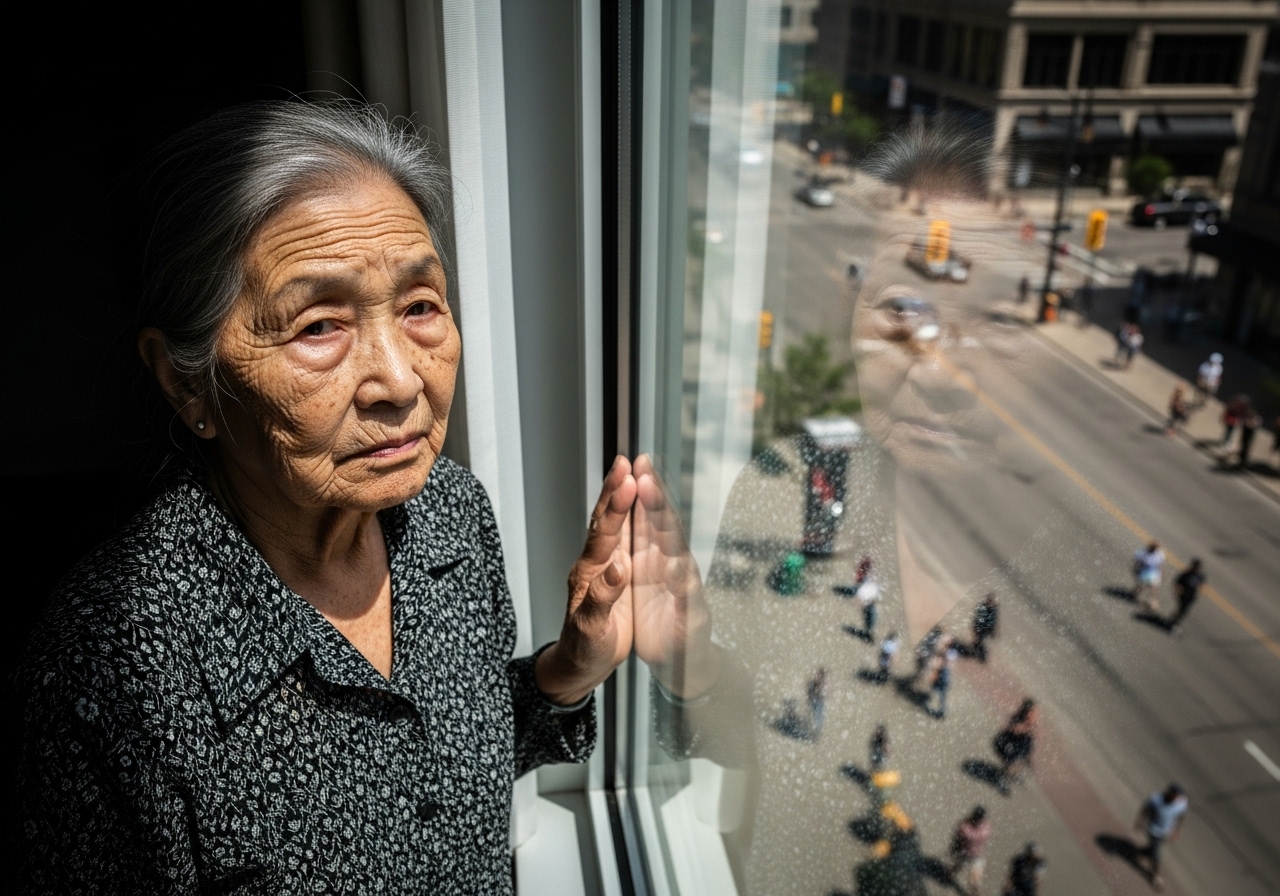
The summer had only just begun, a long, hot stretch promising more than just sunshine, but a relentless unfolding of the city's hidden, darker narratives, and Bernard knew, with a chilling certainty, that this small, 'solved' crime was merely a prelude to a larger, more insidious truth yet to be revealed.
Share This Story


