The Silent Spring
A tense confrontation in a neighborhood community garden where external researchers are failing to identify a toxic threat.
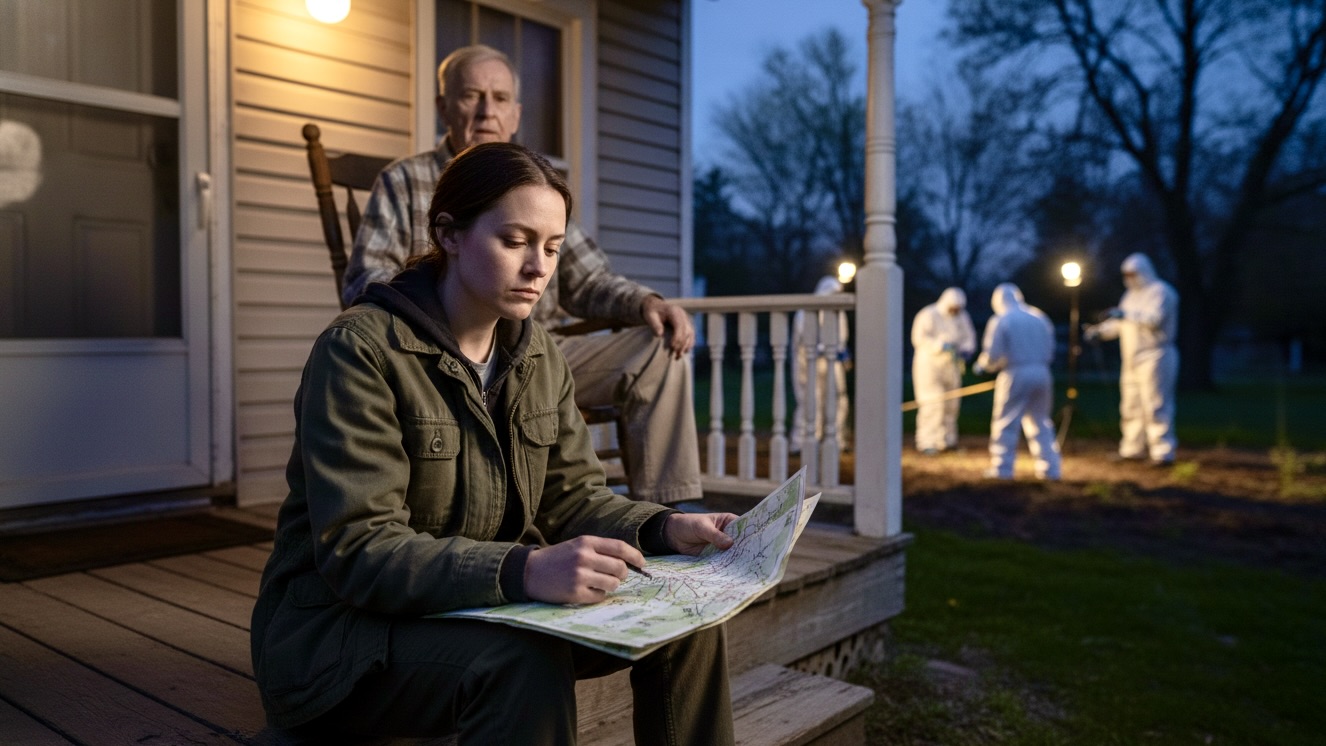
The robins were the first to go quiet. Then the heavy, metallic taste settled in the back of my throat, clinging like smoke. I stood at the edge of the community garden, watching the men in white hazmat suits drive stakes into the northwest corner of the lot. They moved with the clinical detachment of surgeons, extracting cores of earth to take back to their sterile labs downtown. They were looking for data. They were looking in the wrong place.
"They’re wasting their time," a voice rasped behind me. Mr. Taylor sat on his porch, a blanket over his knees despite the mild spring air. He was seventy, lived here since the factory days. He knew what was buried beneath the hydrangeas.
I walked up the steps, the wood creaking under my boots. "Dr. O’Connell says the preliminary scans are clean, Mr. Taylor. He says the groundwater model predicts the flow goes south, away from the houses."
Mr. Taylor spat. "Models. Maps drawn by people who never walked this dirt. They come here with their questions already written, Julie. They don't ask us what the answers might be."
He was right. This was the failure of the extraction method—dropping in, taking samples, and leaving. It treated us like petri dishes, not partners. I looked back at the garden. The researchers were adhering to a protocol designed in a university boardroom, blind to the reality of the terrain. I needed to shift the paradigm. I needed to stop acting like a witness and start acting like a participant.
"Show me," I said, sitting on the step below him. "Tell me where the creek used to run before the city paved the culvert in '98."
Mr. Taylor’s eyes narrowed, assessing me. Trust wasn't given here; it was earned through tenure and blood. "You want to know, or you want to put it in a report?"
"I want to change the question," I said. "We define the scope. Not them."
That night, the kitchen table became the command center. It wasn't just Mr. Taylor. It was Sarah from the daycare who noticed the kids got rashes after playing near the old oak. It was the mechanic, David, who knew which pipes had leaked oil for a decade. We weren't subjects anymore. We were co-researchers. This was the core of it—acknowledging that the lived expertise in this room held more weight than O’Connell’s satellite imagery. We mapped the neighborhood not by property lines, but by sickness and memory.
"Here," Sarah pointed to a spot fifty yards east of where the hazmat suits had been. "The snow never settles here. The ground stays warm."
"The old boiler room runoff," Mr. Taylor murmured. "They paved over it, but the pipes are still down there. That's the source. That's the context they missed."
The next morning, the fog was thick. I met Dr. O’Connell at the gate. He held a clipboard, looking impatient. "Julie, we’re wrapping up. The samples are consistent. No toxicity."
"You sampled the surface fill," I said, handing him our map—a hand-drawn overlay of historical drainage and current illness clusters. "You didn't ask the people who live here where the bodies are buried."
He frowned, glancing at the crude drawing. "This isn't standard methodology."
"It's participatory," I countered. "You’re looking for a chemical signature. We’re showing you the cause. You can't replicate seventy years of observation with a two-day site visit. If you want the truth, you have to let us lead the inquiry. We own the data because we live the consequences."
He hesitated. The silence stretched, heavy and damp. He looked at the map, then at the spot Sarah had marked, then back at me. The arrogance of the expert wavered against the weight of local truth.
"Show me," he finally said.
We dug where Mr. Taylor said to dig. Three feet down, the soil turned a slick, iridescent black. The smell hit us instantly—sweet, rotting, toxic. O’Connell recoiled, his sensors screaming red. We had found it. Not by following the textbook, but by listening to the street.
O’Connell looked at the black sludge, then at the row of houses watching us, and I wondered if he realized that finding the poison was the easy part; admitting we were right would be the hardest thing he’d ever do.
Share This Story


