The Zero-Degree Pivot
A tense confrontation in a drafty community center in a snowbound town, where a public health investigation transforms into a collaborative partnership.
The data on the tablet screamed of a crisis—a three hundred percent spike in respiratory distress within the valley—yet the waiting room of the Blackwood Creek clinic was disturbingly, impossibly empty. Ed, barely twenty-four and shivering in a coat too thin for this latitude, tapped the glass screen as if to shake the numbers into reality. Outside, the wind howled across the frozen mining tailings, a whiteout erasing the horizon. He had arrived with a mandate from the university: extract samples, administer the standardized questionnaire, and return to the city with the raw material of their suffering. But the town had greeted him with closed doors and drawn curtains. The silence was not an absence of illness; it was a fortress of distrust.
He found the matriarch of the community, Mrs. Gordon, in the basement of the local parish, wrapping bandages for a home-visit kit. She did not look up as he entered, the smell of damp wool and antiseptic heavy in the air. Ed approached, his movements sharp with the urgency of the failing timeline. "The metrics are critical, Mrs. Gordon," he announced, his voice echoing slightly in the stone room. "I require access to the households. Without the surveys, the funding for the intervention dissolves. I cannot synthesize a remedy from silence."
Mrs. Gordon paused, her hands hovering over the gauze. When she turned, her eyes were hard, reflecting a century of grievances. "You arrive with predetermined questions, expecting us to fill the blanks in a story you have already written," she declared, her tone operatic in its gravity. "We are not variables in your equation, young man. We are the architects of this grief. Your predecessors came, extracted our blood like oil, and left behind only paper reports that gathered dust while our children coughed. You ask about the air filters, but you do not ask about the soil beneath the foundations. You seek data; we seek survival."
The rebuke struck Ed with physical force. He looked at his standardized form—Item 4: Ventilation Frequency—and realized its utter irrelevance. This was the failure of the external observer. He possessed the statistical tools, but Mrs. Gordon held the contextual knowledge, the lived expertise that no remote sensor could replicate. He saw suddenly that the research was doomed because it was a transaction, not a partnership. To proceed meant dismantling the hierarchy of the scientist and the subject.
Ed unclipped the tablet from its case and set it face down on the scarred wooden table. The gesture was a surrender of authority. "Then the protocol is flawed," he admitted, his voice dropping the defensive edge. "If the inquiry does not reflect the reality of the soil, it is worthless. I propose a new architecture for the truth. We do not use my questions. We convene the council—the youth, the elders, the workers. We define the purpose of this study together. You tell me what matters, and my resources become the instrument of your curiosity, not the other way around."
Mrs. Gordon studied him, the tension in the room stretching like a wire. "Shared ownership," she murmured, testing the weight of the concept. "You offer us the pen, not just the paper?"
"From the design of the method to the interpretation of the results," Ed vowed, the cold air suddenly feeling electric with potential. "We build the capacity here. The findings will not belong to the university archives; they will be forged into tools for your policy changes, your immediate needs. Reciprocity, Mrs. Gordon. I am no longer the researcher. I am the technical consultant to your investigation."
She nodded once, a sharp, decisive movement. "Then prepare yourself, Ed. The meeting begins at sundown, and the community has much to teach you about the nature of the cold."
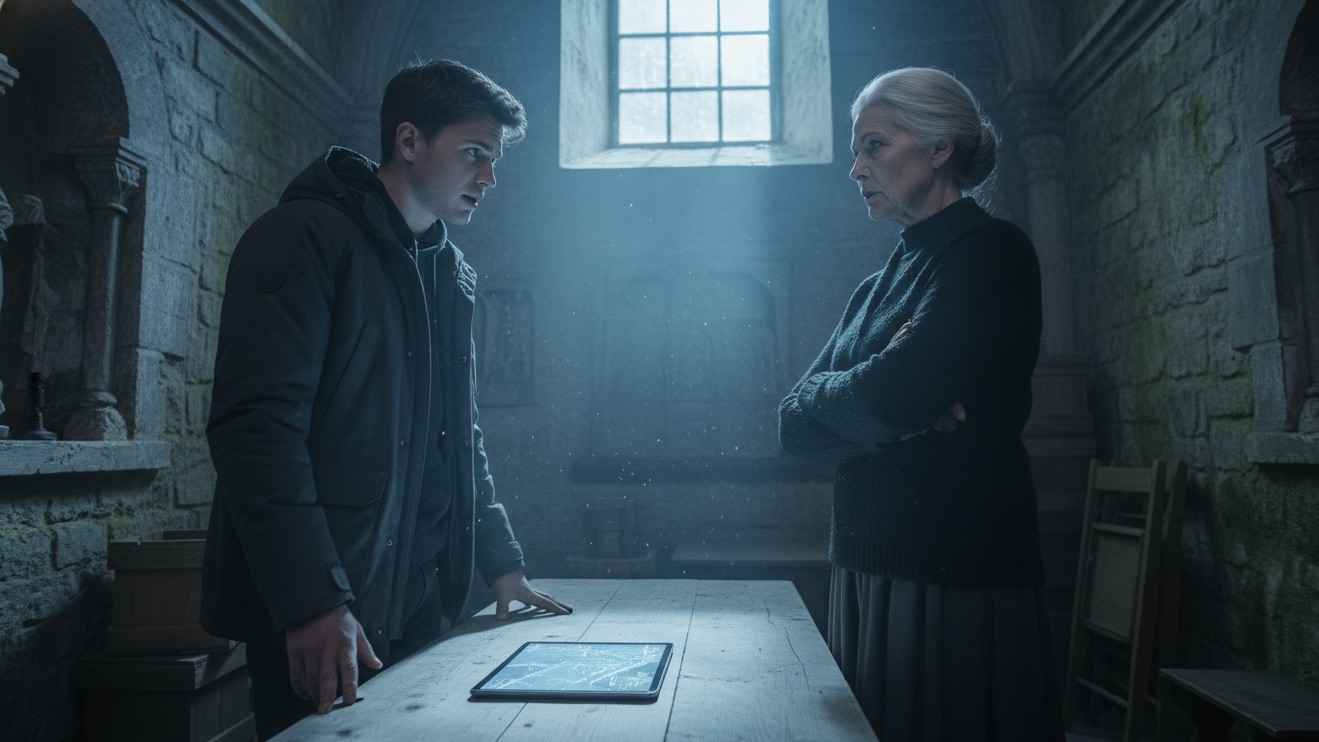
As the wind battered the heavy oak doors, Ed realized that the hardest part of the science was not the analysis, but the humility required to begin.
Share This Story


