The Hum in the Asphalt
On a sweltering summer afternoon in 2025, the protagonist and two companions are hunkered down in the skeletal remains of an abandoned diner along a desolate highway, evading an unseen but palpable threat that seems to feed on the pervasive societal decay. The air shimmers with heat and an unnatural static.
The sun beat down like a blacksmith’s hammer, each ripple of heat off the cracked asphalt of old Route 17 a fresh bruise on my skin. Dust coated my tongue, a fine grit that tasted like rust and forgotten things. My shirt, stuck to my back, was probably the color of stale sweat and whatever dirt I’d picked up from the floorboards of this forgotten diner. My knees knocked together, not from cold, but from that hum. It wasn’t a bee or power lines. It was deeper, a low thrumming that seemed to vibrate in the very concrete beneath my worn sneakers, an echo of the sickness that had bled into everything these past months, these past years, since the switch flipped and humanity decided it preferred static over connection. Or maybe it was just the heat, twisting my guts into knots.
Across the narrow space, partially hidden behind a toppled soda machine that smelled faintly of sour syrup and decay, the one with the dark, unruly hair shifted, his gaze fixed on the shimmering horizon. His hands, usually busy with some gadget or a worn book, were tight fists in the dust. I watched his knuckles, bone-white, and felt a familiar tremor go through me, something more than fear. It was a warmth, a need to reach out, to smooth the worry from his brow. Stupid. Everything was stupid, especially this feeling, but it clung to me like the dust. He caught my eye, a quick, intense flick that pulled the breath out of me. No words. Just a tightening of his jaw, a shared understanding that we were both strung wire-tight, waiting for the other shoe to drop, or perhaps the other claw to drag itself from the brush.
The youngest, thin and wiry, was curled tight against a counter, his face pale under the layers of grime. His name, a gentle, almost musical sound, felt too fragile for this world. He was still. Too still. I could feel his trembling from here, a low frequency thrumming against the silence. It was the kind of silence that wasn't peaceful, but heavy, expectant, like the air before a lightning strike. We hadn't seen anything, not really, but the feeling… it was like being watched by something that understood the exact weight of every wrong decision, every shouted word, every slammed door. The world had turned mean, and now the meanness had started to breed. Not actual monsters, not exactly, but… the echo of them. The implication.
A shard of glass, glinting in the sun, reflected a distorted image of myself: wide eyes, a streak of dirt on my cheek, hair plastered to my forehead. I barely recognized the kid looking back. He looked hunted. We all did. Before all this, before the feeds turned toxic and the streets emptied, before the whispers started about people just… stopping, I’d been planning summer jobs, maybe a road trip, stupid teenage dreams. Now, a road trip meant fighting for scraps, staying hidden, and hoping the next deserted town wasn’t already claimed by the things that lurked in the spaces between the ruined houses, between the broken conversations.
A metallic creak echoed from outside, making all three of us freeze. Not a car. Something heavier, slower. My heart hammered against my ribs, a frantic drumbeat. The dark-haired one’s eyes narrowed, a muscle jumping in his cheek. He didn’t move, not a twitch. He had a way of becoming utterly still, like a desert predator, absorbing every sound, every shift in the air. The youngest let out a tiny whimper, quickly stifled, but it was enough. The sound carried, a thread pulled taut in the oppressive silence. I wanted to tell him it was okay, but the words stuck, dry and useless in my throat. What was okay, really? Nothing. Not anymore.
The creaking came again, closer this time, accompanied by a scraping sound, like heavy stone dragging over concrete. It wasn’t human, not exactly. We knew that. These… things… they were an outgrowth of the collective rage, the years of spitting venom through screens, the deliberate tearing apart of common ground. They weren't supernatural in the old sense, no glowing eyes or fangs. They were worse. They wore the shapes of human anger, the grotesque distortions of forgotten arguments, of slights unforgiven. And they were drawn to discord like moths to a flame. Drawn to the fear that was churning in my gut right now.
The dark-haired one slowly, painstakingly, reached for the rusted rebar propped against the counter. It was heavy, makeshift, but it was all we had. His fingers brushed mine as he moved, a brief, electrifying contact. I felt a surge of something defiant, something that had nothing to do with fear. It was a stubborn warmth, a spark against the encroaching cold. We were still here. Still breathing. Still… connected, even if it was just through this silent, desperate understanding. He nodded towards the back exit, a broken door leading to an overgrown service alley. We would try to slip out, circle around, hope whatever was out there was too slow, too blind, too absorbed in its own grotesque hunger.
The youngest swallowed hard, his eyes wide, pleading. I gave him a quick, tight nod. 'Ready?' I mouthed. He just stared, trembling. He wasn’t ready. None of us ever were. But what else was there? To sit and wait? That was death, slow and certain, eaten alive by the emptiness of a world that had forgotten how to share, how to listen, how to just be. We moved, a coordinated shuffle of three bodies trying to be silent, trying to be invisible. Each creak of the floorboards under my weight felt deafening, a drum roll announcing our presence. The humid air pressed in, thick and suffocating. I could almost taste the decay, the rot of civility.
We reached the back door. The dark-haired one pushed it open a crack, peering out. His back was a solid wall in front of me, broad and reassuring. I knew he would fight. For us. For anything that was left. I pressed closer, the warmth of his presence a shield against the creeping dread. The alley was a tangle of weeds and discarded tires, a narrow strip of cracked concrete flanked by collapsing brick walls. Nothing moved. The sun still blazed, indifferent to our terror. Just the humming, a constant, low buzz that seemed to emanate from the ground itself, from the bones of this dead town.
Then, a shadow detached itself from the far end of the alley. It wasn’t a shadow cast by the sun, but something deeper, thicker, a wrongness in the air given form. It was indistinct, shifting, like smoke, but with a horrifying weight to it. It drifted, not walked, towards us, slowly, deliberately. I saw faces flicker within its indistinct mass, distorted and angry, mouths open in silent screams of accusation, of endless, petty grievances. This was what the polarization had birthed. Not just division, but a living, breathing void that consumed empathy. It was the horror of a world that had finally stopped trying to understand each other.
The youngest gasped, a choked sound that drew the shadow’s attention. It paused, a ripple passing through its form, like a predator scenting fear. Its movement wasn't quick, but inexorable. The dark-haired one pulled me back, his hand gripping my wrist, his eyes burning with a fierce intensity. He slammed the door shut just as the shadow reached the threshold, the old wood groaning under its unseen pressure. We were trapped. Again. But this time, I saw something else in his eyes, something that cut through the terror. A raw, vulnerable tenderness. It was a promise, unspoken, that we would face this together, whatever 'this' was.
He pointed to a narrow gap between the counter and a broken freezer. 'Crawl,' he mouthed, his voice a rasp, barely audible over the increasing pressure against the door. The youngest was already scrambling, a blur of motion fueled by pure panic. I hesitated, my gaze locked with the dark-haired one. A million things passed between us in that heartbeat—fear, desperation, a stubborn refusal to be broken. But also, a question, hanging unspoken in the dusty air. A confession, maybe. He gave a sharp tug on my arm, urging me forward. I went, scraping my knee hard on the concrete, the pain a sharp, welcome anchor to reality.
We wriggled through the cramped space, dust motes dancing in the slivers of light. The groaning of the back door intensified, splintering wood audible now. When we finally cleared the freezer, we found ourselves in a small, windowless storeroom, piled high with cardboard boxes that smelled of stale grease and forgotten inventory. The youngest was huddled in a corner, his face buried in his knees. The dark-haired one was already assessing the room, his gaze scanning for any other exit, any weak point in the crumbling walls. No easy way out. The air in here was stifling, thick with the scent of damp paper and our own fear.
He turned to me, his expression grim. 'They’re… stronger than last time,' he breathed, his voice tight. 'They’re learning.' The 'they' was vague, encompassing the creeping despair, the physical manifestations of the world's brokenness. It wasn’t just the angry faces within the shadow; it was the hunger behind them, the absolute emptiness. This wasn’t just about survival anymore. It was about something more. About fighting back, even if it was just with a rusted piece of rebar and a desperate will to endure. He reached out, his hand hovering near my shoulder, a gesture that spoke volumes without a single word. My skin tingled, wanting that contact.
The silence in the storeroom was suddenly broken by a dull thud, followed by a series of wet, tearing sounds from the diner. They were inside. The shadow. Or whatever it had become. It had broken through. My breath hitched. The youngest let out a strangled cry. I felt a cold dread seep into my bones, a despair so profound it threatened to swallow me whole. This was it. The end of the road. But then, the dark-haired one moved, quickly, purposefully. He picked up a dusty old lantern, its glass cracked, and shook it. It rattled, empty. But his intention was clear. We weren't going to just hide.
His eyes, dark and intense, met mine again. A fierce, unwavering resolve burned there, mirroring a spark that ignited in my own chest. Kindness. It mattered. More than ever. Not just acts of kindness, but the very act of being kind, of connecting, of choosing empathy over anger, even when the world screamed for the opposite. This was our only weapon against a horror born of division. He held out his hand, palm up, a silent invitation. Not for comfort, not for escape, but for solidarity. For battle. And in that gesture, in the shared understanding that flowed between us, the crushing despair lifted, just a fraction. Enough. Enough to move.
The thudding and tearing sounds stopped. A chilling stillness descended, heavy and absolute. It was waiting. We were waiting. The air crackled with a low, constant static hum, vibrating through the floor, a sound that seemed to be the very heartbeat of a world gone wrong. But the dark-haired one’s hand was warm, solid, in mine. His thumb traced a circle on my palm, a silent reassurance, a defiance of the decay all around us. The youngest, still huddled, looked up at us, his eyes wide, but with a flicker of something new—a tiny, fragile hope.
We had to get out. Not just from the storeroom, but from this cycle, this constant retreat. We couldn't let the anger win, couldn't let it consume us like it had consumed so many others. We needed to find a way to fight it, to remind people what it was like to simply be good to each other. Even if it was just us three, armed with nothing but a broken lantern and a desperate, illogical belief in connection. The rebar felt heavier in the dark-haired one’s hand now, no longer just a weapon, but a symbol. A symbol of resistance.
The weight of his hand, the unspoken promise in his eyes, solidified something inside me. We were not just running anymore. We were looking for a way to light a spark in the overwhelming darkness. There had to be others, people who remembered, who wanted to rebuild, to reconnect. We had to find them. We had to carry the embers of civility across this scorched landscape, against all odds, against the very forces that seemed to feed on its absence. His grip tightened, a silent question, a shared resolve. And for the first time in months, I felt a surge of something other than fear: purpose. This wasn't just about surviving; it was about beginning again, one impossible, kind act at a time.
We would leave this dead diner, brave the crushing heat and the crawling static-shadows, and seek out the last vestiges of warmth, the hidden pockets of humanity that perhaps still understood what it meant to simply be present, to simply care. Our path was uncertain, fraught with unseen horrors and the constant threat of a world that had forgotten its own heart. But with his hand in mine, and the faint, renewed spark of hope, a new quest began, westward, towards the faint, impossible promise of a kinder horizon.
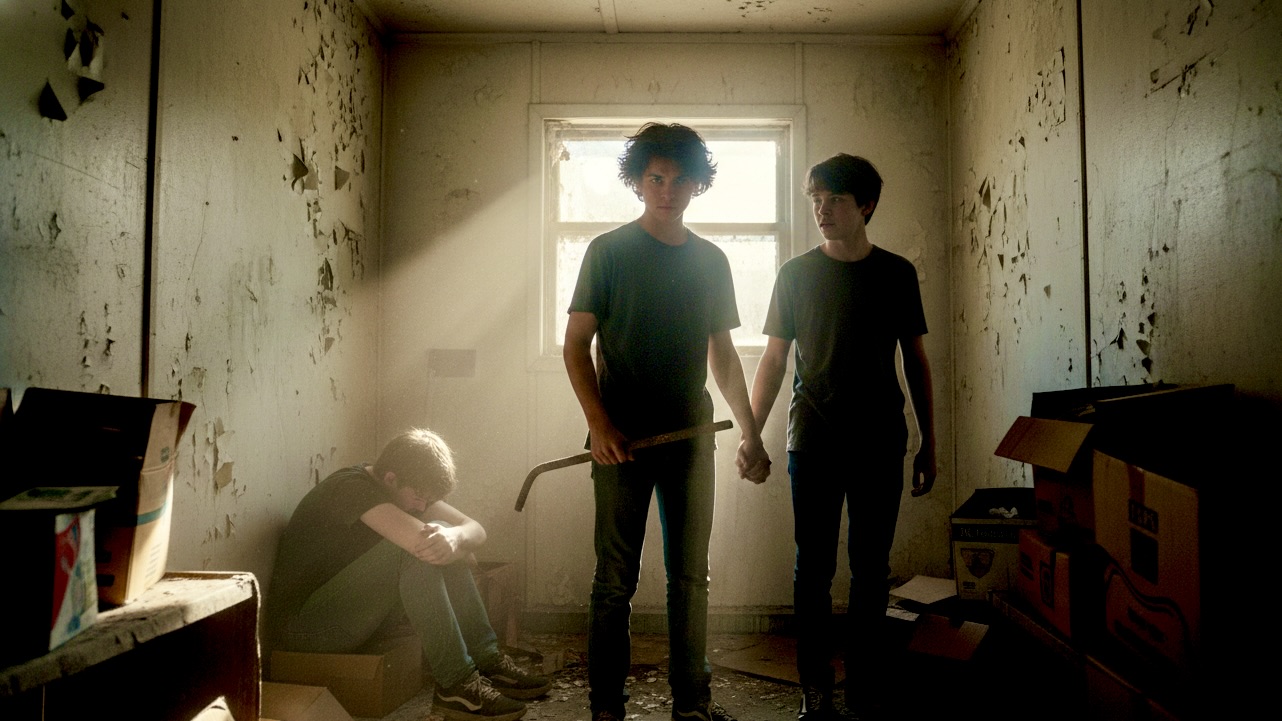
But with his hand in mine, and the faint, renewed spark of hope, a new quest began, westward, towards the faint, impossible promise of a kinder horizon.
Share This Story


