Rotten Roots and Hard Ground
A biting wind scoured the stunted birches, stripping them bare. The tundra, a canvas of burnt sienna and dull gold, stretched to a horizon where the sky hung heavy and bruised. Every breath was a frosty cloud, every step a reluctant push through the deepening mud and ancient, waterlogged moss.
The bog sucked at Lucasie’s boots. Each step was a fight, a squelch, then a slow, reluctant release. The chill had teeth, biting through the thick wool of their parka, finding the gaps where the zipper wasn't quite sealed. Overhead, the sky was a sheet of bruised grey, pressing down on the stunted birches. Their leaves, already mostly gone, clattered like dry bones in the wind.
A small, square device, grey plastic flecked with mud, hummed faintly at the base of a lichen-covered rock. Lucasie knelt, gloved fingers brushing aside stiff tundra grasses. The display flickered, then spat static. Not good. Not at all.
They pulled out their own handheld, tried to sync. A flatline. The local network, usually robust, was dead silent. A knot tightened in Lucasie's gut. These were supposed to be fail-safes. The 'E' in ECO-STAR. Environment. Understand the ground you’re treading, the life it sustains. Their project, this slow, deliberate harvest of a unique, bio-luminescent moss that could power the entire isolated settlement, was built on that understanding. Or so they’d told themselves.
"Still nothing?" Myna's voice crackled, distant, through the comms. She was back at the station, probably huddled over a screen, a mug of lukewarm tea forgotten beside her elbow. Myna, with her quick fingers and optimistic code. She saw patterns. Lucasie saw mud and dead air.
"Nothing. Just… silence," Lucasie muttered, the words turning to fog. A long pause. The wind picked up, a low moan across the flat expanse. The smell of damp earth, of something decaying beneath the permafrost, filled their nostrils.
"Could be a solar flare? Or… a local interference?" Myna offered, grasping.
Lucasie grunted. "Or it's busted. Or someone busted it." They tapped the casing again. Still nothing. The silence felt heavy now, not just empty. It felt like a decision.
---
The Unseen Hand
They moved on, leaving the dead sensor to its lonely vigil. Three more checks. Same result. Flatlined comms, corrupted local data. Each time, Lucasie felt the landscape shift around them, becoming less familiar, more watchful. The crunch of frost-nipped berries underfoot. The faint, almost imperceptible tremor of the earth, as if something vast was moving far beneath the surface.
At the fourth site, something was different. Not just a dead sensor. The ground around it was disturbed. Not by caribou, not by a bear. There were faint boot prints, too small for a grown man, too precise for random wandering. The moss, the very thing they were trying to harvest responsibly, was torn up in uneven patches, like someone had ripped it away in a frantic rush.
Lucasie knelt, pressing a gloved hand into the cold, damp earth. The scent of turned soil, bitter and cold. This wasn't an animal. This was deliberate. The 'Ecology of an Idea' had a predator. Or a parasite. Who benefits from this, they thought, from ruining what we're trying to build?
A sudden snap in the distance. A branch, dry as tinder. Lucasie froze. Head cocked. No wind that strong. They spun, eyes scanning the skeletal birches, the undulations of the tundra. Nothing. Just the vast, empty expanse, the bruised sky. But the skin on the back of their neck prickled. They weren't alone.
Their fingers went to the utility knife at their hip, a habit more than a conscious decision. The metal was cold against the parka fabric. An old man, Thomasie, had taught them how to track. How to listen to the land. But this wasn't about listening to the land's natural rhythm. This felt like a different conversation entirely. A human one. And it was speaking in threats.
The data, they'd called it. An 'Opportunity' to create a new, clean energy source. A 'Solution' for the community's dependence on fossil fuels. But what if the 'Opportunity' attracted hungry eyes? What if the 'Solution' created more problems than it solved? The questions coiled in Lucasie's mind, a cold snake.
---
Cold Comfort and Heavy Words
Back at the settlement, the small cabin hummed with the warmth of a wood stove. Old Man Thomasie sat by the window, carving a piece of juniper root, the scent of woodsmoke and resin clinging to him. His face, a map of wrinkles, didn't change as Lucasie entered, but his eyes, sharp and dark, flickered up from his work.
"Sensors," Lucasie began, peeling off their parka, letting it slump to the floor. "They're down. And something else. Tracks. Someone’s out there. Messing with the sites."
Thomasie shaved another sliver of wood. "The land," he said, his voice a low rumble, "it doesn't forgive a hurried hand." He didn't look up.
Lucasie scoffed, a quick, humourless sound. "We weren't hurried. We did the impact assessments. The modelling. The bio-mimicry. We even put in the 'E' in ECO-STAR. Environment first. That's what we preach, Thomasie."
Thomasie finally raised his head. His gaze was steady, unblinking. "Preaching and listening are different paths, child. You listen with your instruments. The land listens with its roots. Its rivers. Its long memory. It remembers the quick hand. The one that thinks it knows better."
The air in the cabin thickened. Lucasie felt the familiar impatience, the generational divide. "This isn't about some ancient wisdom, Thomasie. This is about real people, trying to build something. To live here. And someone is actively trying to stop it."
"Perhaps," Thomasie said, a faint smile playing on his lips, "the land is trying to stop it too. Or teach you how it really works." He tapped the small, intricately carved bird in his hand. "You think you know the 'Customer,' the 'Opportunity'. But do you know the soil? The caribou? What do they think of your plan?"
Lucasie ran a hand over their cropped hair. This was the same conversation every time. "We need that moss. For the power. For the future. We can’t just… sit back and wait for the land to give us permission. It’s about survival."
"Survival," Thomasie repeated, his voice softer, "is built on respect. Not extraction. Even a careful one. Your 'Solution,' your little glowing moss, what does it truly eat? What does it excrete? And what happens when it dies?"
Lucasie slumped onto a wooden bench. The wood was cold even through their trousers. They didn’t have answers for those questions, not really. Not the way Thomasie meant them. They had spreadsheets, projections. The 'Results' section of their plan. But Thomasie spoke of deeper truths. The ecology of an idea, not just the financial one.
---
The Unspoken Threat
The next morning was sharper, colder. The air felt thin, metallic. Lucasie had spent half the night staring at maps, at the sensor grid, at the gaps in the data. The boot prints gnawed at them. The torn moss. The unspoken threat.
Myna, bleary-eyed, brought over a tablet. "I managed to pull some residual data from the edge sensors. Not much. But… there's a pattern. A signature. Something moving quickly, in and out of the dead zones. Too fast for a human on foot. Too precise for an animal."
Lucasie squinted at the faint blips on the screen. "A snowmobile? This early in the season?" The ground was still too soft for heavy machinery, but a light, nimble snowmobile might manage, especially on the frozen patches that were starting to form in the deepest parts of the bog.
"Could be. Or… something else." Myna chewed on her lip, a nervous habit. "There's an old trapper's trail, deep in the east bog. Barely used anymore. It cuts right through the densest moss fields. If someone wanted to avoid detection…"
Lucasie stood, the fatigue suddenly overridden by a cold, clear focus. This wasn't just about a failed project anymore. This was about infiltration. About a deliberate act against their community's fragile attempt at self-sufficiency. The 'Advantage' they thought they had – the ethical, low-impact approach – might just be a weakness. Someone else saw their 'Opportunity' and was moving to seize it, or destroy it.
The words of Old Man Thomasie echoed, a low thrum: The land remembers the quick hand. Lucasie clenched their jaw. This wasn't about the land punishing them. This was about someone else exploiting the land, and them, for their own gain. A human hand. A greedy one.
They pulled their parka back on. The weight of it, heavy on their shoulders. "Myna, get the drone ready. Long-range battery. I need eyes on that east bog trail. I'm going in. On foot. To see what else the 'quick hand' has left behind."
The wind howled a fresh lament outside, carrying the scent of damp leaves and impending frost. Lucasie pushed open the door, stepping out into the biting autumn air. The task felt heavier now, colder. Not just data collection, but a hunt. A dangerous game played on ground that remembered everything.
This was the start of it, they knew. The real work. The muddy, dangerous work of understanding the ecosystem of their idea, and the human predators within it. The land had spoken, and it wasn’t just about moss or wind. It was about something hidden, something waiting. And Lucasie was walking right into it.
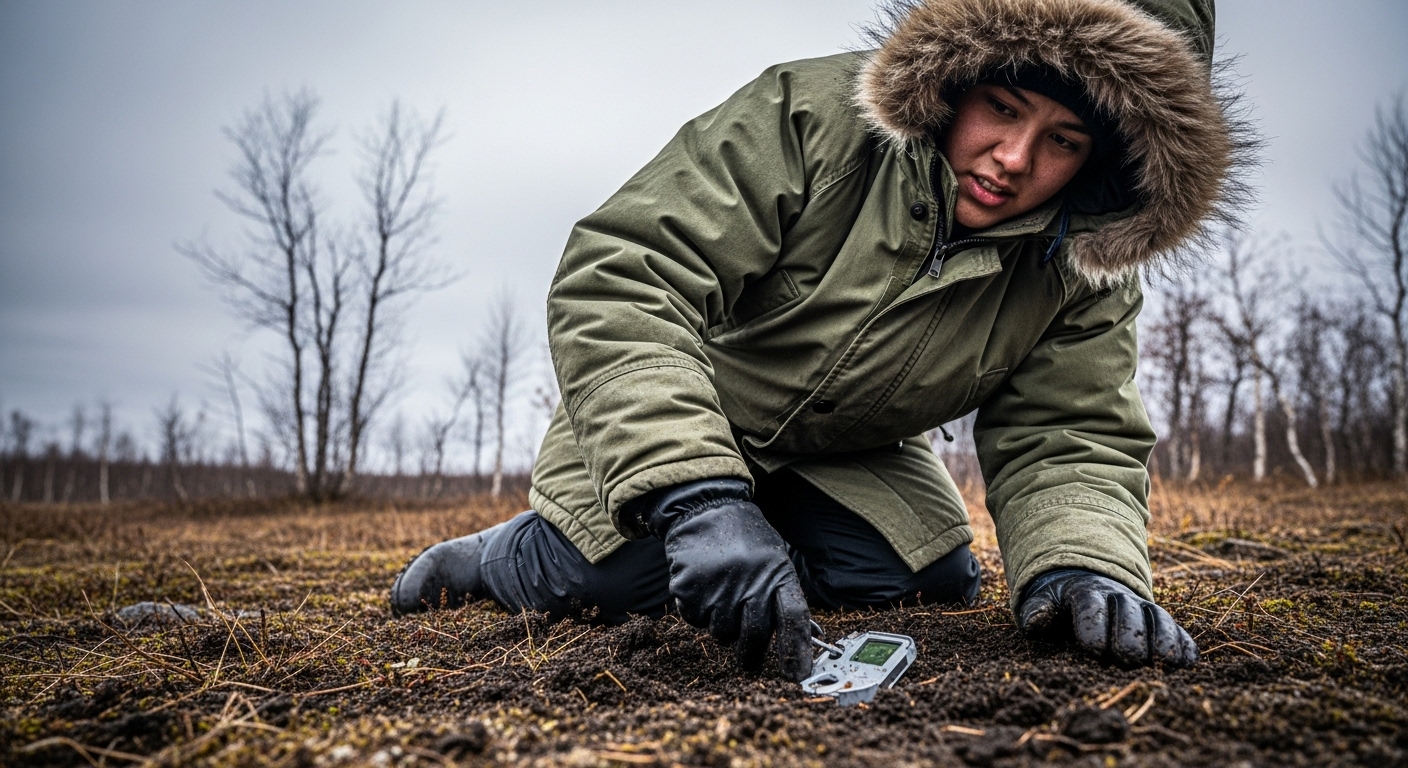
Lucasie pushed open the door, stepping out into the biting autumn air, the task feeling heavier, colder. This was the start of it, they knew – the real work, the muddy, dangerous work of understanding the ecosystem of their idea, and the human predators within it.
Share This Story


