Below the Ice's Skin
The Red River, a black, sluggish ribbon through the heart of winter-gripped Winnipeg, hummed with a deceptive calm. Icy wind scoured the banks, tearing at loose snow and rattling the skeleton branches of the elm trees. Under the pale, indifferent streetlights, the world felt stripped bare, a stark stage for transactions made in hushed tones and hurried glances.
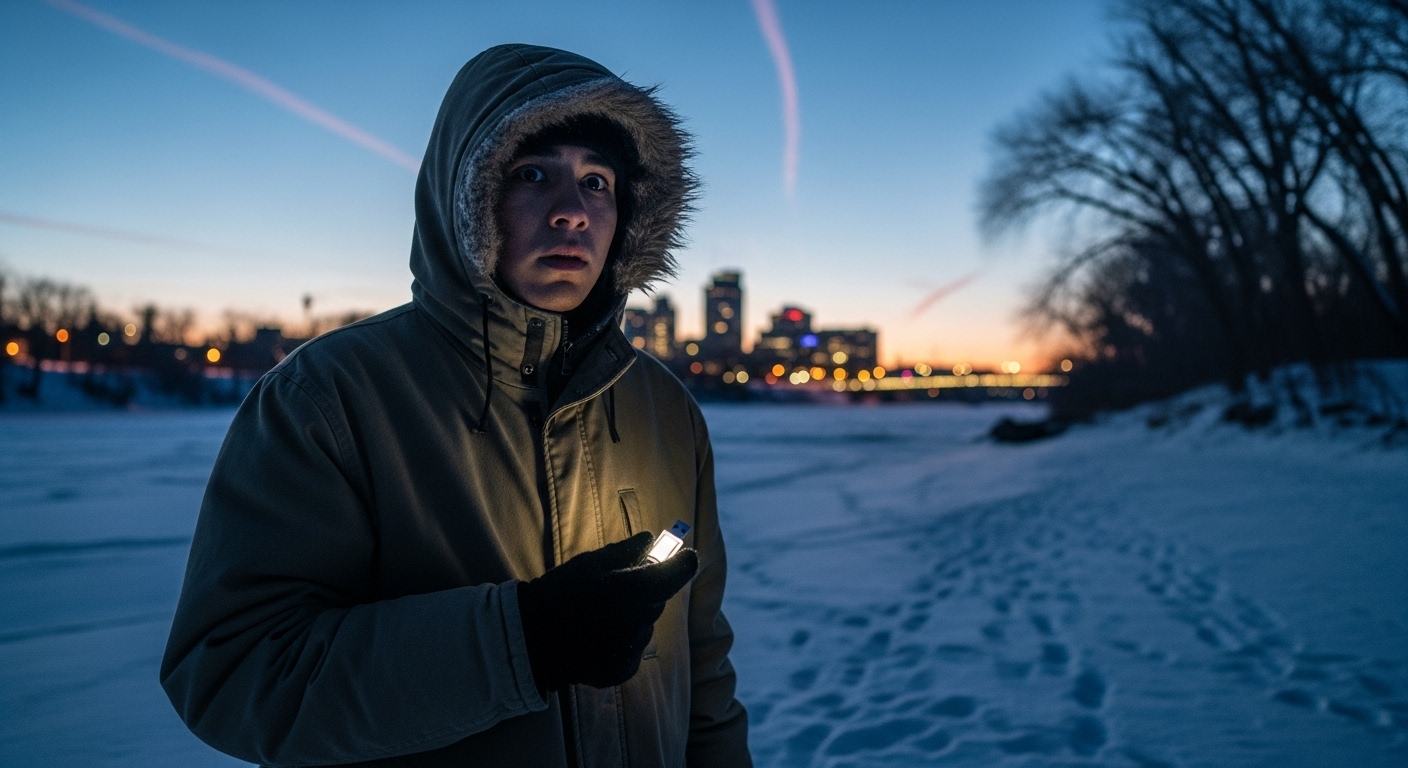
His breath plumed, a fleeting ghost against the merciless Winnipeg winter. Dorian hunched deeper into his parka, the cheap synthetic fabric doing little against the wind slicing off the frozen Red River. Seventeen below, the radio had chirped that morning, a chipper voice mocking the frostbite creeping into his fingertips. He shouldn't be here. Not for this. Not for what Samir had promised, a stack of hundreds that felt like a lifetime's ransom for his mother's piling medical bills. But his mother… she was fading. And desperation, he’d learned, was a colder beast than any February gale.
His mind raced, fragmented thoughts like ice shards skittering across a pond. The way his father’s eyes had gone hollow when the band council dismissed their appeal, the tight knot in his mother’s voice every time she had to say no to another specialist. This was for them. This had to be. He adjusted the frayed strap of his messenger bag, the plastic toggle digging into his shoulder. The weight inside felt negligible, yet it pressed down on him with a crushing density. A simple data stick, Samir had said. Just a transfer. No questions, no look-backs. But nothing was ever simple in this city, especially not when it involved men who drove black SUVs and spoke in whispers.
The river ice groaned beneath the snow, a low, guttural sound that vibrated up through his worn boots. He pictured the current still moving, dark and insistent, beneath the frozen surface, mirroring the hidden currents of power that moved beneath the city's seemingly placid surface. He was just a ripple, a tiny perturbation in a much larger, dirtier stream. He watched the sparse traffic on the bridge above, the headlights smearing across the grey sky like tired brushstrokes. No black SUVs, not yet. Just a beat-up Ford pickup, a city bus exhaling diesel, and then… a lone figure emerging from the shadow of the St. Boniface Cathedral’s spire across the river. Samir.
---
Samir walked with a deliberate, almost exaggerated casualness, his hands shoved deep into a threadbare denim jacket. His breath, too, bloomed white, but his eyes, sharp and quick, darted between Dorian and the empty expanse of the riverbank. He was shorter than Dorian, wiry, with a nervous energy that always hummed beneath his skin. Samir wasn’t Indigenous, but his family had known tough times too, navigating their own labyrinth of systemic prejudice and urban neglect.
“You're early,” Samir muttered, not quite meeting Dorian’s gaze as he reached the designated spot, a gnarled old willow tree whose branches looked like tortured claws against the bruised sky. He didn’t bother with pleasantries. This wasn’t a social call. The cold seemed to strip away all unnecessary civility.
Dorian shrugged, a shiver running through him that had nothing to do with the temperature. “You said urgent.”
“Everything’s urgent, kid.” Samir’s voice was low, almost a growl, his eyes flicking towards the bridge again. “Got it?”
Dorian hesitated, the data stick suddenly feeling like a live thing in his pocket, buzzing with secrets. “You sure about this, Samir? This… this isn’t just about some guy’s tax returns, is it?” He watched Samir’s jaw clench, the small muscle jumping. He knew the answer before it came. The stories of city council deals, the whispers of land grabs, the way certain contracts always seemed to go to certain people. It was all part of the city’s grim folklore, but to be actually in it…
“It’s about more than tax returns,” Samir said, his voice flat. “It’s about who gets to eat and who starves. Who gets a roof over their head and who’s out on the street. It’s about a lot of empty promises from people who should know better, and a whole lot of money changing hands where it shouldn’t. Now, do you have it or not?” He shifted his weight, clearly agitated, his gaze sweeping the surroundings with an almost frantic energy.
Dorian reached into his inside pocket, pulling out the small, unremarkable USB drive. His fingers felt stiff, clumsy in the cold. Samir’s hand, equally swift and practiced, snatched it. Then, just as quickly, a thick wad of bills was pressed into Dorian’s palm. The paper felt crisp, alien. Not exactly warm, but certainly a different kind of heat than the desperate cold that had defined his day.
“Get out of here,” Samir hissed, already turning, his gaze fixed on something Dorian couldn’t yet see. “Don’t look back. Don’t talk about this to anyone. Not ever.”
---
Dorian’s heart hammered a frantic rhythm against his ribs. He stuffed the money into his pocket, trying to appear nonchalant, but his muscles screamed with a sudden, primal urge to flee. He cast a quick glance over his shoulder. And then he saw it. A black sedan, not an SUV, but sleek and expensive, idling a block away on a side street, its windows tinted dark. Too dark. It hadn’t been there a minute ago. A chill colder than the arctic air traced its way down his spine.
He started walking, a hurried, awkward shuffle over the packed snow and ice, resisting the urge to break into a run. Every creak of the river, every gust of wind, sounded like a footstep behind him. He could almost feel eyes on his back, invisible needles pricking his skin. He crossed the footbridge, the metal grating cold and unforgiving beneath his boots, the river a dark, swirling presence below. He didn’t dare look back at the sedan, but its presence hummed in his peripheral vision, a heavy, silent accusation.
He ducked down a narrow alleyway between two brick buildings, the smell of stale garbage and frozen exhaust fumes stinging his nostrils. He didn’t stop until he reached the relative anonymity of Main Street, merging with the handful of people hurrying through the evening rush, their faces grim against the cold. The city lights began to blur, a surreal smear of red and yellow against the deepening cobalt sky. He felt a strange disassociation, as if he were watching himself move through a film, the world around him a vivid, hyper-real backdrop to a scene he didn't quite understand.
He found a bus stop, stamping his feet, trying to regain feeling in his toes. He pulled out the money, fanned it slightly. More than he’d ever held at once. Enough. For now. But Samir’s face, etched with a tension that went beyond the cold, kept flashing in his mind. Who gets to eat and who starves. The words resonated, a stark truth about the city, about the world he suddenly found himself enmeshed in. This wasn't just about his mother anymore. This was about the fragile, brutal balance of power, about the people who clung to it with icy grip, and the young men like him, like Samir, who were used as pawns in their silent, savage game.
The bus arrived, a noisy, steaming behemoth. He climbed aboard, the warm air smelling faintly of old coffee and wet wool. He took a seat by the window, watching the familiar, grimy streets of his neighbourhood pass by. The glow of a corner store, the faded murals on brick walls, the bare branches of trees silhouetted against the streetlights. He still felt the phantom weight of the data stick in his hand, even though it was long gone, the money a strange, heavy lump in his pocket. The city stretched out, vast and indifferent, a monument to grit and survival. And he, Dorian, was now a small, unwilling participant in its hidden machinery.
---
He pressed his forehead against the cold glass of the bus window. The frost flowers on the pane blurred the outside world into abstract shapes. What had he done? What had he truly carried? The knowledge felt like a foreign body inside him, heavy and indigestible. He closed his eyes, the warmth of the bus, the low rumble of its engine, doing little to dispel the chill that had settled deep in his bones. He was in it now, truly in it, and the quiet, distant hum of the city council building across the river felt suddenly, terrifyingly close.
He pictured his mother, frail in her bed, and the fear twisted into something cold and sharp within him. Was this really worth it? He didn’t know. He only knew that the ice on the river held more than just water; it held secrets, and he had just helped one of them slip free.
He didn’t know if the money he clutched was payment or a down payment, a desperate escape or the first step into a labyrinth he might never find his way out of, but the cold weight of the bills felt like a physical chain binding him to a future he could not yet see, and the hum of the city’s unseen gears felt deafening.
Share This Story


