The Hum of Fluorescent Doubt
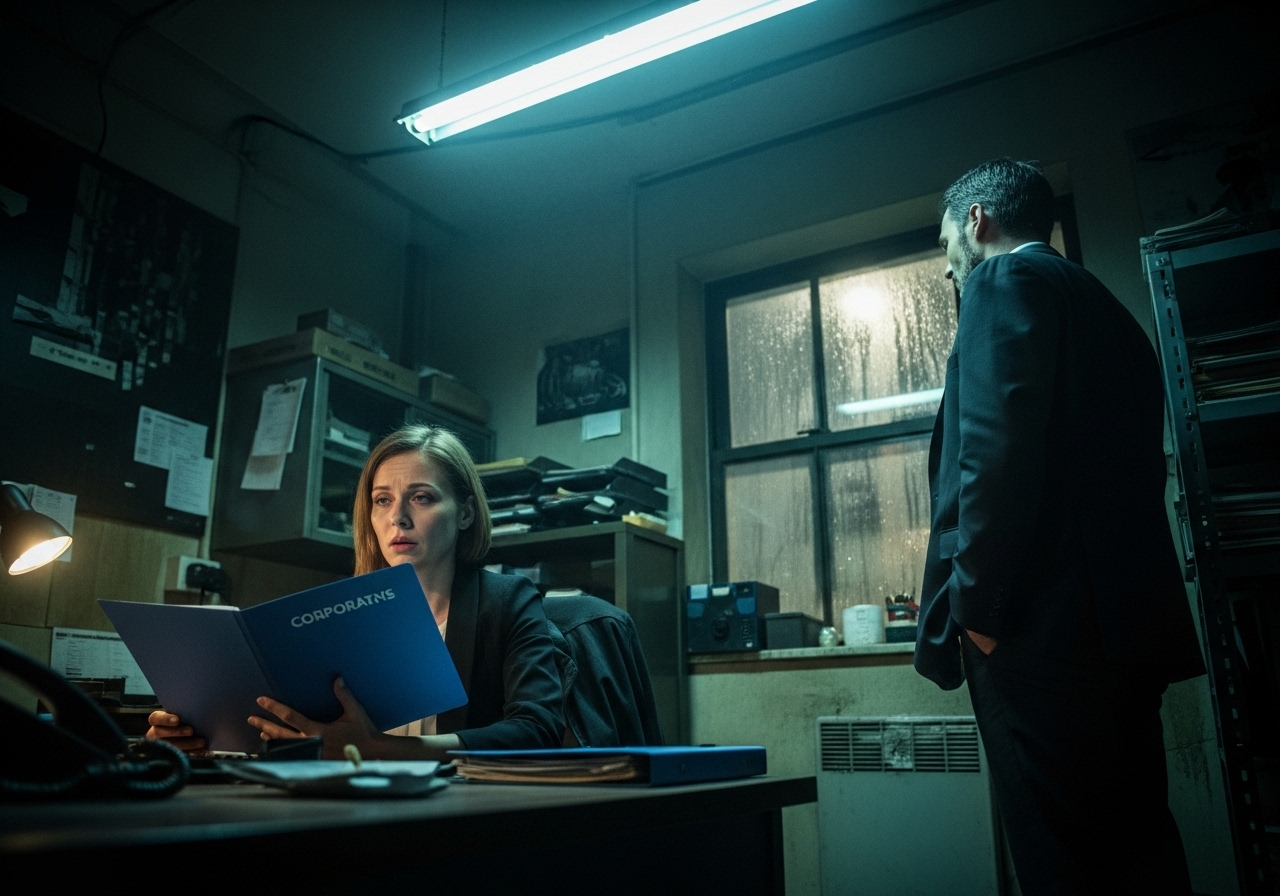
The office smelled of damp velvet and cold coffee. A single fluorescent tube on the ceiling flickered with an incessant, irritating buzz, casting long, wavering shadows over piles of scripts and precarious towers of account books. It was a room that had seen too many late nights and absorbed too much anxiety, and tonight was no different.
“You can’t be serious, Samuel.” Eva’s voice was flat. Not angry, not yet. Just… hollowed out. She stared at the glossy proposal folder on the desk between them as if it were something rotting.
Samuel stopped the nervous, rhythmic clicking of his pen. The silence that rushed in felt louder. “I’m serious about keeping the lights on, Eva. I’m serious about making payroll next month. Are you?”
“This isn’t about the lights. This is about… them.” She nudged the folder with a finger, refusing to touch it properly. The Dymentex logo, a stylized green and blue swoosh that suggested pristine nature, seemed to mock her from its cover. “It’s blood money. It’s poison.”
“It’s a hundred and fifty thousand pounds,” he countered, his voice tight with a frayed patience she knew all too well. He picked up the pen again, but just rolled it between his thumb and forefinger. A small, controlled motion. “It’s the new sound system we need. It’s a properly funded outreach programme. It’s… it’s the difference between existing and not.”
“At what cost? We’d be a walking advertisement for a company that’s actively… what was that headline last year? The oil spill? They called it a ‘minor leakage event’.” She finally looked at him, and her eyes were dark with a disappointment that stung more than any shout could have. “We’d be laundering their reputation. For them, we’re just… corporate social responsibility. A rounding error on their PR budget. For us, it’s our soul.”
“Oh, don’t be so dramatic,” he snapped, the control finally slipping. The pen clattered onto the desk. “Soul doesn’t pay the rent. Soul doesn’t fix the leak in the green room roof. I’ve spent the last six months sending out, what, four hundred grant applications? I’ve begged for five-pound donations on social media. I’ve spent weeks tailoring funding requests to every council and trust in the country. We got three positive replies, Eva. Three. For a combined total of eight thousand pounds. It’s not enough. It’s a plaster on a gaping wound.”
He stood up, pacing the tiny space between the filing cabinet and a rack of dusty costumes from a forgotten production of A Midsummer Night’s Dream. He scraped a hand through his hair. “I hate them as much as you do. You think I like this? But I’m looking at the numbers, and the numbers don’t care about our feelings. The numbers are just… numbers. And they are all red.”
Eva watched him, her jaw tight. She could smell the dust his pacing kicked up. It mingled with the scent of rain on the pavement outside the grimy window. “There are other ways. We could… we could do another fundraiser. A telethon, a… a bake sale, I don’t know.”
“A bake sale?” The laugh that escaped him was harsh, humourless. “Right. We’ll sell brownies and save the theatre. Why didn’t I think of that? Maybe we can ask the landlord if he’ll take payment in flapjacks.”
“That’s not fair.”
“No, it’s not,” he agreed, his voice dropping. He stopped pacing and leaned his hands on the desk, his weight on his knuckles. He looked tired. Not just tonight-tired, but a deep, settled exhaustion that seemed to have taken root in his bones. “None of this is fair. It’s not fair that we have to fight this hard just to put on plays that make people think. It’s not fair that funding for the arts is the first thing to be slashed whenever someone in government sneezes. And it’s not fair that our only real option is to take money from a company that represents everything we’re supposed to be against. But that’s the world we live in.”
---
She remembered the beginning. The two of them in a pub, scribbling ideas on napkins, fuelled by cheap lager and a ridiculous, brilliant certainty that they could actually do it. That they could build a space for art that mattered, a place that was for everyone. The name they’d chosen, ‘The Hearth Theatre’, was supposed to mean something. Warmth. Community. A focal point. Now it felt like the hearth was cold, and they were arguing over what to burn just to create a bit of heat.
“When did you get so… cynical?” she asked, her voice softer now.
Samuel didn’t answer right away. He straightened up and walked to the window, rubbing a clear patch on the grimy glass with his sleeve. He stared out at the wet, shimmering street. “Probably around the time I had to tell Mrs. Gable we couldn’t afford to run her seniors’ drama workshop anymore,” he said, his voice muffled by the glass. “Or maybe it was when I had to use my own credit card to pay the deposit on the lighting rig for the last show. Pick one.”
The air in the room was thick with unspoken things. Years of shared stress, of small victories and crushing defeats. He wasn’t just the numbers guy. He was the one who’d stayed up with her all night building sets. He was the one who believed in her vision when even she doubted it.
“This will break us, Samuel,” she whispered. “Not the theatre. Us. It will change what we are.”
“Being closed will also change what we are,” he shot back, turning from the window. “It will make us a memory. A nice idea that didn’t work. I’d rather be a compromised, functioning theatre than a noble, defunct one. At least if we’re open, we can still do good work. We can put on plays that challenge people—maybe even plays that challenge Dymentex. We can use their money against them.”
“Like a parasite?”
“Like a survivor,” he corrected. “I brought it to the board. It’s on the table. Lucy’s on our side, Mannie is… undecided. It’s split, right down the middle. They’re waiting to hear what we decide. What we recommend.”
The weight of it settled on her. It wasn’t just their argument. It was the future, balanced on this one, ugly decision. She looked down at her hands, resting on the scarred surface of the old desk. She saw chipped nail polish, a small burn mark from a hot glue gun. Hands that built things. What were they about to build now? Or what were they about to tear down?
The door to the office creaked open. It was Lucy, her face pale, holding two steaming mugs. She didn’t say anything, just looked from Eva’s face to Samuel’s, and in her eyes was the terrified, exhausted question that they had failed to answer. She placed the mugs down, the ceramic clinking loudly in the tense silence. “Mannie’s here,” she said quietly. “He wants to talk before the final vote.”
Eva looked past Lucy, through the open door. Mannie was standing in the dim hallway, his expression unreadable, twisting the hem of his jacket. The deciding vote. And in that moment, she had no idea which way he would fall.
Share This Story


