A Cold Reckoning
The siren's long, ragged cry tore through the damp, still air of early spring, an abrasive sound that never truly faded, only retreated to the edges of hearing. Inside the emergency department's trauma bay, the fluorescent lights hummed with an indifferent, sterile glow, casting harsh, unforgiving shadows. Dr. Armedi, his scrubs already feeling heavy and cool against his skin, adjusted his loupes, the familiar metallic tang of iron and disinfectant already prickling at the back of his throat. Another Winnipeg night was bleeding into a grey, hesitant dawn, bringing with it the city’s grim offerings.
The double doors exploded inward, rattling their steel frames. A gurney, wheels squealing a discordant protest, tore across the polished linoleum. "Incoming! Male, early twenties, GSW to the abdomen, multiple blunt force traumas!" The paramedic's voice was a strained bark over the clatter. Armedi felt the familiar jolt, a cold clarity settling over his nerves, pushing back the fatigue that had been clinging to him since his last shift bled into this one. He stepped forward, his eyes already scanning the form on the gurney, cataloguing the damage before a word was spoken.
Beatriz, her movements economical and precise, was already at the head of the bed, assessing the airway. "Airway patent, barely. Shallow respirations." Her voice, calm as still water, cut through the controlled chaos. Dr. Sohali, fumbling slightly with his gloves, moved to the patient's side, his younger face a mask of concentrated apprehension. Armedi noted the slight tremor in Sohali's hands. It was always the first few that got them like that. The sheer, ugly reality of it.
The patient, a young man, was a canvas of fresh violence. One eye was swollen shut, a grotesque purple bloom spreading across his temple, already migrating down his cheekbone. Dried blood matted his dark hair, stiff as wire. But it was the abdomen that drew Armedi’s immediate, grim focus. A crimson blossom had seeped through the improvised dressing, darkening the fabric of his shirt. Not just a seep. A gush. The smell of copper was suddenly thick, cloying.
"Cut him out," Armedi commanded, his voice low, firm. Sohali grabbed the trauma shears, the sharp snick-snick echoing as he sliced through layers of clothing. Beneath, the damage was laid bare. A ragged, weeping hole just above the navel. A second, smaller entry wound higher, closer to the ribs. Not one, but two. A slow, spreading dread began to unfurl within Armedi.
Beatriz was attaching leads, the monitor beginning its rhythmic beeping. A weak, thready pulse. Blood pressure dangerously low. "We need IV access, wide bore," she stated, already prepping an arm. Sohali inserted a line, his brow furrowed in concentration, the needle finding the vein with a practiced, if slightly hesitant, hand.
Armedi pressed a gloved finger to the patient's neck, checking for distension. None. Good. For now. He then moved to the exit wounds, searching the back. Nothing obvious. That meant the bullets were still inside. Roving through tissue, carving their own destructive path. The implications were immediate and sickening.
"Let's get him on the table. Fast. Call OR, tell them we have an acute abdomen, GSW, possible major vascular injury. Prep for laparotomy." His words were clipped, each syllable weighted with urgency. They shifted the patient, the groan of the gurney as they moved him to the trauma table feeling like a fresh wound in the quiet room.
---
The Unspoken Language of Damage
Under the harsh, unblinking glare of the surgical lights, the young man’s body looked fragile, broken. Armedi leaned in, examining the entry wounds more closely. The edges were uneven, stellate. Not a clean shot. Close range, perhaps. Or a cheap calibre, tumbling. The thought soured his mouth. This wasn’t just an accident; it was a deliberate, brutal act. The downtown streets, especially as winter released its grip and the city tentatively awoke, always seemed to simmer with a renewed, ugly energy.
"Palpate," Armedi instructed Sohali. The resident’s fingers pressed gently, methodically, against the soft tissue surrounding the wound. A wince from the patient, a soft, almost imperceptible sound of pain, brought a flicker of something in Armedi's chest. Life. Still there. Still fighting.
"Rigid. Guarding," Sohali reported, his voice tight. "Significant tenderness." No surprise there. The peritoneal cavity was almost certainly awash in blood, maybe bowel contents. A ticking clock. Every second amplified the damage, compounded the risk.
Beatriz updated them. "Two units of O negative hanging. BP's picked up slightly, 90/60. Heart rate 110." A marginal improvement. Enough to buy them minutes, perhaps. But only minutes.
Armedi felt the old familiar pressure build, a weight behind his eyes. Decades of this. The blood, the desperation, the impossible choices. Each body a story, often unfinished, usually tragic. The exhaustion was a deep, bone-weary ache that no amount of sleep could truly assuage. He wondered about the spring outside. Was it raining? Had the ice finally given way in the back alleys, revealing the grimy secrets beneath? He pictured the muddy slush, the grey skies, the first tentative green shoots pushing through the sodden earth, oblivious to the grimness inside these walls.
He glanced at the patient's face again. Young. So young. Someone’s son. Someone’s friend. Someone’s future, now dangling by a thread. The anonymity of the victim in the ER was a strange kind of mercy, but also a cruelty. He was a body, a collection of injuries. Yet, the human beneath was always palpable, an unspoken presence in the room.
"Let's get a FAST exam," Armedi said, breaking the silence. Beatriz wheeled the ultrasound machine closer. Armedi took the probe, gel cool against the patient’s abdomen, and began the quick scan. His eyes flickered between the monitor and the patient. Fluid in Morison's pouch. Splenic view… more free fluid. Pelvic view… definitely free fluid. A lot of it.
"Positive FAST," Armedi confirmed, his voice devoid of inflection. "Significant haemorrhage. This is an immediate trip to OR. No time for a CT." Sohali nodded, his expression grim. Beatriz was already on the phone, her voice a low murmur, relaying the urgency to the surgical suite.
---
Before the Incision
A flurry of activity followed. Sohali prepped the patient’s abdomen, scrubbing vigorously, the antiseptic odour sharp. Beatriz secured a third large-bore IV, anticipating the need for massive transfusions. Armedi checked the monitors one last time, his gaze lingering on the flickering numbers. The patient’s heart rate was creeping up again. His blood pressure, a tenuous victory, was starting to dip.
“BP’s 85/55,” Beatriz announced, her voice taut. “Heart rate 125.”
“He’s crashing,” Sohali muttered, almost to himself. The tremor in his hands was more pronounced now.
Armedi felt a tightening in his gut, a cold knot of adrenaline. This was it. The precipice. He had seen this so many times. The sudden, irreversible slide. “More fluid,” he ordered, “Push a unit now. Get ready for transport.”
He took a deep breath, the air in the trauma bay suddenly feeling thinner, colder. The room was quiet save for the rhythmic beeping of the monitor and the hurried sounds of preparation. Every movement was precise, calculated, a ballet of controlled desperation. The light caught the sheen of sweat on Sohali’s brow, the slight tension in Beatriz’s jaw. Armedi saw it all, a silent observer even as he was the conductor of this grim orchestra.
He looked at the young man, his face bruised and slack. The vibrant spring outside, with its promises of renewal, felt a world away. Here, life was a fragile, brutal thing, fought for centimetre by centimetre, breath by struggling breath. He had to honour that fight, however slim the chances.
His gaze fell on a small, worn charm bracelet tangled around the patient’s wrist, a simple bead of chipped blue glass nestled amongst faded string. A tiny, irrelevant detail. Yet, it anchored the young man, momentarily, to a life beyond these sterile walls, to someone who had cared enough to give him such a thing. That fleeting connection, that brief glimpse of a world outside the theatre of trauma, was sometimes the heaviest part of his work.
The stretcher arrived, and the transfer was swift, efficient. Armedi remained at the patient’s side, his hand hovering over the young man’s chest, feeling the weak, erratic beat through his glove. Sohali pushed the stretcher, his stride purposeful now, past the waiting family in the corridor—a small, terrified huddle—towards the bright, antechamber of the operating room. The murmur of concerned voices followed them, a mournful counterpoint to the relentless beeps of the monitors.
The journey to theatre was short, but in the realm of crashing patients, it felt like an odyssey. Each passing door, each turn in the corridor, a new threshold crossed, a new battle to be fought. Armedi focused on the rhythm of the monitors, the faint pressure of his hand, the promise he’d implicitly made to this stranger.
---
The Unveiling
Inside the operating room, the air was cooler, more controlled. The surgical team was already assembling, instruments laid out with gleaming precision. Armedi moved to the head of the bed, his eyes meeting Beatriz's for a brief, unspoken exchange. A shared history of these moments, etched into their faces.
"Scalpel, please." His voice was steady, a low command that resonated with years of practice. The anaesthetist gave a final nod. Armedi made the incision, a deliberate, practised line down the patient's abdomen. The skin parted, then muscle. He cut deeper, through fascia, revealing the pale, almost luminous sheen of the peritoneum.
The moment the peritoneum was opened, the true extent of the devastation became horrifyingly clear. Blood, thick and dark, welled up, spilling into the cavity, staining everything. A bowel loop, torn and ragged, floated in the crimson pool. And then, the discovery: a large, actively bleeding laceration on the mesentery, pumping arterial blood with each desperate beat of the heart. One of the bullets, it seemed, had carved a path of pure destruction.
"Suction," Armedi said, his voice flat. He began to work, his movements swift and sure, yet the scene before him unfolded in a slow, brutal clarity. The delicate dance of trying to repair, to stem the tide, to snatch life back from the brink of oblivion. This was not just about two bullets; it was about the complex, fragile machinery of a young man’s existence, now laid bare and haemorrhaging. The spring outside was irrelevant here. Only the blood, the instruments, and the desperate, unwavering focus mattered. The cold reckoning had begun, and Armedi knew, with a certainty that settled deep in his bones, that this fight would be long, fraught with uncertainty, and demand every ounce of strength they had.
There were more injuries, a fractured rib, and a small, almost hidden, wound on his flank from what appeared to be a knife. Not just bullets then, but a more personal, visceral attack. The complexity deepened. Armedi paused for a flicker of a second, just enough time for a single breath to catch in his throat, then pushed the thought away. Focus. Just focus. The blood continued to pool, defying the suction.
"We need to pack this. Hard." His voice was firmer now, cutting through the low hum of the monitors and the quiet clink of instruments. "Sohali, assist with pressure. Beatriz, get two more units of blood up. Now."
The fight had truly begun. The operating theatre, a sanctuary of control and precision, was now a battleground. Armedi saw not just a body, but a complex, fragile network of life that desperately needed his hands, his knowledge. He thought of the young man’s family, huddled in a waiting room, hoping. He thought of the unseen spring outside, the soft, hesitant rain that might be falling on Winnipeg’s streets, washing away the evidence of violence, but never truly erasing its impact. This was the long work, the slow, deliberate struggle against a tide of despair.
The image of the blue glass charm bracelet flashed through his mind, a fleeting, almost irrelevant detail, but one that grounded him, reminded him of the human fragility beneath the sterile sheets and surgical drapes. He picked up the suture, his movements smooth, methodical. A new quest had just been unveiled, a profound battle for breath and future, and Armedi, despite the weariness that clung to his bones like a damp Winnipeg spring mist, was ready to lead the charge.
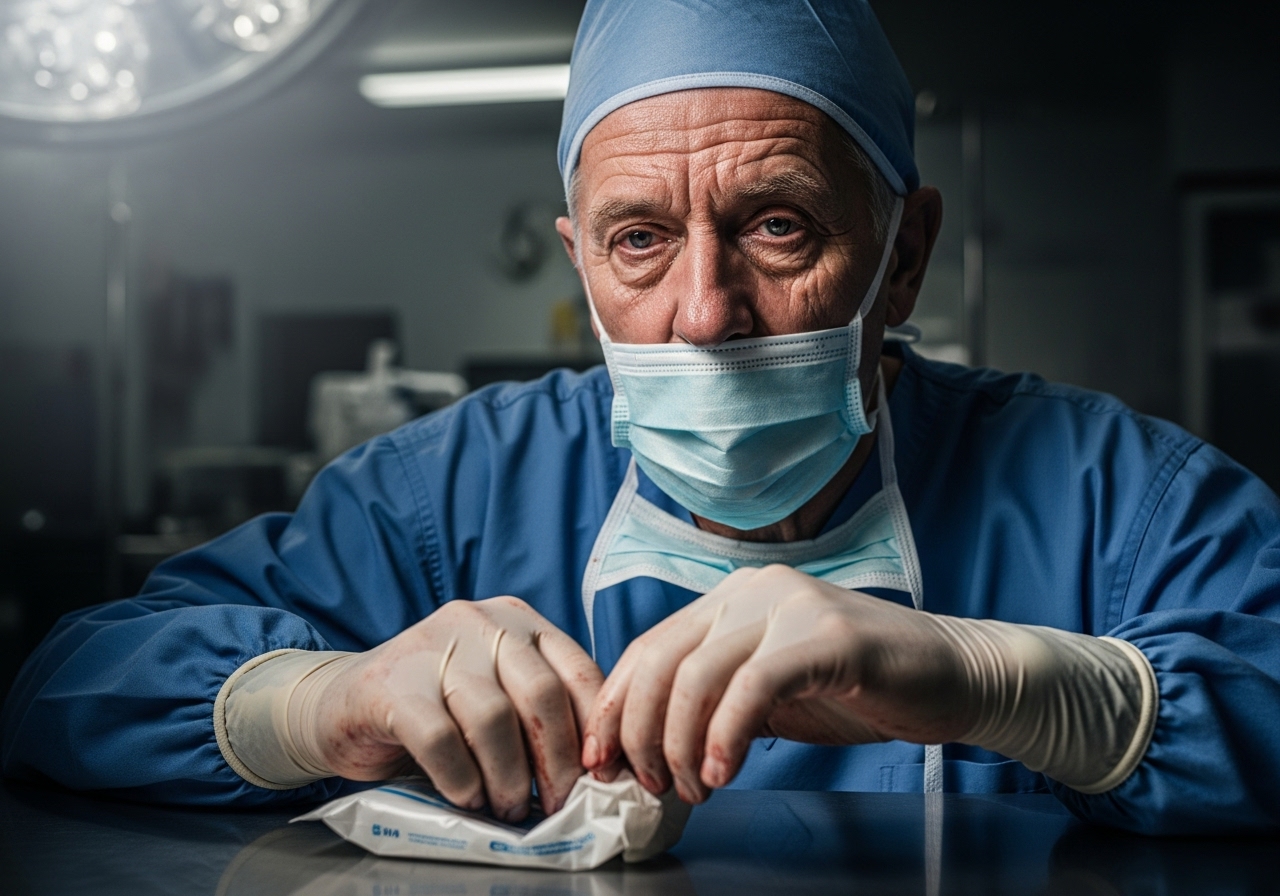
Armedi gripped the suture needle, knowing the real fight for this young man’s life had only just begun, a perilous journey into the unknown depths of recovery and beyond.
Share This Story


