Sun-Bleached Justice
Alex, a legal intern, grapples with the oppressive summer heat and the weight of a seemingly minor legal case in a world where kindness has become a dangerous commodity. He and his colleague, Casey, are rushing through the city to present evidence for a client accused of 'Resource Diversion'.
The heat pressed down like a physical hand, sticky and relentless. Late August, 2025, and the city shimmered, not with mirages, but with the exhaust of a million idling vehicles, the collective exhalation of a million desperate lives. Alex felt it in his teeth, a gritty film that never quite rinsed clean. Every breath tasted like dust and disappointment. Lindsay’s case, simple as it should have been, felt heavy in his gut, a lead sinker dragging him down even as he pushed his legs harder. He could hear Casey’s breath hitching beside him, her usual sharp commentary reduced to gasps.
His shirt, already plastered to his back, chafed at his shoulders. The alleyways were a furnace, smelling of burnt plastic and something acrid, vaguely metallic, like static clinging to hot pavement. They were cutting through a district he barely recognized anymore, storefronts boarded up, the spray-painted warnings on the brick peeling in the sun. A kid, no older than ten, sat hunched against a wall, gnawing on what looked like a piece of dried bread. Alex’s eyes lingered, a reflex he’d tried to suppress. Compassion. A liability. That’s what Lindsay was learning, the hard way.
“We’re gonna miss it,” Casey choked out, her voice tight, a thin wire stretched to breaking. Her dark hair, usually meticulously pulled back, had started to escape, tendrils sticking to her temples. She stumbled over a loose grate, catching herself with a quick, jarring movement that sent a tremor up her arm. “If that judge… he doesn’t wait. You know him.”
Alex nodded, not looking at her. The judge, Simon, a man whose face was etched with the same harshness that seemed to define their entire society, would indeed not wait. Courtesy was a forgotten language, a relic from the quaint, foolish times before the Scarcity Acts. He remembered his grandpa, before he… before, talking about people holding doors, offering seats. It sounded like a fable now, something from a storybook designed to mock their current reality.
“He’ll make an example of her,” Alex muttered, the words dry in his throat, competing with the roar of a low-flying cargo drone. The drone cast a momentary, welcome shadow, then was gone, leaving the glare even more blinding. They burst out of the alley onto a wider thoroughfare, a torrent of pedestrians jostling, shoulders bumping, faces set in identical masks of grim determination. Nobody met anyone’s gaze. Eye contact was an invitation, and invitations were dangerous.
He felt a scrape on his hand as he shoved past a man with a large, battered pack. The man didn’t react, didn’t even glance back. Just kept moving, a human current in the river of bodies. Alex tucked his hand into his pocket, the sting a dull counterpoint to the throb in his temples. Lindsay, a sixteen-year-old, had given a bottle of purified water to an elderly woman struggling in line at a water ration station. Not stolen, not hoarded, but simply given. And now she faced a two-year Resource Diversion sentence, maybe more, if Simon had his way.
They navigated the labyrinthine streets, the scent of burning copper from an overloaded power conduit mixing with the faint, sweet decay from an overflowing public disposal unit. Every building seemed to lean a little more, every crack in the pavement a little wider. It was all just… fraying. Like a cheap suit worn threadbare. And kindness? That was the first thread to snap. He knew Casey thought he was foolish for even trying, for clinging to the idea that Lindsay’s actions were anything but an act of societal defiance. But what if that defiance was the only thing left?
Casey finally caught his eye, her breath coming in ragged gasps. “The old data archives. That’s our last shot. If that ledger exists, it proves the woman Lindsay helped wasn’t on the exclusion list. It’ll show she was still allocated basic water. Meaning Lindsay didn’t technically… divert a critical resource.” Her voice trailed off, a sliver of desperation in it. Even Casey, usually so cynical, felt the precariousness of this last-ditch effort. The legal system had been streamlined, designed for efficiency, for punishment, not for justice as Alex still stubbornly understood it.
They reached the Justice Complex, a brutalist concrete monolith that seemed to absorb all sound and light. The air inside was cool, almost shockingly so, recycled and filtered, smelling faintly of sterile cleaning agents and desperation. Guards, unblinking and heavily armed, scanned their badges. Alex felt the familiar prickle of their gaze, a cold probe against his skin. This place wasn’t built to welcome; it was built to intimidate.
Inside, the main hall was a muted hum of hushed conversations and the scuff of official boots on polished stone. Other interns, older, sharper, gave them perfunctory nods. There was a hierarchy here, unspoken but absolute. Alex and Casey, still in their late teens, were often dismissed, seen as idealistic nuisances. He adjusted the collar of his stiff, borrowed suit jacket, feeling the cheap fabric scratch at his neck. It was too hot for this, but appearance, here, was everything.
“You really think this changes anything?” Casey asked, her voice low, a conspiratorial murmur. She was fiddling with the strap of her satchel, a nervous habit. “They just want to make an example. Kindness. It’s a bad word now.”
Alex pushed open the heavy door to their cramped 'consultation' room, which was really just a glorified storage closet. The stale air hit them, thick and unwelcoming. He tossed his satchel onto the tiny, scarred table. “It changes the narrative, Casey. If we can prove the woman wasn’t critical priority, it softens the Resource Diversion charge. Makes Lindsay look less like a saboteur, more like… misguided. And maybe, just maybe, Simon will see it as a waste of judicial resources to pursue maximum penalties.” He didn’t quite believe it himself, but he had to say it, for Casey, for Lindsay, for the fragment of hope he was clinging to.
Casey scoffed, but there was less conviction in it than usual. “Misguided? Alex, the whole point is that ‘misguided’ is now a crime. The system isn’t looking for nuance. It’s looking for order. And order, for them, means no unauthorized resource transfers. Period. It keeps everyone in line. Keeps them desperate, keeps them self-preserving.” She leaned against the filing cabinet, which groaned under her weight, a tiny, metallic complaint.
He started pulling up the public ledger access on the portable terminal, the screen flickering to life with its stark, blocky interface. “But the public narrative… people are talking. Even if it’s just in whispers. About how things are. About how… hard. And how maybe, just maybe, a little bit of shared humanity isn’t the end of the world.” His fingers flew over the keyboard, punching in access codes, his mind racing through the labyrinth of the city’s data systems.
“Shared humanity,” Casey repeated, the words tasting foreign on her tongue. “You sound like an old holovid. The world changed, Alex. Kindness isn’t a virtue anymore, it’s a weakness. It’s a drain. A distraction from survival. Look around. Nobody’s giving anything away. Not their time, not their energy, certainly not their water.” She gestured vaguely towards the thin, peeling paint on the wall. “They want us all atomized, desperate enough to keep our heads down and just… obey.”
A bead of sweat trickled down Alex’s temple, blurring his vision for a moment. He swiped it away with the back of his hand. “Is that what you believe? That it’s truly gone? That the capacity for it, the need for it, is just… dead?” He paused, his gaze fixed on the glowing cursor, hovering over a search field. “Because if it is, Casey, then what’s the point? What are we even fighting for in here?”
She shrugged, a small, weary gesture. “We’re fighting for Lindsay’s freedom. Because she’s a person, and she got caught in a system that’s designed to crush you for the smallest deviation. It’s not about kindness, Alex. It’s about the rule of law. And right now, the law says kindness is punishable. We just have to find the loophole, the technicality, the thing that makes her case… less inconvenient for the State.” Her eyes, usually so sharp, seemed distant, reflecting a weariness that went beyond the summer heat.
“The State doesn’t want loopholes,” Alex countered, his voice sharper than he intended. He pushed a stray lock of hair from his eyes. “They want compliance. They want fear. And if we give up on the idea that there’s anything more than that, then they win. Completely.” He hit ‘enter’, and the screen filled with lines of data, a dense forest of entries. He scrolled quickly, his eyes scanning for the specific entry, the digital ghost of an old woman’s water allocation.
A distant siren wailed, a mournful sound that seemed to hang in the air for too long before fading. It was the sound of the city, he realized, a constant undercurrent of alert and apprehension. Casey shifted, rubbing her arm, a tiny nervous tic. “What if there isn’t a loophole? What if there’s nothing? This is the third time we’ve tried this specific data pull.”
“Then we keep pulling,” Alex said, his jaw tight. He felt a flicker of frustration, a spark of the anger that simmered beneath the surface of most days. This wasn’t just about Lindsay. It was about all of them. About the way the world had calcified, hardened into something unrecognizable. He remembered a story his mom used to tell him, from before, about neighbours baking cookies for each other. Cookies. The thought felt alien, almost absurd. Who had resources for cookies?
He saw it then. A small, almost insignificant entry, tucked deep within a sub-ledger from the municipal health services, dated just days before Lindsay’s arrest. It was a temporary allocation adjustment, a re-routing of minimal water resources to a specific address, approved due to a localized contamination incident. The elderly woman, Martha, had been registered as living at that address. It was there. Proof. Not that she didn’t have an allocation, but that her usual allocation had been temporarily suspended, making her act of accepting water from Lindsay a non-violation of the 'critical resource' definition, because her temporary allocation had been diverted elsewhere.
“Found it,” Alex breathed, a rush of cold relief washing over him, momentarily pushing back the heat and the tension. His finger trembled as he highlighted the entry, then quickly initiated a secure data transfer to the public defense office’s certified evidence server. “Temporary reallocation. Martha’s usual access was offline. Lindsay’s act, technically, didn’t deprive the central grid of a critical, allocated resource. It was a stopgap measure for an individual whose allocation was already… elsewhere.” He looked at Casey, a grin fighting its way onto his face, feeling a small, stupid surge of triumph.
Casey stared at the screen, then at him, her eyes widening slightly. “You… you actually found it. This could actually work.” Her voice was quiet, almost reverent, a rare moment of genuine surprise from her. The usual pragmatic shield around her seemed to drop, just for a second, revealing something fragile underneath. But it was quickly replaced by a flicker of fear. “They won’t like this. They won’t like anything that complicates the narrative.”
He knew she was right. The system preferred simple narratives: crime, punishment, deterrence. This messy truth, this technicality that hinted at a deeper human need, would be an irritant. But it was a foothold. A sliver of light in the unrelenting glare. He printed out a physical copy, the ancient printer whirring to life with a mechanical groan, spitting out the crumpled paper. The ink smelled faintly of burnt sugar.
Just as he held the paper up, a frantic banging started on the door. Not a polite knock, but a heavy, insistent pounding. Alex and Casey exchanged a startled look. The air in the tiny room seemed to thicken again, the sterile smell suddenly cloying. A voice, harsh and authoritative, barked through the thin door, “Public Defenders’ Interns! The court is reconvening. Judge Simon has moved the verdict forward. Now!”
The urgency in the voice, the unexpected acceleration of the verdict, sent a jolt of ice through Alex’s veins, chilling him far more effectively than the recycled air. They were cutting off their time. Short-circuiting their chance to properly submit the evidence. It was a tactic, a classic move to ensure a predetermined outcome. Simon was not just unyielding, he was ruthless. He wanted Lindsay gone, and he wanted this ‘kindness’ precedent set in stone.
“They know,” Casey whispered, her eyes wide with alarm. “Somehow, they know we have something. Or they just… didn’t want us to find anything at all.” She was already moving, grabbing the printout, stuffing it into a clear, evidence-approved sleeve. “We have to get in there. Now.”
The rush to the courtroom was a blur, the cool air of the complex now feeling oppressive, suffocating. Each step thudded like a gavel in Alex’s ears. He clutched the evidence folder, the flimsy paper feeling like their last shield against a world intent on proving kindness a fatal flaw. He imagined the judge’s stone face, the prosecutor’s smug satisfaction. They wouldn't just be arguing a case; they'd be arguing against the very current of their society. And the thought clawed at him, a cold, hard truth: a single act of generosity, if deemed a crime, could unravel more than just Lindsay's life. It could unravel any last, fragile thread of decency holding them all together.
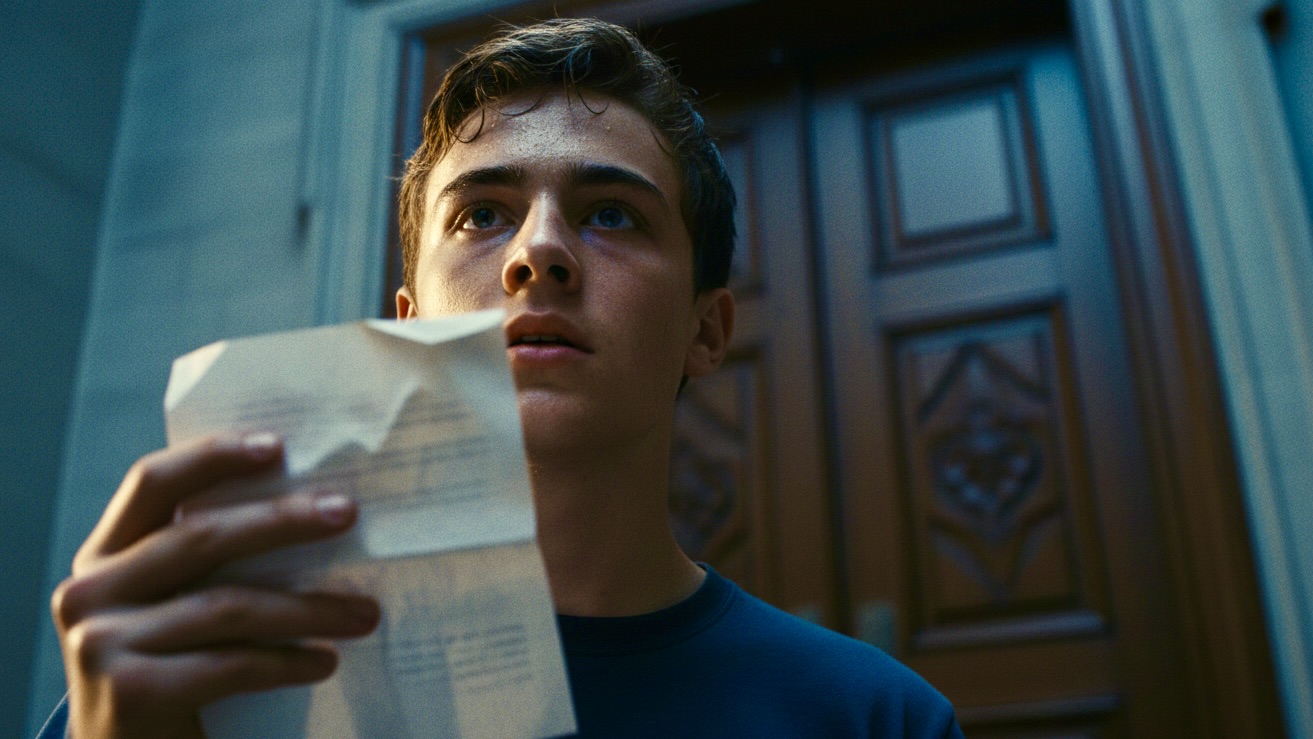
He clutched the evidence folder, the flimsy paper feeling like their last shield against a world intent on proving kindness a fatal flaw. He imagined the judge’s stone face, the prosecutor’s smug satisfaction. They wouldn't just be arguing a case; they'd be arguing against the very current of their society. And the thought clawed at him, a cold, hard truth: a single act of generosity, if deemed a crime, could unravel more than just Lindsay's life. It could unravel any last, fragile thread of decency holding them all together.
Share This Story


