Where the Pipe Bends
The air under the sink was thick with the smell of damp plaster and something metallic, like old pennies. Water, cold and insistent, dripped onto my cheek, tracing a path through the grime I'd already accumulated. It was a slow, rhythmic torture, a tiny water clock counting down to something I didn't have a name for yet.
The copper pipe was slick with condensation, cool against my knuckles. I was wedged into the cabinet, my hip pressed against a bottle of bleach, the world reduced to this damp, dark space. The drip was maddening. Not fast enough to be a crisis, just a persistent, patient erosion. Plink. A pause long enough to make you doubt. Plink. There it was again, hitting the warped base of the pressboard cabinet.
"Got it?" Gideon’s voice came from above, muffled by the floorboards of our tiny world. He was sitting at the kitchen table, or what we called a table. I could see his socked feet from my vantage point. They were still. Too still.
"Almost," I grunted, twisting the wrench. The nut wouldn’t budge. It was fused with rust, a single, stubborn piece of metal mocking my efforts. My t-shirt was sticking to my back, the August humidity in our fifth-floor walk-up in Greenpoint refusing to obey the wheezing authority of the window unit.
"You’re making that face," he said. His voice had a strange, placid quality. The sound of a calm sea just before the tide turns.
"It's a stubborn face. For a stubborn nut." I readjusted my grip, my wrist aching. The drip landed squarely in my eye, and I flinched, smearing gritty water across my forehead. I could feel him watching me. It wasn’t a supportive or curious watch; it was the observational stillness of a heron watching a fish, all patience and potential energy.
I wriggled backwards out of the cabinet, blinking in the relative brightness of the kitchen. The single fluorescent tube above the counter hummed, casting everything in a pale, clinical light. Gideon was exactly where I’d left him, hunched over a cup of tea that had long gone cold. His pupils were tiny pins in the grey irises, his gaze fixed on me but seeing something miles away. He was beautiful, even like this. Especially like this. That was the sickest part. The sharp line of his jaw, the dark hair falling over his brow. He was a perfect, flawed sculpture.
"Maybe we should just call the super," he suggested, his voice a low murmur.
"And wait three weeks for him to show up with the wrong tool and track grease all over the floor? No thanks. I just need the… the other one. The one with the teeth."
I stood up, wiping my hands on my jeans. They left dark, damp streaks. "Where did you put the big toolbox?"
"Basement, I think." He didn't move. His focus was absolute, unnerving. It felt less like he was in the room with me and more like he was watching a film of me, detached and analytical.
"Right." The basement was a crypt of forgotten furniture and colossal water bugs. I wasn’t going down there. There had to be another wrench. I started opening drawers, the clutter of our life spilling out. Takeout menus, dead batteries, rubber bands, a single-serving bottle of fancy gin from a hotel minibar. Nothing.
---
I moved to the hall closet, the one stuffed with winter coats that smelled of mothballs even in summer, and a precarious stack of board games we never played. Behind the games was an old rucksack he used to use for work. It felt heavy.
"I'm just going to check in here," I said, more to myself than to him. The silence from the kitchen was an answer in itself.
I pulled the bag out. It was an old canvas thing, faded to a nondescript olive. As I set it on the floor, something inside clinked softly. Not the heavy, metallic sound of a tool. It was a lighter, more delicate sound. The sound of glass on glass.
My hands felt clumsy. The zipper snagged. I took a breath that didn't seem to fill my lungs and pulled harder. It gave way, revealing a bundled-up grey sweatshirt. I didn't want to unroll it. Every instinct screamed at me to zip the bag, put it back behind the Monopoly box, and go back to the leaking pipe. The drip was a manageable problem. A problem with a solution. A nut, a wrench, a seal.
But I couldn't. My fingers were already working at the fabric, unfolding it. Inside was not a wrench. It was a small, clear plastic baggie. And inside that, a constellation of small, blue pills. Next to it, a rolled-up twenty-dollar bill and a small, empty vial.
The hum of the refrigerator suddenly seemed deafening. The drip under the sink was a drumbeat. Plink. Plink.
I looked up from the bag, my gaze travelling down the short hallway to the kitchen. Gideon hadn't moved. He was still sitting at the table, his teacup held in both hands. He was watching me, and for the first time since I'd come out from under the sink, his eyes were perfectly clear. He knew what I had found. And he wasn't going to say a word.
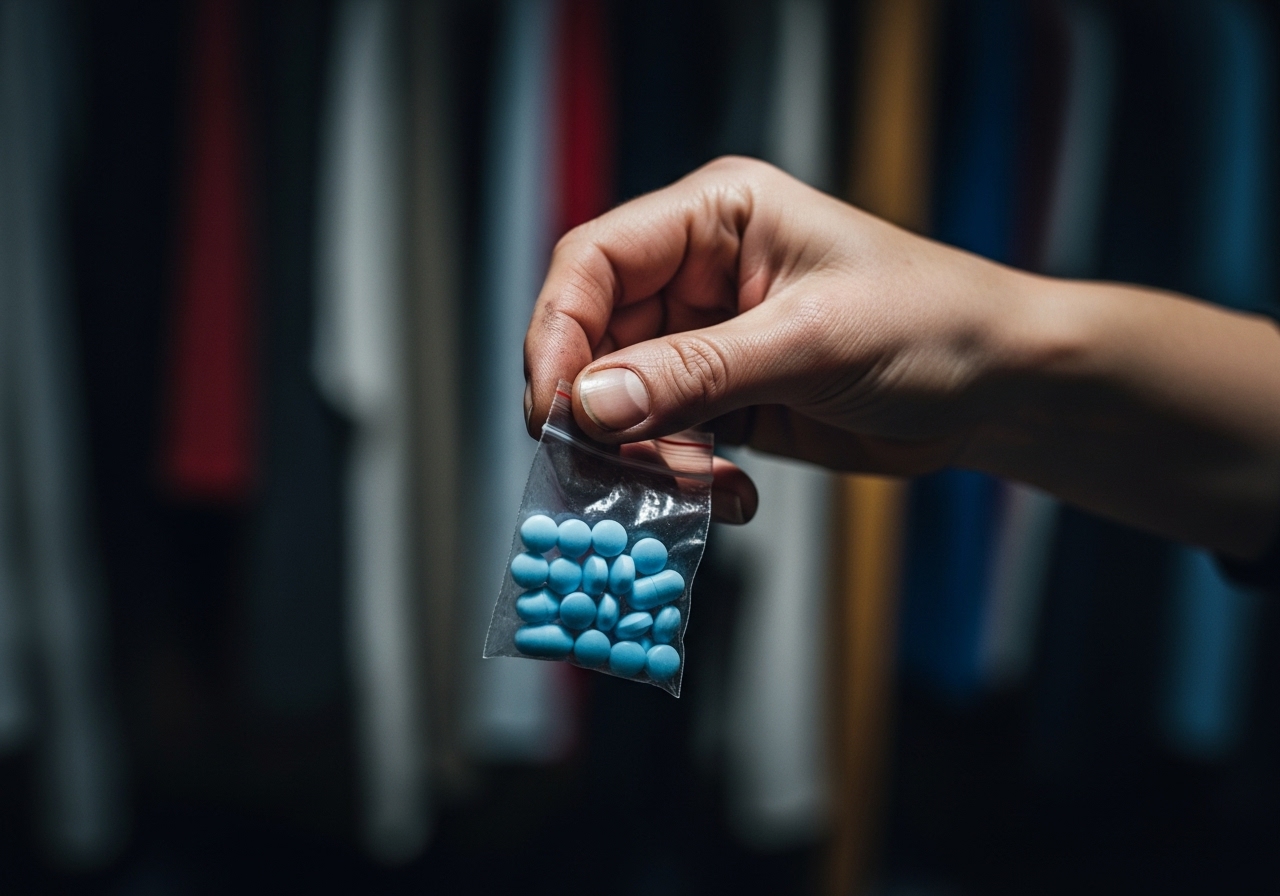
I held the baggie in my palm, the weight of it both nothing and everything. The only sound was the patient, rhythmic drip from the broken pipe, each drop landing like a verdict.
Share This Story


