The Wet Autumn Gloom
Late autumn 2025. A dilapidated city bar, dimly lit, rain streaks down the grimy windows. The air is thick with the smell of stale beer and damp wool. A middle-aged man sits at the bar, nursing a drink, engaged in a conversation with the bar owner.
The rain had been a constant companion for three days, a grey sheet that blurred the edges of the city. It hammered against the cracked glass of Sal’s window, a rhythm section to the low hum of the refrigeration unit behind the bar. I traced a condensation ring on the polished counter, the ice in my glass long gone. My jacket, still damp, clung to the back of the stool, smelling faintly of wet concrete and desperation. Outside, the few remaining leaves on the maple tree across the street were no longer scarlet or gold, but a bruised, sodden brown, plastered to the asphalt.
Sal wiped down the already clean counter, her movements economical. She didn't look at me directly, just at the reflections in the dark wood. She always moved like a clockwork figure, a steady, deliberate whir. Her face, etched with a decade’s worth of late nights and bad luck, was unreadable as usual. "Still stewing over that hit-and-run, Miller?" she asked, her voice raspy, like gravel on a dry road.
"It’s not just the hit-and-run, Sal," I said, pushing the empty glass forward. She refilled it without a word, a fresh amber liquid swirling with a clink of new ice. "It’s the silence. The way nobody even bothered to stop. Just drove past, splashed the old man, left him there on the curb. Like a discarded sack of trash."
She snorted, a dry, humorless sound. "People got their own trash to worry about, Miller. Got enough to carry without picking up someone else's. This ain't some Hollywood melodrama where strangers rush in for the third act. This is late twenty-twenty-five. You expecting a goddamn chorus line of good Samaritans?"
I took a long swallow, the cheap whiskey burning a familiar path down my throat. It tasted like regret and old promises. "I don’t know what I’m expecting. Maybe… maybe just a flicker. A pause. Something that says we haven’t all completely broken down into a pack of scavenging dogs."
"Dogs got their own code, Miller," she countered, her eyes finally flicking to mine, sharp and knowing. "Loyalty. Pack. Survival. Sometimes that looks like a dog-eat-dog world, but it’s still… an understanding. We got less than that, lately. Less and less."
A small crack appeared in her usual stoicism, a micro-expression of something weary, something ancient. It was the kind of detail I used to live for, back when my byline mattered more than the rent. Now, it just felt like another piece of evidence for my internal dossier of dread. I ran a hand over my stubbled chin. My beard felt rough, a neglected landscape.
"Saw a kid, maybe ten years old, outside the market yesterday," I continued, ignoring her. "His backpack had busted open. Apples, a box of cereal, a juice carton… spilled all over the sidewalk. People just… walked around him. Stepped over the cereal. Nobody offered a hand. The kid just knelt there, tears streaming, trying to scoop up soggy cornflakes."
Sal hummed, a low, non-committal sound. She picked up a used glass, held it under the dim yellow light above the bar, scrutinizing it for lipstick or smudges. "Maybe they were late for work. Maybe their own kid was sick. Maybe they hadn’t eaten in a day themselves. You don’t know what’s under someone’s skin, Miller. Not anymore. Not when everyone’s stretched thin as piano wire."
"But it’s changed, Sal. You can’t deny that. A few years ago… there would have been someone. A dozen someones. Now it’s like we’ve all got blinders on. Like empathy became a luxury we couldn’t afford anymore. Like it got priced out of the market."
She placed the glass in the washer, the jets hissing softly. "It’s a zero-sum game, Miller. Always has been. The difference is, the zero-sum got smaller. The pie's shrunk. People ain’t got much to give because they ain’t got much to get. And when you’re facing down the barrel of an empty fridge or a final notice, altruism tends to pack its bags and hit the road."
I watched a water droplet crawl down the windowpane, distorting the blurry streetlights into wavering yellow smears. It gathered speed, then merged with another, thicker, faster, until it was just a dark streak against the grey. That was us, I thought. All individual drops, once distinct, now just a collective, rushing towards an unknown drain.
"Is that what you believe?" I asked, my voice low, hoping it didn't betray how much I needed her to say no. "That it's just… gone? That there’s no turning it back?"
She paused, her hand hovering over the next glass. Her gaze drifted out the window, fixed on something unseen in the downpour. For a moment, she was just a woman looking at the rain, not Sal, the stoic proprietor of the last real bar in this forgotten corner of the city. "I believe people are wired for connection, Miller. We’re tribal. We need each other. The question isn’t if it's gone, but if we remember how to find it again, under all this… this." She waved a hand vaguely, encompassing the rain, the bar, the struggling city, the whole damned world.
The bar was quiet, the usual Tuesday evening drone of distant traffic and the muffled thud of the old boiler. A few other patrons, regulars mostly, hunched over their drinks, lost in their own thoughts or the static on the ancient television hanging crookedly from the ceiling. A faint smell of burnt coffee lingered from the afternoon rush, mixed with the metallic tang of rain carried in on coats.
"So, what? We just wait?" I pressed, a flicker of something, maybe impatience, maybe desperation, in my tone. "Wait for someone to remember how to be decent? While the rest of us… what? Descend?"
She shrugged, a slight movement of her shoulders. "You sound like a man looking for a hero, Miller. There ain't any coming. Not with capes, anyway. If kindness is gonna make a comeback, it'll be in the small stuff. The stuff no one sees. The stuff that doesn't make the news feeds."
I thought about the news feeds. My own defunct account, filled with the kind of stories nobody wanted to read anymore. Corruption. Disaster. The ever-present, low-grade hum of despair. Good news was an anomaly, usually buried under a mountain of clickbait about the latest celebrity scandal or a new government mandate designed to make life just a little bit harder for everyone. Who had time for quiet acts of decency?
"The small stuff?" I echoed, skepticism heavy in my voice. "Like what? A shared cigarette? A nod on the street?"
Sal finally turned, leaning against the backbar, her arms crossed. Her eyes, shadowed by the dim light, held a surprising depth. "Like the woman I saw last week. Her power had been cut. Been out for days. Landlord's a pig, right? Everyone knows it. She had a little kid. Anyway, the guy who runs the bodega across the street? He’s always grumpy. Always looks like he swallowed a lemon. But every morning, for three days straight, I saw him walking over to her door, carrying a thermos of hot coffee, and a couple of those stale pastries he usually sells for half price. He didn't make a big show of it. Just knocked, handed it to her, mumbled something, and walked away. No applause. No likes. Just… coffee."
I blinked. The image was stark, so simple it felt almost foreign. A grumpy bodega owner, an act of quiet, unadvertised warmth. It was the kind of detail I would have dismissed as irrelevant, too small for a headline, too personal for a general trend. But now, it snagged something inside me, something I hadn't realized was still capable of being snagged.
"Coffee," I murmured. "That's… something."
"It's everything," Sal corrected, her voice firm. "Because it costs him. Time. Effort. Maybe a few bucks he could've used for himself. But he did it anyway. And he didn't do it because some algorithm told him to. He did it because… well, because some part of him knew it was the right thing to do. Maybe he'd been there himself, once. Maybe he just couldn't stand the thought of a kid going cold."
She pushed a small, battered metal tin towards me. It was full of mismatched buttons. "My grandmother used to say, 'You can judge a man by the buttons he keeps.' She meant, you see the small repairs he makes, the little things he holds onto, the pieces he picks up after everything else falls apart. The world breaks, Miller. That’s a given. But sometimes, sometimes a few people still try to patch it up, even if it’s just with a spare button."
I picked up a button, a mother-of-pearl disc, smooth and cool under my thumb. It had two holes, slightly off-center. Worn. Real. Not perfect. Like everything else, I supposed. The rain outside continued its relentless drumming, and the bar’s old light fixtures hummed, a low, tired tune. The conversation had started as a condemnation, a lament for a lost decency. But Sal, in her own gruff, unsentimental way, had nudged it somewhere else. Not to a place of sunshine and rainbows, but to a place where the shadows weren't quite so absolute. A place where a cold cup of coffee, or a couple of stale pastries, could still cut through the gloom, if you knew how to look for it.
"You ever… do something like that, Sal?" I asked, my gaze still on the button.
She pulled a cloth from under the counter, started polishing a bottle of cheap gin. "Wouldn't you like to know," she mumbled, but the corner of her mouth, just for a split second, twitched. Almost a smile. Not quite. Enough.
I stayed there for a long time, the whiskey warm in my gut, the button warm in my palm. The rain softened to a drizzle. The streetlights outside, once blurry smears, sharpened into distinct, lonely points of light. I thought about the kid and the scattered cereal. I thought about the old man in the rain. And then I thought about the coffee, the quiet, almost invisible exchange. It didn't solve anything. It didn't bring back the golden age of human decency. But it was there. A small, stubborn refusal. A single, dull button in a world full of rips and tears. Maybe that was enough to keep the threads from unraveling completely. Maybe not. The night was still young, and the city still vast, full of both the visible and the unseen, the callous and the kind. And the rain had started up again, heavier now, washing everything clean, or perhaps, just washing it all away.
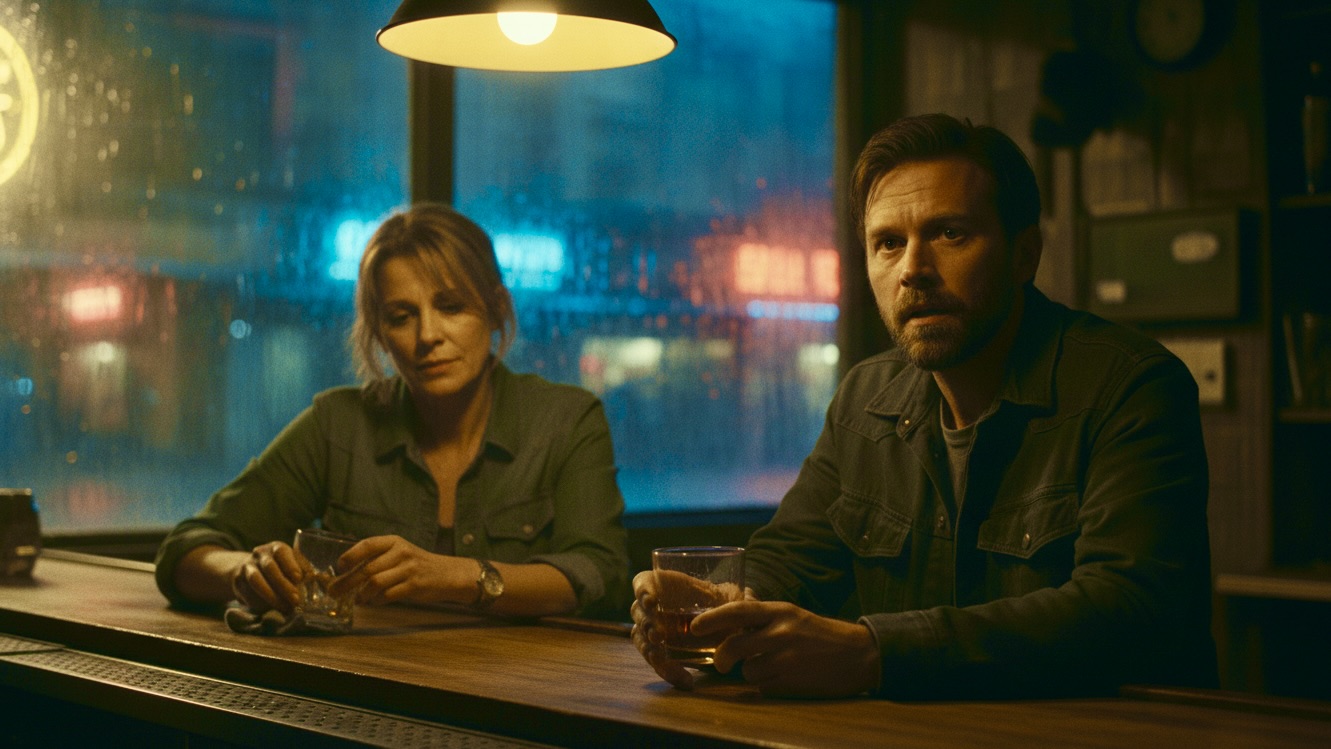
The night was still young, and the city still vast, full of both the visible and the unseen, the callous and the kind. And the rain had started up again, heavier now, washing everything clean, or perhaps, just washing it all away.
Share This Story


