The Hum of Shared Intent
A deep winter morning clings to the small community arts centre in Northwestern Ontario, where a diverse group of young adults, emerging artists, and passionate individuals have convened. Inside, the chill of the boreal landscape is held at bay by the quiet warmth of shared purpose, coffee, and the clanking of an old radiator. This is a roundtable discussion, a delicate crucible where individual artistic ambitions are meant to forge into a collective, a non-profit arts organization. The air is thick with anticipation, tinged with the faint scent of damp wool and old paper, as the participants prepare to navigate the complex, hopeful journey of creating something lasting.
Outside, the world was a study in hushed, relentless white. Snow, fine as confectioner's sugar, blurred the edges of the frosted windowpanes, piling in soft, impossible drifts against the clapboard walls of the community arts centre. The faint scent of pine needles, a leftover from some forgotten Christmas event, mingled with the more immediate aroma of lukewarm coffee and the damp wool of freshly shed coats. Kally shivered, not from the cold—the ancient radiator clanked a comforting rhythm in the corner—but from the lingering chill of the walk. Her boots, still holding vestiges of melting snow, left faint, dark prints on the worn linoleum floor. She tugged at the cuff of her thick, grey jumper, the wool scratchy against her wrist, and focused on the murmur of voices around the polished oak table. The early winter light, thin and hesitant, struggled through the condensation on the glass, painting the room in muted shades of blue and silver. A lone chickadee, black-capped and bold, pecked at a branch outside, a tiny, defiant splash of life against the monochrome canvas of the boreal forest. The warmth of the room, the promise of the shared conversation, felt like a small, precious victory against the encroaching vastness of the season. She felt a knot in her stomach, a familiar tightness that always preceded these kinds of gatherings. Collaboration. The word often felt heavier than a block of granite, yet here they were, a dozen young artists, each with their own fervent spark, hoping to fuse those sparks into a bonfire. She adjusted her wire-rimmed glasses, the faint marks on the bridge of her nose a small, constant reminder of her own gaze.
Edward, a man with a perpetually kind smile and a scattering of grey at his temples despite his relatively young age, cleared his throat gently. He was perched at the head of the table, his hands clasped, a slight tremor in his fingers betraying perhaps a nervousness he rarely showed. “Thank you all for braving the weather,” he began, his voice a low, steady rumble, “and for lending your considerable talents to this discussion. We’ve spoken in smaller groups, yes, but this is… this is where the confluence truly begins. The ambition, as we all know, is to establish a viable, enduring non-profit arts collective right here in our community. To provide a platform, a home, for the incredible creative energy I know resides within each of you, and within this region.” He paused, allowing his gaze to sweep across each face, holding Kally’s for a moment. She felt a flush creep up her neck.
---
The Common Thread
Sandy, a graphic designer with a meticulous beard and an unsettling calm about him, was the first to speak after Edward’s opening. He leaned forward, elbows on the table, a chipped ceramic mug clutched in his hands. “The fundamental question, I believe,” Sandy stated, his voice quiet but resonant, “is not merely what we wish to do as individual artists under this collective’s umbrella, but what the collective itself, as a singular entity, will be. What is its ethos? Its overarching mission? Without that, truly, without that anchor point, we risk drifting into a loose association of disparate projects. An agglomeration, not a collective. And an agglomeration,” he added, a slight curl to his lip, “ rarely sustains itself through the long, lean winters.”
Kally traced a pattern on the condensation of her water glass. Sandy’s point, while logical, felt like a cold splash. She imagined her film projects, nascent and precious, being subsumed by some grand, undefined ‘ethos’. The idea pricked her, an uncomfortable truth. She wanted to make films about the quiet lives of people in small Northern towns, the way light hit the snow just so on a clear morning, the grit of ordinary resilience. How would that fit into a ‘singular entity’?
“Precisely,” Edward affirmed, nodding slowly. “A common thread, Sandy. Not a knot that binds, but a thread that interweaves. It allows for individual expression, yet strengthens the overall fabric.”
Liv, a musician whose vibrant dreadlocks defied the winter grey, spoke next. Her fingers, adorned with simple silver rings, tapped a silent rhythm on the tabletop. “And with that thread,” she began, her voice soft but surprisingly clear, “comes the imperative of trust. We are artists. We are, by nature, possessive of our visions, sensitive to critique. To function as a collective, truly, we must foster an environment of radical candour, yes, but also profound respect. There will be disagreements. There will be differing creative impulses. How do we navigate those without fracturing the very structure we aim to build? We need a framework, I submit, for not just collaboration, but for genuine, empathetic conflict resolution. Formalizing this, perhaps even writing it into our foundational principles, prevents ego from becoming the ultimate architect of our downfall.”
A collective gasp, soft and knowing, went through the room. Liv had articulated the unspoken fear. Kally felt it too. The sting of a critique, the clash of ideas, the silent resentment. These were the true icebergs in the calm waters of collaboration. She wondered if a written framework could truly mend a bruised artistic spirit. Her own impulse was always to retreat, to nurse wounds in private. This collective would demand something different from her, something braver.
---
Structures of Sustenance
Noah, a sculptor whose large, calloused hands looked more at home with clay or wood than a coffee cup, spoke thoughtfully. He had a quiet intensity, his eyes often scanning the room as if composing an invisible piece of art. “Beyond the abstract, there are tangibles. Physical space. Shared tools. The mundane, yet vital, act of collective purchasing or maintenance. We cannot speak of a collective without considering where this collective will live, physically. A shared studio, a communal workshop, even a designated meeting centre… these aren’t luxuries, but necessities. How do we pool resources responsibly? How do we ensure equitable access? The practicalities, while perhaps less romantic than artistic vision, are the very structures of sustenance. Without them, the most brilliant ideas remain just that: ideas, floating in the ether, vulnerable to the first strong gust of wind.” He paused, then added, almost as an afterthought, “And we have rather strong gusts up here.”
A ripple of agreement went around the table. Kally pictured the old, unused pottery studio at the back of the centre, filled with dusty wheels and broken kilns. It had potential, yes, but the thought of cleaning it, repairing it, then negotiating its use among a dozen personalities felt like a Herculean labour. Yet, Noah was right. Her own cramped apartment, piled high with lenses and lighting equipment, was no place to edit a feature film, let alone host a screening. The very act of finding, and then maintaining, a shared space felt like an allegorical journey in itself, each broken window or leaky tap a metaphor for the collective’s own vulnerabilities.
Isla, a digital artist who communicated mostly through gestures and expressive eyebrows, cleared her throat, drawing all eyes to her. Her voice, when it came, was soft, almost a whisper, yet carried a surprising weight. “And how do we… reach beyond these walls? The digital realm, it is vast. Intimidating. But it is also our greatest opportunity for outreach, for connecting with audiences and patrons far beyond our immediate snow drifts. A cohesive online presence, a shared narrative across platforms, a unified voice… these are not simply marketing tools. They are the public face, the invitation. But it demands… a consistency. A shared understanding of our message, our aesthetic. And the vigilance to maintain it. It is not enough to simply exist; we must project. Clearly. Authentically. Even when the collective’s spirit feels… fragmented, internally. The public must see the unified whole.”
Kally considered Isla’s words. Her own Instagram feed was a chaotic mess of film stills, blurry selfies, and half-formed thoughts. To curate a collective’s digital identity, to present a polished, intentional narrative, seemed an enormous undertaking. It required a level of self-discipline and collective strategy that felt daunting. Yet, she knew Isla was right. In this digital age, visibility was oxygen. She imagined a beautifully designed website, a curated social media presence, showcasing their diverse talents, a beacon in the northern darkness.
---
The Unseen Effort
The conversation flowed, a steady current of practicalities and aspirations. They spoke of grant applications, the dizzying complexity of non-profit legal structures, the sheer, unseen effort required to keep a venture like this alive. Edward listened intently, interjecting occasionally with a clarifying question or a gentle nudge to stay on topic. The initial shyness in the room had dissipated, replaced by a charged atmosphere of shared purpose, a collective leaning forward into the future. Kally found herself offering a suggestion about crowd-funding platforms, her voice surprisingly steady, her initial knot of anxiety loosening its hold. She felt the delicate balance of individual input and communal goal-setting, a fragile, thrilling dance.
As the afternoon light began its swift descent, painting the snow outside in deepening shades of indigo and violet, Edward brought the discussion to a close. “We have laid the groundwork today,” he said, his voice imbued with a quiet satisfaction. “Each of you has articulated a critical pillar upon which this collective must rest: vision, trust, space, outreach. These are not simple suggestions. They are the very sinews of what we hope to build. It will be arduous. There will be moments of doubt, perhaps even despair. But the potential, the sheer, transformative potential of an artist-led collective in this community… it is boundless. It is, I daresay, essential.”
Kally packed her notebook, the faint indentation of her pen on the paper a testament to the furious notes she’d taken. The room was emptying, chairs scraping softly on the linoleum. She felt a lightness, an almost giddy sense of possibility mixed with a clear-eyed understanding of the monumental work ahead. The collective wasn't just a place for art; it was art itself, a living, breathing, vulnerable creation demanding constant tending. It was a commitment, a promise made not just to fellow artists, but to the very idea of art as a vital, communal force in a world often too focused on individual gain. The last rays of sunlight, weak and watery, cast long, blue shadows across the floor. She watched them fade, a slow, gentle relinquishing to the long winter night, and a deep, quiet hope settled within her, like a seed nestled deep in frozen earth, waiting for its season.
She stepped out into the biting cold, the clean air sharp in her lungs. The snow creaked under her boots. Up above, the first stars were piercing the darkening canvas, impossibly bright and numerous. They seemed to hum with the same quiet, hopeful energy she now felt pulsing beneath her own ribs. The collective. A tiny, defiant spark in the vast, cold expanse.
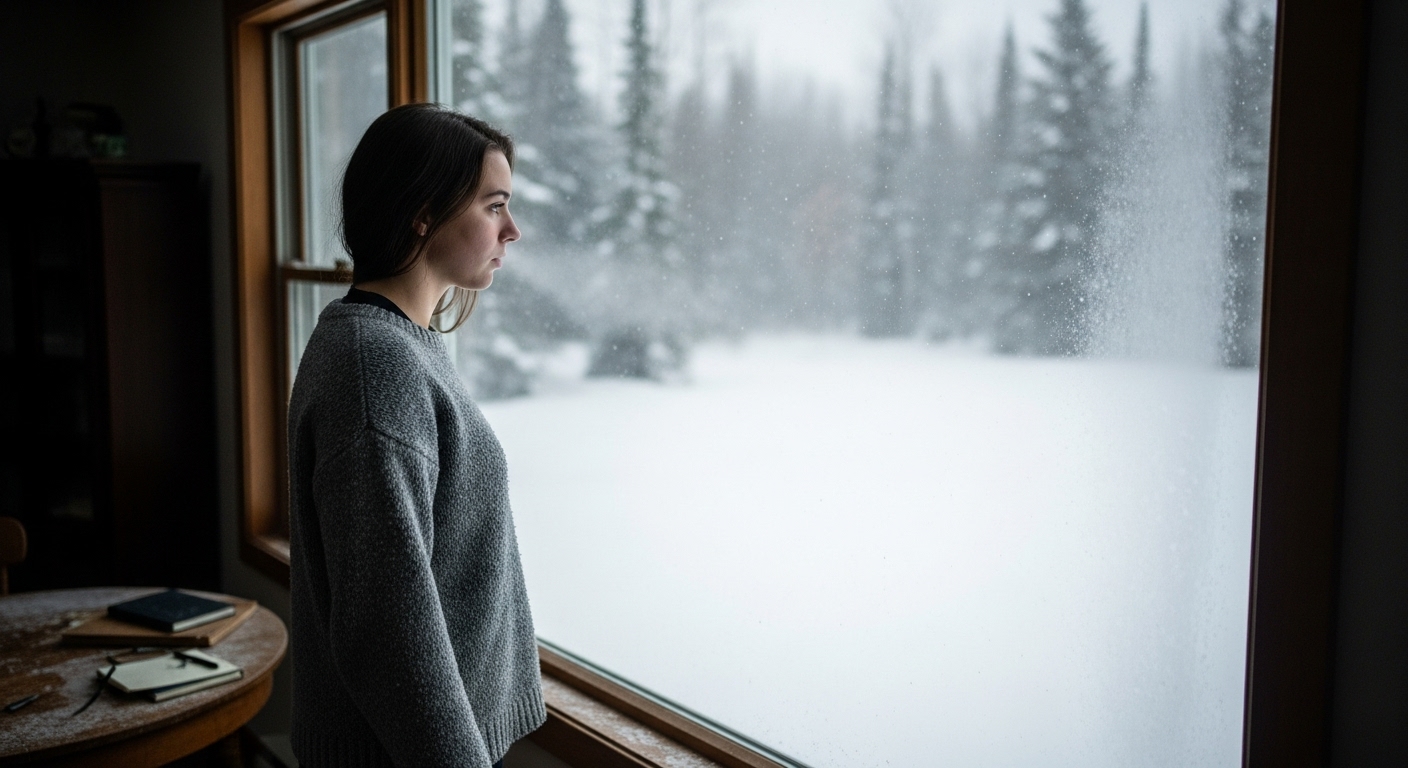
The path forward was clearer, yet the immensity of the task now weighed with a new kind of gravity, a silent question hanging in the frigid air: could such a diverse group truly sustain the fragile, beautiful promise they had just forged?
Share This Story


